

The most comfortable dining chairs are upholstered mid-back chairs with a 17- to 19-inch seat height, a 16- to 18-inch seat depth, and a back that rises 15 to 20 inches above the seat. Those three numbers matter more than the brand name, because a chair that fits your body and your table lets you sit through a long dinner without shifting, while a chair that misses them starts to hurt after twenty minutes no matter how good it looks.
A dining chair is not a sofa, so comfort here means support, not sinking in. The seat should hold your thighs flat, your feet should rest on the floor, and the back should meet your lower back at a slight recline. Get those three things right and almost any well-made chair feels good.
💡 Practical Home Tip: Before you buy a set of six, order one chair first and eat three real dinners in it. Sit all the way back, check that your feet stay flat on the floor, and time how long you last before you shift. One chair costs little to return; six chairs that nobody wants to sit in cost a fortune to replace.
What Makes a Dining Chair Comfortable?
A comfortable dining chair fits your body and your table at the same time: the seat height leaves 10 to 12 inches between the seat and the tabletop, the seat depth supports your thighs without pressing behind your knees, and the back supports your lower back at a gentle 95- to 100-degree angle. Cushion thickness alone does not create comfort.
Start with the fit, not the fabric. A thick cushion on a chair that is too deep pushes you forward, so your back never touches the backrest and your feet dangle. A thin cushion on a chair with the right depth and angle feels fine for an hour, because your weight spreads across the seat instead of pressing on one edge.
The seat should have a slight contour or a gentle slope rather than a dead-flat top. A contoured seat spreads your weight and keeps you from sliding forward, while a flat wooden seat concentrates pressure on your sitting bones. That is why a simple wooden chair with a shaped seat often beats a flat chair with a thick pad.
The backrest does the second half of the work. A back that rises 15 to 20 inches above the seat reaches your lower back and supports it through a full meal, and a slight backward tilt of about 95 to 100 degrees lets you lean back between courses without sliding forward.
Dining Chair Measurements That Matter
The four measurements that decide comfort are seat height (17 to 19 inches for a standard 30-inch table), seat width (20 to 22 inches for a side chair), seat depth (16 to 18 inches), and back height (15 to 20 inches above the seat for a mid-back chair). Measure your table first, then match the chair to it.
Seat height is the single most important number. A standard dining table stands 28 to 30 inches tall, and a seat at 17 to 19 inches leaves the 10- to 12-inch gap your thighs need under the tabletop. The dining chair measurement guide from The Classy Home puts the same rule plainly: seat height of 17 to 19 inches for a 30-inch table, with a 10- to 12-inch gap between seat and tabletop for comfortable legroom.
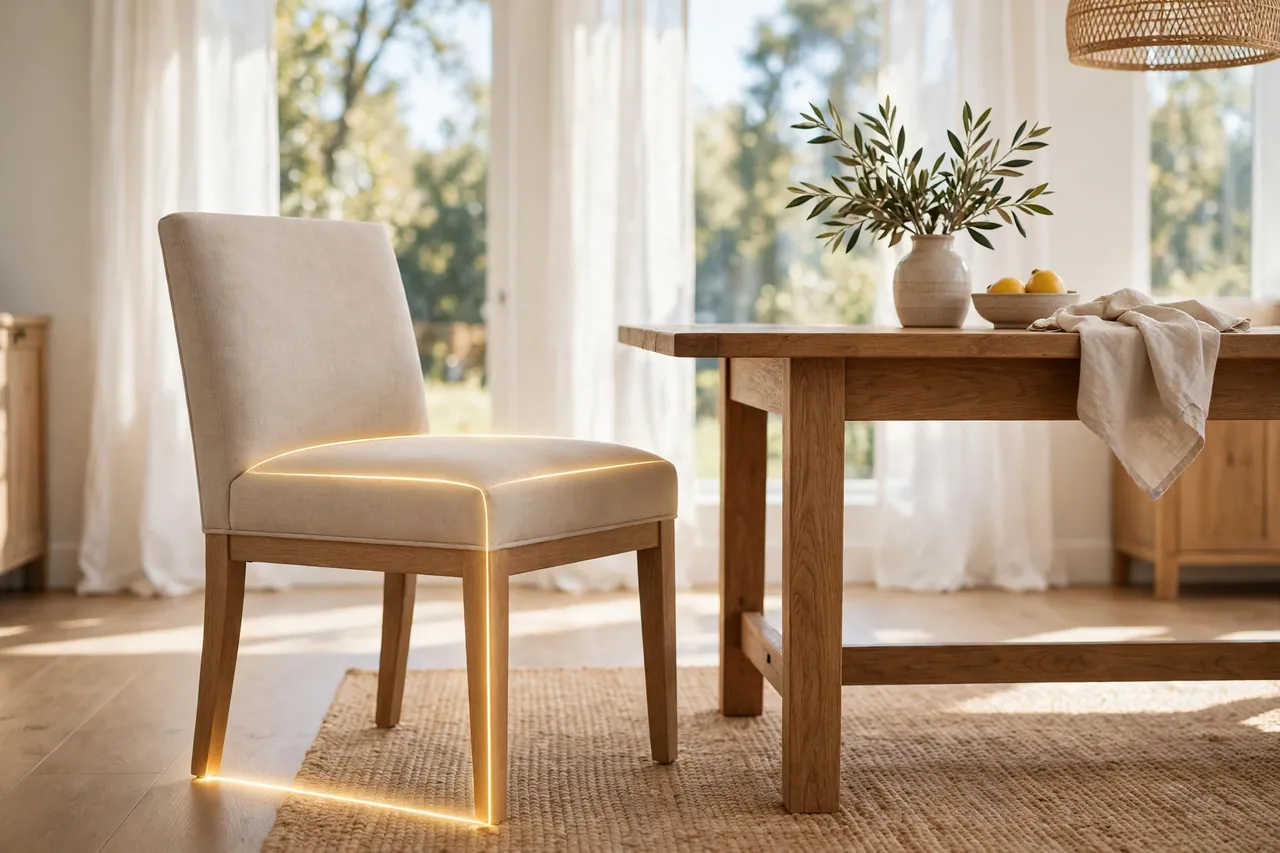
Seat depth is the most overlooked number, and it is the one that decides whether you can sit back at all. At 16 to 18 inches deep, most adults can sit with their back against the chair back and still have a few inches between the back of the knee and the seat edge. Below 15 inches the seat feels shallow and perch-like; above 19 to 20 inches it pushes you away from the table or forces you to lean forward, which removes the benefit of the backrest entirely.
Seat width decides elbow room. A side chair at 20 to 22 inches wide fits most adults, while an armchair runs 24 to 26 inches wide because the armrests add to the footprint. When you plan the table, allow each chair its width plus 2 to 4 inches on each side, so diners are not shoulder to shoulder.
Back height decides two things: support and storage. A mid-back chair at 15 to 20 inches above the seat supports the lower back through a full meal and is the best all-around choice for most households. A high back over 20 inches gives full spinal support but may not slide under the table, so measure from the floor to the underside of your table apron before you buy and compare that number with the chair’s total height.
| Measurement | Comfortable range | What goes wrong outside it |
|---|---|---|
| Seat height | 17–19 inches (30-inch table) | Too high: thighs jam under the table; too low: you hunch over your plate |
| Seat depth | 16–18 inches | Too shallow: perching; too deep: feet dangle, back never touches the backrest |
| Seat width (side chair) | 20–22 inches | Too narrow: hips squeeze; too wide: chairs crowd the table |
| Back height above seat | 15–20 inches (mid-back) | Too low: no lumbar support; too high: chair will not slide under the table |
| Seat-to-table gap | 10–12 inches | Too small: no legroom; too large: elbows sit above the table surface |
One warning about upholstered chairs: measure the seat height while sitting in the chair, not while it stands empty. A soft cushion compresses an inch or more under your weight, so a chair that measures 19 inches empty may sit at 18 inches once you are on it.
How Much Do the Most Comfortable Dining Chairs Cost?
Comfortable dining chairs cost from about $125 each at the budget end to about $349 to $449 each at the mid-range, and a set of six runs roughly $750 to $2,700 before tax and delivery. Paying more buys a sturdier frame and better foam, but the comfort numbers in the section above matter more than the price tag.
At the budget end, the IKEA BERGMUND chair costs $125 on ikea.com, checked November 12, 2026, with a padded seat and a removable, washable cover. It is the cheapest genuinely comfortable dining chair from a major retailer, and its washable cover is the feature that matters most for families with small children.
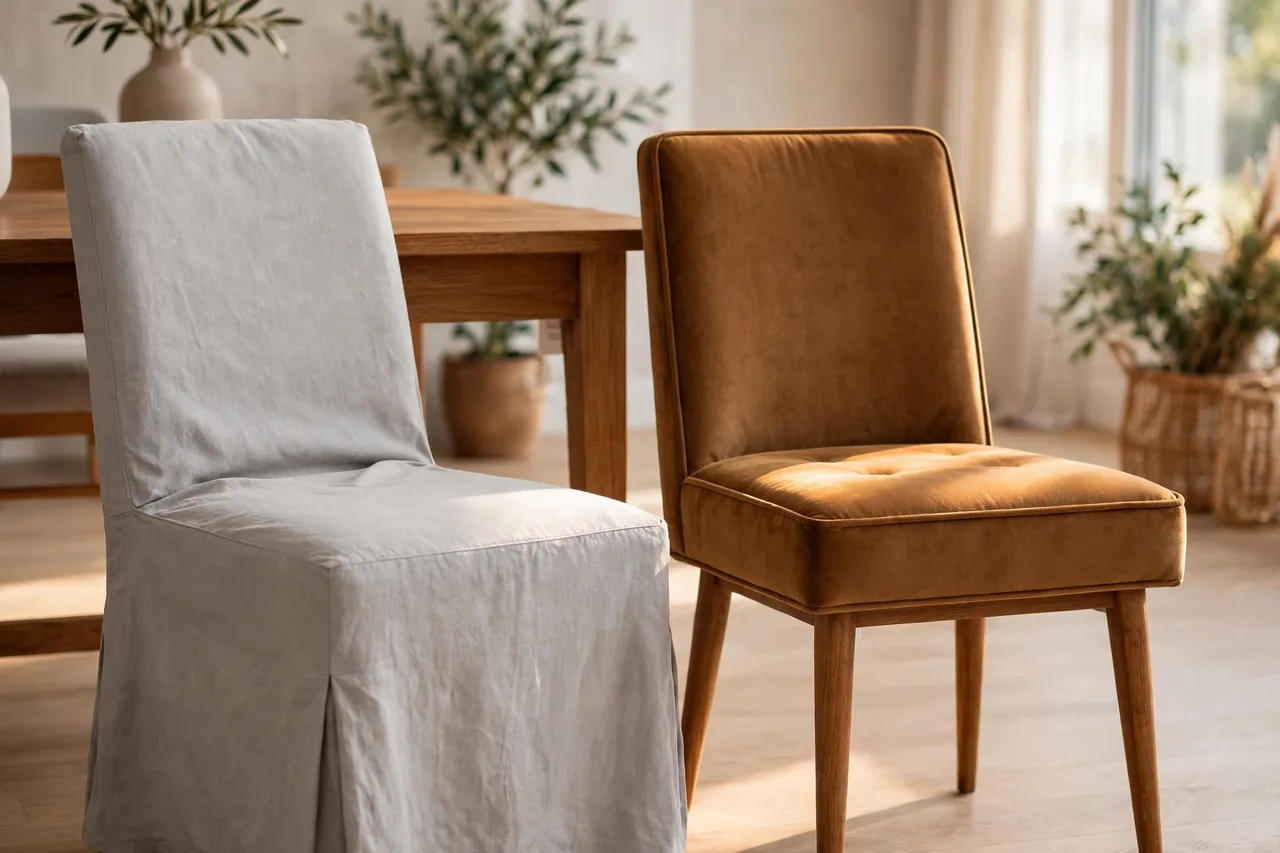
In the mid-range, the West Elm Mid-Century Upholstered Dining Chair with wood legs lists at $349 to $449 on westelm.com, with a limited-time price from $319.20, checked November 12, 2026. West Elm describes it as a wide, cushy seat with a sloping back and a contract-grade frame, which is the level of build that survives daily family use.
Above $500 a chair, you pay for design names, solid hardwood frames, and premium upholstery such as performance velvet or full-grain leather. A chair at $700 can be worth it if it is the chair you sit in for two hours every night, but it is not automatically more comfortable than the $349 chair.
| Budget | Example chair | Price each | Set of six |
|---|---|---|---|
| Budget | IKEA BERGMUND | $125 | $750 |
| Mid-range | West Elm Mid-Century Upholstered | $349–$449 (sale from $319.20) | $2,094–$2,694 |
| Premium | Designer / solid hardwood chairs | $500–$700+ | $3,000+ |
Count the full set before you fall in love with one chair. Six chairs at $125 cost $750, while six at $449 cost $2,694, and delivery, tax, and any protection plan sit on top of that. Our guide to white label furniture explains why similar-looking chairs carry very different prices: many brands share the same factories, so the label is not always what you are paying for. And if the dining room is small, our best storage ideas for small rooms help you fit the table, the chairs, and everything else the room must hold.
Upholstered vs Wood vs Leather vs Metal: Which Seat Feels Best for an Hour?
Upholstered chairs are the most comfortable dining chairs for long meals, because medium-density foam over a shaped seat supports your weight for an hour without pressure points. Wood suits short meals and easy cleaning, leather suits wipe-clean family dining, and bare metal suits short sittings only.
Upholstery wins on comfort for one reason: it gives. Medium-density foam compresses under your sitting bones and spreads the load, while a shaped wooden seat cannot change shape at all. Performance fabric is the practical choice for dining, because it resists stains and cleans with a damp cloth, while plain cotton or linen stains the first time a glass tips over. Velvet looks rich and feels soft, but it shows every crumb and needs regular brushing.
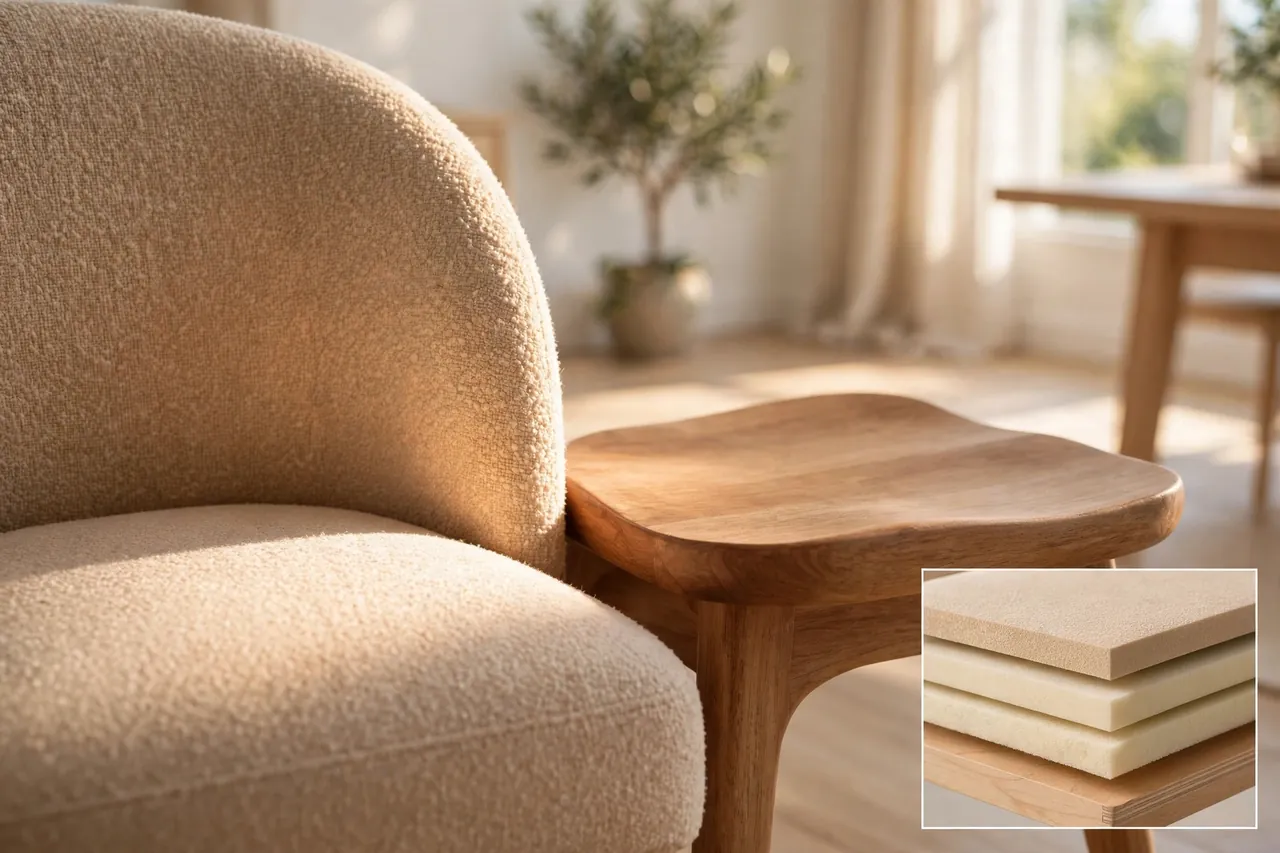
Wood is the honest second choice. A solid hardwood chair with a contoured seat and a curved backrest can feel good for forty-five minutes, and it wipes clean in seconds, which is why wooden chairs survive decades in family dining rooms. Add a thin seat cushion with ties and you get most of the comfort of upholstery with none of the stain worry, and you can wash the cushion cover whenever you like.
Leather sits between the two. Genuine leather is easy to wipe, ages well, and feels cool at first touch, then warms to your body. Faux leather cleans just as easily and costs far less, but it can feel sticky in summer and crack after a few years of daily use. Both need the same thing wood needs: a shaped seat and a backrest that meets your lower back, because the material alone cannot fix a bad shape.
Metal and molded plastic are the least comfortable for long meals. They are light, strong, and easy to clean, which makes them good extra chairs for parties, but a bare metal seat presses hard after twenty minutes. If you love the look, add a fitted cushion and keep them as the spare set, not the everyday set.
Arm Chairs vs Side Chairs: Which Is More Comfortable?
Arm chairs are more comfortable than side chairs for long meals, because the armrests support your elbows and let your shoulders relax, while side chairs are lighter, cheaper, and easier to squeeze around a table. Most dining rooms work best with arm chairs at the two ends and side chairs along the sides.
The armrests do real work at a long dinner. They hold your elbows at table height, so your shoulders drop instead of hunching, and they give you something to push against when you stand up. That matters most for older diners and for anyone who lingers over coffee after the meal. The trade-off is space: an arm chair runs 24 to 26 inches wide, so two of them need a table at least 8 feet long if they sit on the sides rather than the ends.
Side chairs win on flexibility. They slide fully under the table, they cost less per chair, and you can fit more of them around the same table when guests arrive. A good side chair with a mid-back and a padded seat is comfortable for a normal meal; it only loses to the arm chair after the first hour, when the lack of elbow support starts to show.
Watch the arm height before you buy. The top of the armrest should sit below the underside of your table apron, or the chair cannot push in at all. Measure from the floor to the apron, then compare it with the arm height in the chair’s specifications. A chair that cannot slide in eats a foot of floor space every day, and a dining room that feels crowded stops being comfortable no matter how good the chairs are.
The classic mix is two arm chairs at the heads of the table and four side chairs along the sides. The hosts get the comfortable ends, the guests get good side chairs, and the table still fits six without crowding.
How to Test a Dining Chair Before You Buy It
Test a dining chair by sitting in it the way you eat: sit all the way back, put your feet flat on the floor, and stay there for ten minutes without shifting. If your feet dangle, your knees press the seat edge, or your lower back finds no support, the chair fails the test no matter how good it looks.
Run the sit test in order, and do it in the store before you order online. First, sit all the way back and check the gap between the back of your knees and the seat edge: you want one to two inches of space. No gap means the seat is too deep for you, and a big gap means it is too shallow to support your thighs.
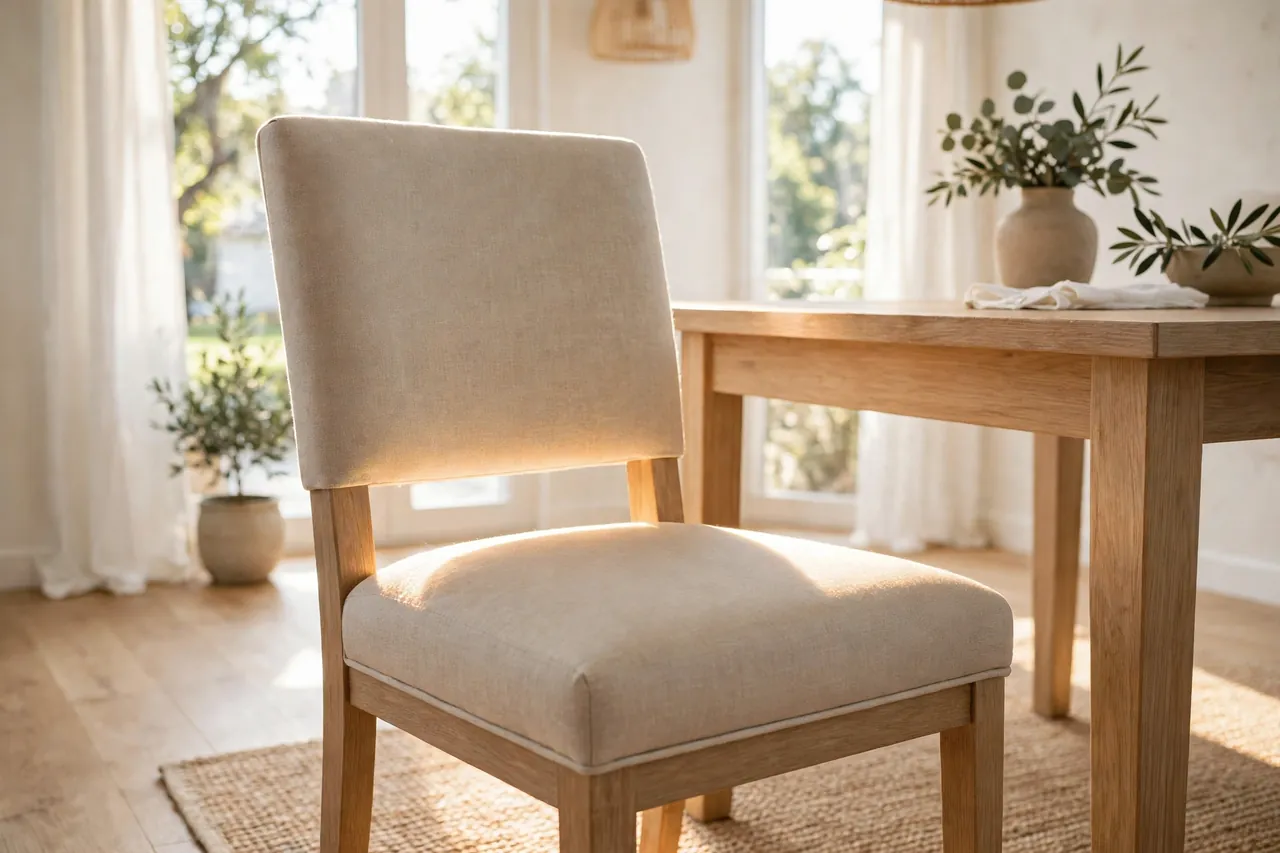
Next, check your feet and your elbows together. Your feet should rest flat on the floor with your knees at about 90 degrees, and your elbows should rest near table height without your shoulders rising. If the chair passes both checks, stay seated for ten full minutes.
Then test the chair the way daily life tests it. Pull it out from the table and push it back in, lift it with one hand, and rock it gently side to side to check for wobble. A well-built chair feels solid and quiet; a loose joint creaks or flexes, and that flex only gets worse with use.
- Sit all the way back and check for one to two inches behind your knees.
- Check feet flat on the floor and knees near 90 degrees.
- Rest your elbows at table height and drop your shoulders.
- Stay seated for ten minutes without shifting position.
- Pull the chair out, push it in, lift it, and rock it gently for wobble.
- Look underneath for corner blocks and solid joinery, not staples alone.
When you buy online, order one chair first and run the same test at your own table. Most retailers accept a single-chair return far more easily than a set of six, and the one-chair test tells you everything the store test does, plus how the chair fits your actual table height. If it passes at home, order the rest; if it fails, you have lost one return label, not a whole dining set.
How to Keep Dining Chairs Comfortable for Years
Keep dining chairs comfortable by vacuuming upholstered seats weekly, wiping spills at once instead of letting them set, tightening loose screws every six months, and adding felt pads under the legs. Comfort fades when cushions flatten, joints loosen, and legs scrape, and all three are preventable.
Start with the weekly clean, because it does most of the work. Vacuum an upholstered seat with an upholstery attachment, get into the seam where the seat meets the back, and brush off crumbs before they grind into the fabric. For wood and leather, a damp cloth once a week keeps the surface clean, and a dry cloth after it stops water marks. Our deep cleaning house checklist walks you through a whole-room clean once the chairs are done.
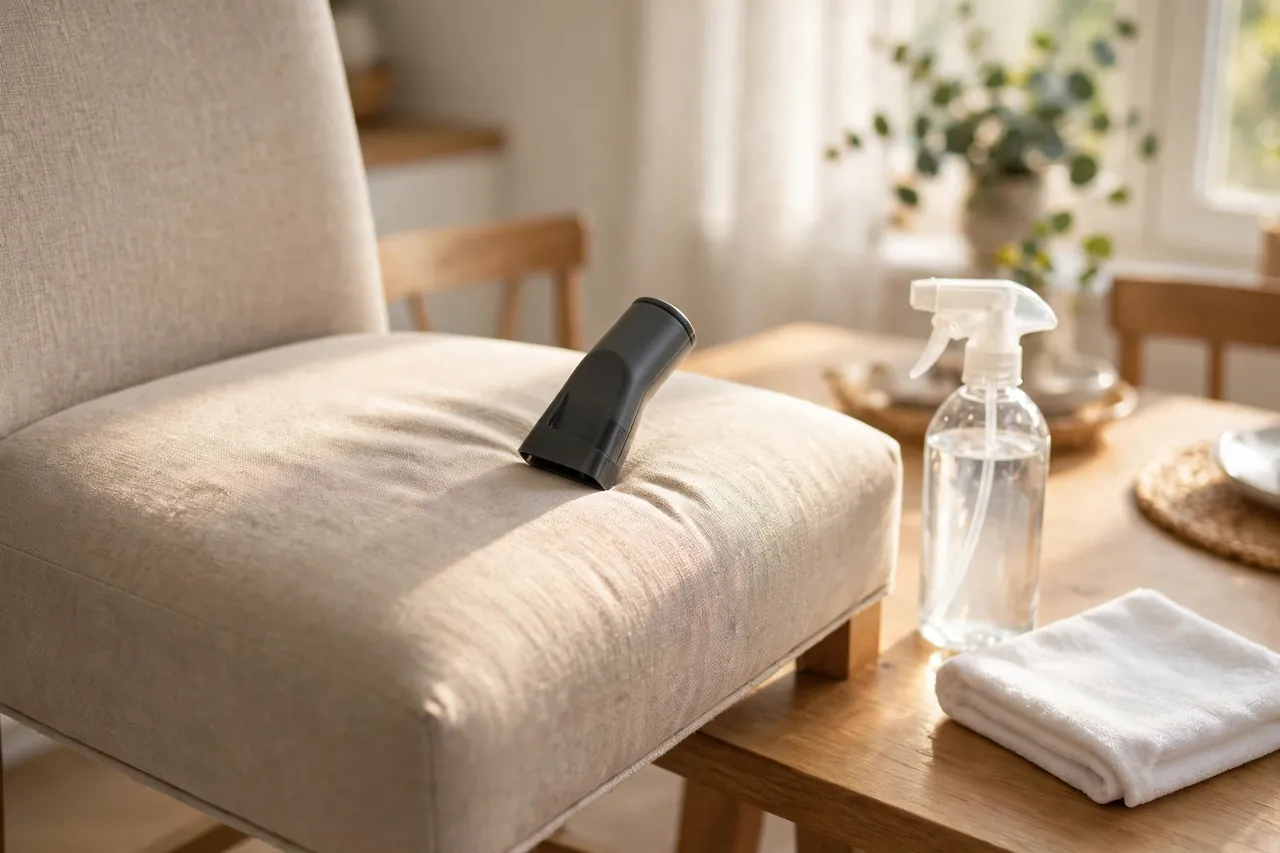
Spills need speed, not strength. Blot a spill at once with a clean cloth, work from the outside edge toward the center so the stain does not spread, and never rub, because rubbing pushes the liquid deeper and roughs up the fabric. Test any cleaner on a hidden spot first, and let it dry fully before you judge the result. On a BERGMUND-style chair with a removable cover, take the cover off and wash it instead of scrubbing the chair itself.
Check the joints twice a year. Dining chairs take a daily load that loosens screws and glue joints, so flip each chair, tighten every screw, and listen for creaks when you set it back down. A chair that wobbles after tightening has a failing joint, and a repair shop can re-glue it for far less than a replacement costs.
Protect the floor and the chair together. Felt pads under the legs stop the scraping that wears both the floor and the leg ends, and they make the chairs glide instead of dragging, which saves the joints too. Replace the pads when they flatten or fall off.
Who Should Buy Which Chair — and Who Should Skip Upholstery
Buy upholstered mid-back chairs if you host long dinners and want the most comfortable seat for an hour or more. Buy shaped wood if you have small children or eat fast weeknight meals, and skip light fabric upholstery if your dining room doubles as a homework and craft table.
Long-dinner households should spend their money on the seat, not the style. An upholstered mid-back chair with performance fabric, a 16- to 18-inch seat depth, and a solid frame is the right buy, and the budget version of that chair beats a premium chair with the wrong measurements.
Families with toddlers should buy for cleaning first and comfort second. A shaped wooden chair with a washable cushion, or an upholstered chair with a removable washable cover like the BERGMUND, survives spaghetti night without a stain setting in. Light-colored linen or velvet looks beautiful in photos and regrets it at the first meal.
Small dining rooms need a different trade. A slim side chair at 20 inches wide with a low back slides fully under the table and keeps the room open, while a wide arm chair eats the walkway. Leave at least 36 inches behind each chair for someone to pull out and stand up.
Skip a chair entirely if it fails the sit test, whatever the price or the brand. A beautiful chair that hurts after twenty minutes becomes the chair nobody chooses, and then it becomes the chair that holds laundry. Comfort is the feature you cannot add later, so let the sit test, not the showroom, make the final call.
Related Guides
Chairs are only half the dining room. A washable rug under the table comes from our Tumble Rugs vs Ruggable comparison, a side table for the room comes from our apothecary table guide, and the whole-room clean after dinner is in our deep cleaning house checklist.
Frequently Asked Questions
What measurements matter when buying dining chairs?
The four key measurements are seat height, seat width, seat depth, and back height. For a standard 30-inch table, look for a seat height of 17 to 19 inches, a side-chair width of 20 to 22 inches, a seat depth of 16 to 18 inches, and a back rising 15 to 20 inches above the seat.
How wide should dining table chairs be?
Standard dining side chairs are 18 to 22 inches wide, and arm chairs run 24 to 26 inches wide because the armrests add to the footprint. When spacing chairs around a table, allow the chair width plus 2 to 4 inches on each side so diners are not shoulder to shoulder. Add up the widths before you buy.
What is a comfortable seat depth for dining chairs?
A seat depth of 16 to 18 inches is the comfortable range for most adults. At this depth, most people sit with their back against the chair back and still have a few inches between the back of their knee and the seat edge. Below 15 inches feels shallow; above 19 inches you sit too far from the table.
Are stackable dining chairs a good option?
Stackable chairs are a practical choice when you need extra seating for occasional gatherings and storage space is limited. Most are made from metal, molded plastic, or polypropylene, and they are generally less comfortable than fully padded chairs for long meals. Keep them as spare seating, not your everyday dining chairs.
What dining chair back height is most comfortable?
Mid-back chairs, with the back rising 15 to 20 inches above the seat, are the most comfortable for everyday dining because they support the lower back through a full meal. Low backs of 12 to 15 inches suit short meals, while high backs over 20 inches give full support but may not slide under the table.
Measure your table, run the ten-minute sit test on one chair, and order the rest only when that chair passes. The most comfortable dining chair is the one that fits your body, your table, and your room — and now you know the numbers that prove it.


