
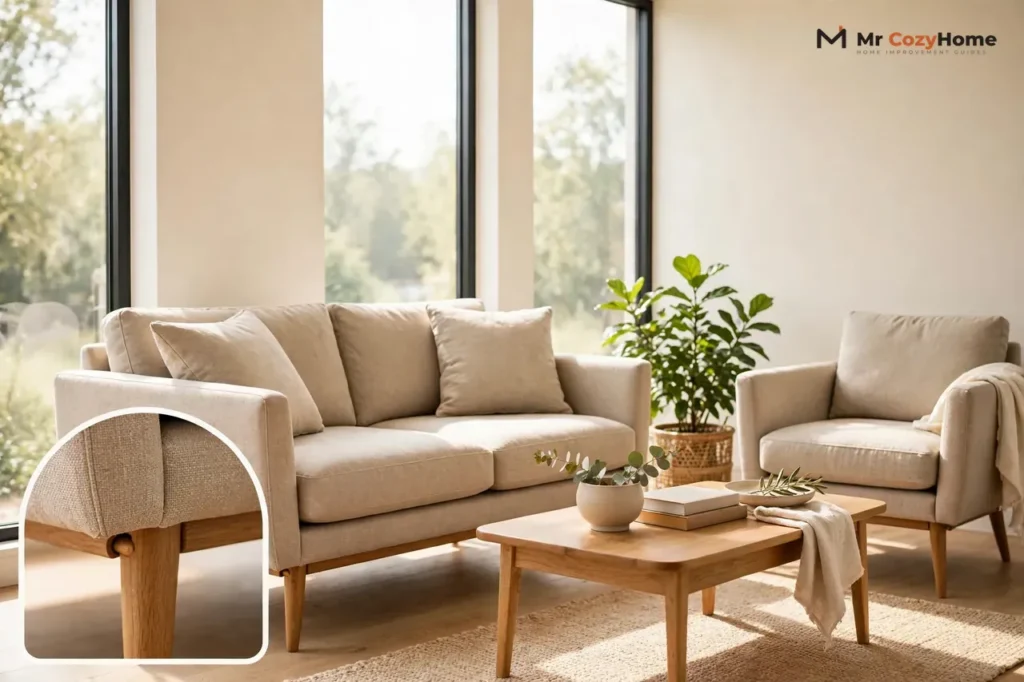
White label furniture is furniture made by one manufacturer and sold under many different brand names — and a 2018 DataWeave study of 20,000 products across two furniture e-commerce sites found that 71% of them were white-labeled, with 98.8% priced differently between the sites, as reported by RetailBrew. The same chair can sit in three stores under three names at three prices, and the only thing that changes is the label on the tag.
One five-minute check tells you whether two listings are the same piece or just a lookalike: compare the exact dimensions down to the fraction of an inch. If the measurements match, the country of origin matches, and the photos show the same frame, you have found the same piece. The full checklist is in the spotting section below, and it works on sofas, beds, tables, and lamps alike.
💡 Practical Home Tip: Before you buy any piece over $300, search its exact dimensions in quotes on Google — for example, “34.5 W x 35 D x 31 H” — and see which other stores sell the same measurements. That one search often finds the same piece for less, and it takes less time than reading the reviews.
What Is White Label Furniture?
White label furniture is furniture built by one manufacturer and sold by many retailers under their own brand names. The factory designs and builds the piece, and each store puts its own name, photos, and price on it, so the same sofa can appear as three different products in three different stores.
The model is simple. A manufacturer makes a chair, a bed, or a table in bulk, often overseas in China or Indonesia, though some pieces are made in the United States. Retailers buy that piece wholesale, give it their own product name, and sell it at the price their customers will pay. A Pottery Barn shopper and a Walmart shopper may be looking at the same frame from the same factory, as the design site Nestorations explains in its guide to white labeling.
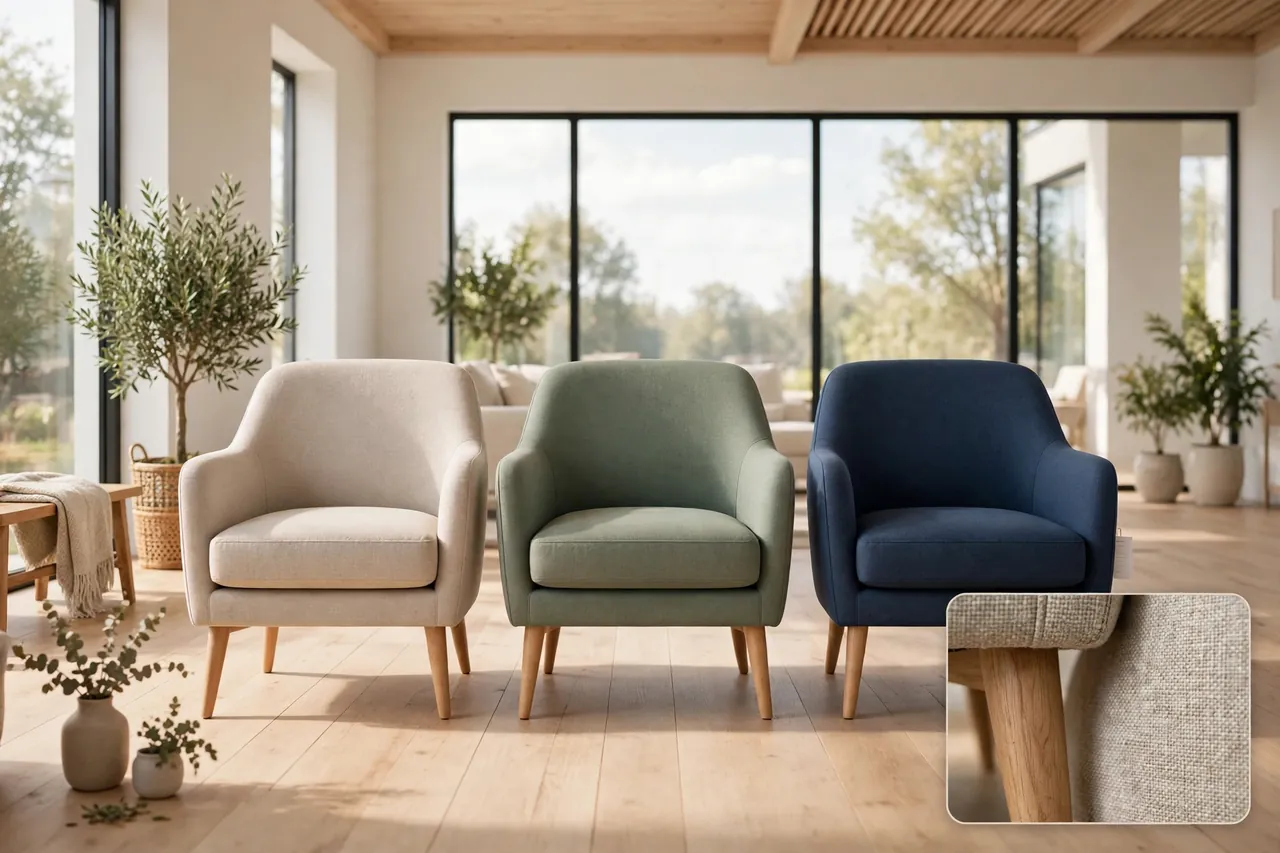
White labeling is not new and it is not small. It has been growing since the 1980s, according to Christie Nordhielm, an adjunct professor at Georgetown University’s McDonough School of Business, speaking to RetailBrew. Wayfair alone grew from 80 house brands in 2019 to 124 in 2022, and those house brands made up 72% of its US revenue. Most of those house-brand pieces are white-labeled: ready-made designs the retailer brands as its own.
The key point is that the brand on the tag is not the maker. When you buy a white label piece, you are buying a factory’s design through a retailer’s storefront. That is why two listings can look identical yet carry very different prices — and why the next section matters, because the way the model works decides who pockets the difference.
How Does White Label Furniture Work?
White label furniture works through a split of labor: the manufacturer builds the piece, and the retailer brands and sells it. The factory handles cutting, upholstery, finishing, and packing, while the retailer handles product selection, branding, sales, and customer service, as the EU manufacturer guide from Artisan Furniture describes.
Here is the path a piece takes, step by step.
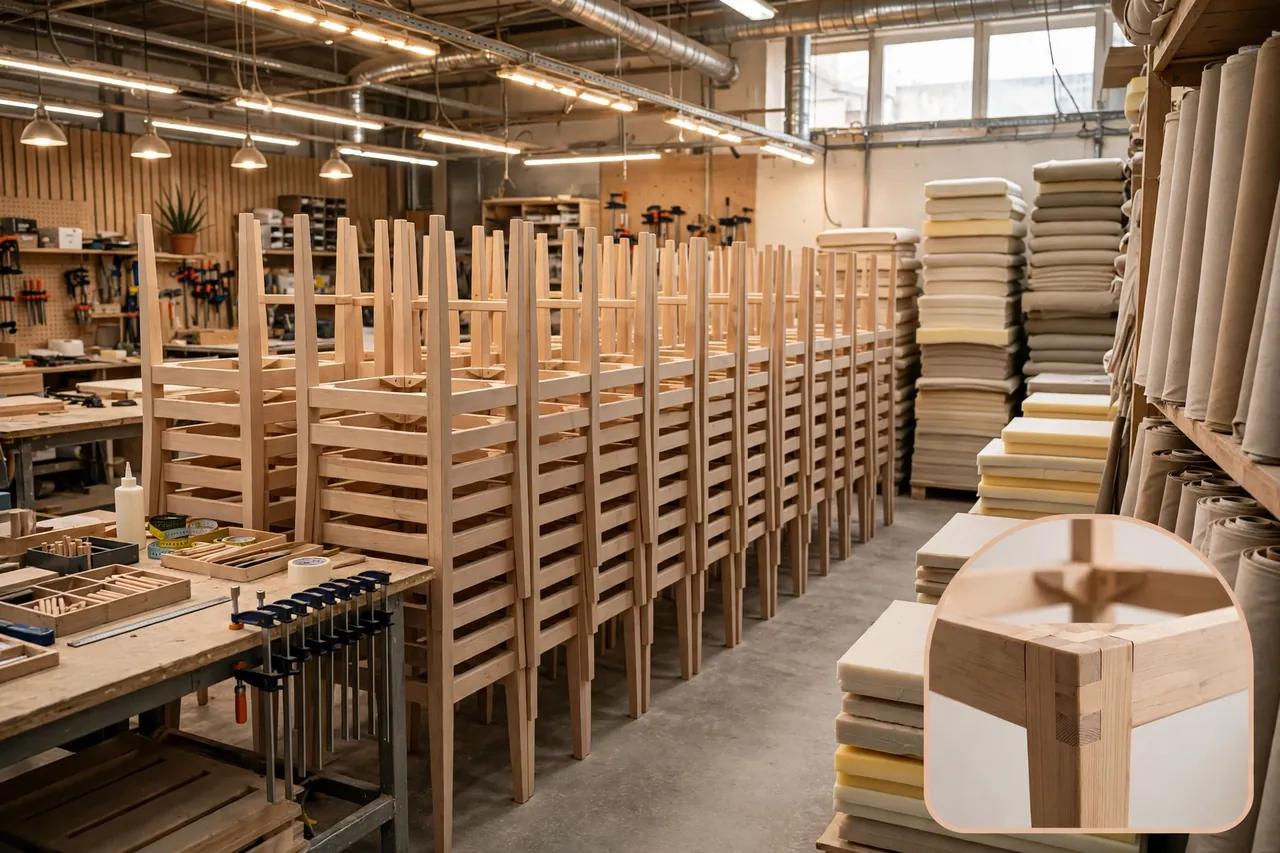
- A manufacturer designs a piece — a sofa, a bed frame, a sideboard — or picks one from its existing catalog.
- Retailers buy that piece wholesale, often in minimum orders of 20 to 300 units per model, with production taking four to sixteen weeks after the order is confirmed.
- Each retailer gives the piece its own name, its own photos, and its own price. One store may call it the Davin chair, another the Danton chair, and a third may use a completely different name, Nestorations notes.
- The piece ships to the buyer under the retailer’s brand, with the retailer’s label, packaging, and customer service. The factory’s name appears nowhere on the product.
Because there is no shared model number or barcode across stores, the same piece is hard to track. Furniture has no universal SKU the way electronics do, so a shopper cannot type one number into a search box and find every store selling the same item. Retailers know this, and some even use computer-generated product images instead of real photos, which makes reverse image search harder, according to Spoken co-founder Dane Hurtubise in RetailBrew.
That missing link is the whole game. The factory sells one piece once, and each retailer sells it again at its own price — so the question is not whether the piece is good, but whether you are paying the store’s price or the piece’s price. The next section clears up the one term people mix up with white label, and the mix-up costs buyers money.
White Label vs Private Label: What Is the Difference?
White label and private label sound alike, but they are different deals. White label furniture is a ready-made piece sold to many retailers, so the design is not exclusive and other brands may sell the same piece. Private label furniture is made to one retailer’s specifications — its materials, finish, and upholstery — and sold only by that retailer.
| Factor | White label | Private label |
|---|---|---|
| Who else sells it | Many retailers | One retailer only |
| Design | Manufacturer’s ready-made design | Built to the retailer’s specs |
| Customization | Light — finish, fabric, legs | Full — materials, size, details |
| Launch speed | Fast, no development time | Slower, needs design work |
| Price for you | Varies widely by store | Set by one seller |
Private label is the exclusive version. A large retailer with enough capital works with a manufacturer to create a piece only it can sell, so you will not find the same item at a rival store, and the retailer can charge what it wants. Smaller brands usually white label instead, because it needs no factory, no design team, and no big upfront spend — they pick from a catalog and start selling.
For you as a buyer, the difference decides your strategy. A white label piece can almost always be found cheaper somewhere else, because many stores sell it. A private label piece cannot, because only one store carries it — so your only lever is a sale, a coupon, or a negotiation. Guess which kind of piece most of the furniture in your home already is? The answer is in the next section, and it starts with a tape measure.
How to Spot the Same Piece Under a Different Brand
You can spot the same white label piece under a different brand by matching four details across listings: exact dimensions, country of origin, materials and finish, and the product photos. When all four match, it is the same piece; when only the look matches, it may be a cheaper copy instead.
Start with the dimensions, because they are the hardest detail to fake. Two listings for the same piece will list the same width, depth, and height, often down to a decimal — for example, 34.5 inches wide, not a rounded 35. Copy the exact measurements from the first listing and search them in quotes. If a second store’s listing shows the same numbers, you have a strong match. Then check the country of origin, the finish name, and the listed materials. A solid oak frame from Vietnam in a walnut finish is a fingerprint; a vague “wood” listing is not.
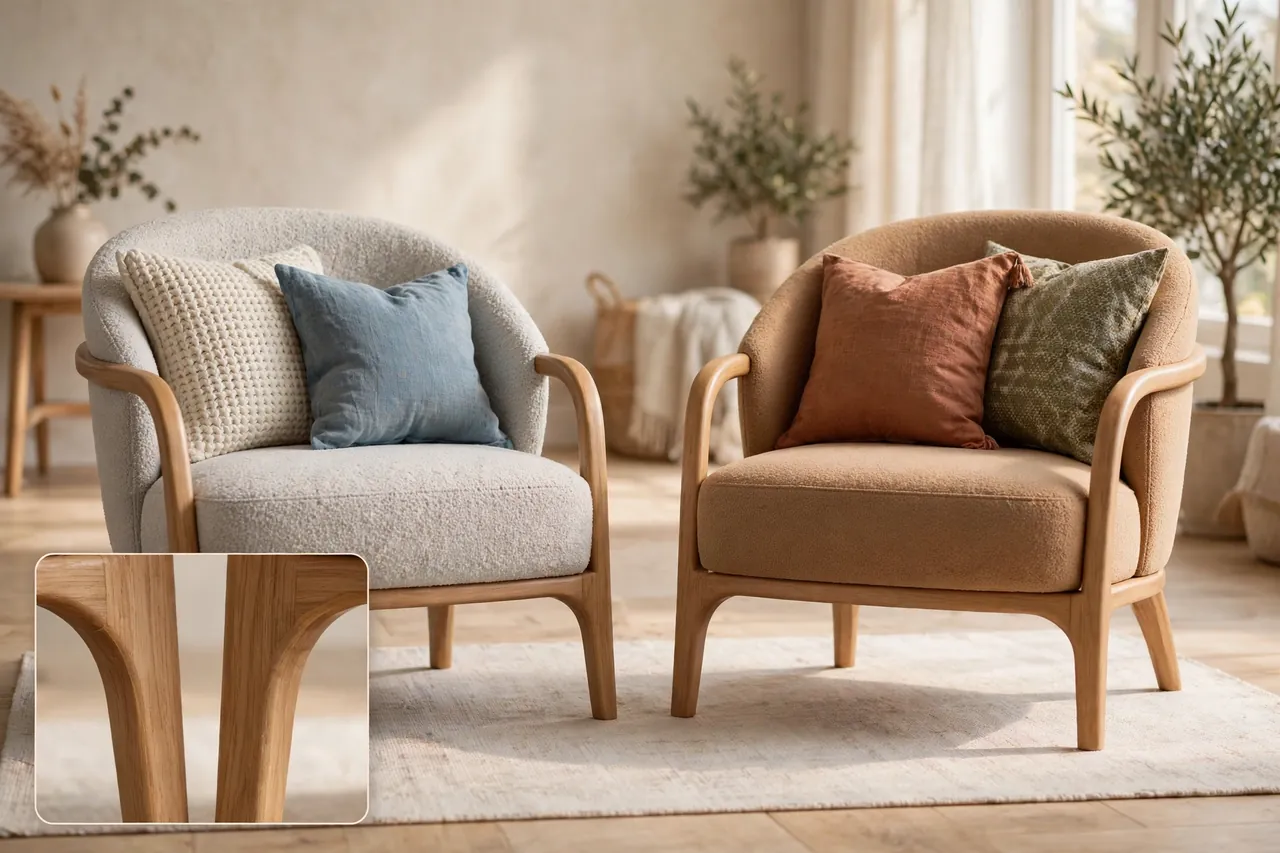
Photos help, but they can mislead. Look past the styling — the throw pillows, the rug, the wall color — and compare the shape of the frame, the legs, the stitching, and the joints. The same piece photographed in two different rooms still has the same leg angle and the same arm curve. If one store uses computer-generated images while the other uses real photos, compare the silhouette, not the lighting. Reverse image search can also surface the same piece under other names, and comparison tools such as Spoken.io were built for exactly this job: Spoken started in 2022 by mapping identical pieces across stores, and it now serves over 100,000 monthly users, RetailBrew reports.
Run this five-point check before you pay.
- Dimensions match exactly, including decimals and all three measurements.
- Country of origin is the same on both listings.
- Materials, finish, and fabric names match, not just the color.
- Photos show the same frame shape, legs, and joints under different styling.
- Weight and assembly notes match — the same piece ships in the same box.
One warning: a match on looks alone is not enough. Manufacturers also copy popular designs with cheaper materials, and that is a knock-off, not a white label twin. The difference shows up in the details — particleboard where the original used solid wood, or a thinner foam seat. If the price gap looks too good and the materials do not match, you are looking at a copy, not a twin. That mix-up is the most common mistake shoppers make, and it is the subject of the next section.
What Most People Get Wrong About White Label Furniture
Most people get white label furniture wrong in two ways: they assume it is a scam, and they assume that a lookalike at a lower price is the same piece. The first belief costs them confidence, and the second costs them money, because neither one is true.
White labeling is not a scam. It is a legal and common business model used across furniture, clothing, food, and electronics, and wholesalers have sold this way for decades. The factory makes the piece, the retailer sells it, and the buyer gets a real product with a real warranty from the store they bought it from. Nothing about that is hidden or illegal — the only thing hidden is how many stores sell the same piece. Calling it a scam misses the point: the model is normal, and the smart move is to use it, not to fear it.
The second mistake runs the other way. Shoppers see two chairs that look the same, buy the cheaper one, and then wonder why it wobbles after six months. A lookalike can share a shape while using thinner wood, weaker joints, or lower-density foam. The DataWeave study found that 98.8% of white-labeled products were priced differently between two sites — but a price gap alone never proves two pieces are identical. Only matching dimensions, origin, materials, and photos prove it.
There is also a quiet third mistake: paying for the brand and believing the brand made the piece better. A higher price from a famous store does not change the frame, the foam, or the factory. It buys nicer photos, a prettier showroom, and a brand name on the box. If those things matter to you, pay for them happily — but pay knowing what you bought. The next section weighs the real trade-offs, so you can decide when the cheaper twin is the right call and when it is not.
Is White Label Furniture Worth It? Pros and Cons
White label furniture is worth it when you match the piece to the job: it saves real money on functional pieces such as side tables, lamps, and storage, but it is a weaker buy when you need a one-of-a-kind design, a guaranteed long life, or a retailer who controls the whole build.
For shoppers, the biggest win is price. The same piece can cost far less at one store than another, so ten minutes of comparing listings can save hundreds of dollars — and on big pieces such as sofas and beds, the saving can reach four figures. Choice is the second win: because many stores carry the same factory catalog, you can find the style you want in more finishes, fabrics, and sizes than any single brand offers. And availability is the third: white label pieces are usually in stock and ready to ship, since the factory already makes them in volume.
| Pros | Cons |
|---|---|
| Same piece often costs much less at another store | Quality varies by factory, not by brand name |
| Wide choice of styles, finishes, and sizes | Hard to tell a twin from a cheaper knock-off |
| Usually in stock and quick to ship | Many stores sell the same look, so nothing feels unique |
| Easy to replace — the piece is widely sold | Returns and service depend on the retailer, not the maker |
| Good value on functional, everyday pieces | Resale value is low, since the design is common |
The cons are real. Quality is set by the factory, not the brand, so a famous name on the tag guarantees nothing about the frame or the foam. The design is not exclusive, so your neighbor may own the same sideboard. And if something breaks, you deal with the retailer, not the factory that built it — so the store’s return policy matters more than the brand’s reputation. Ek Design’s pros and cons guide lists the same trade-offs from the seller’s side: faster market entry and lower costs against limited differentiation and quality-control risk.
Here is the problem with a simple pros-and-cons list: it treats every piece the same, and the right answer depends on the piece. A white label lamp is a near-free win, because a lamp either lights up or it does not. A white label sofa is a judgment call, because you will sit on it every day for years. The next section shows where to buy each kind, and where to find the cheaper twin.
Where to Buy White Label Furniture
You can buy white label furniture almost anywhere furniture is sold, because most large retailers carry it: Wayfair, Pottery Barn, Crate and Barrel, West Elm, Home Depot, Walmart, and Overstock all sell white-labeled pieces alongside their exclusive lines, as Nestorations lists in its white labeling guide.
That breadth is your advantage. Start with the piece you like at the store you trust, then search for its twin before you buy. Copy the exact dimensions into a search, check comparison sites such as Spoken.io, and look at the same piece under the manufacturer’s own name — Spoken’s founders found their first twin this way, when a missing part on an Urban Outfitters coffee table led them to the maker, Sauder, and the same table at Home Depot for about half the price, RetailBrew reports. Marketplace sellers and discount stores often carry the same factory piece under the factory’s name or a house brand, and that listing is usually the cheapest one.
Trade shows are where the model is easiest to see. At furniture markets in High Point, Las Vegas, Dallas, Atlanta, and New York, different wholesalers display the exact same pieces under different labels, Nestorations notes. You do not need a trade badge to use that knowledge: the same catalogs feed the online stores, so the twins you would see at a show are the twins you can find with a dimensions search at home.
Three buying rules keep you safe. First, buy the twin from a retailer with a clear return policy, because a cheap price means little if you cannot send a damaged piece back. Second, compare the final delivered total — price plus shipping, tax, and any assembly fee — not the sticker price, since delivery can erase the saving. Third, keep the cheaper twin honest: if its materials, origin, or dimensions differ from the original, it is not a twin. Where you buy matters less than how you check, and the next section gives you the check that matters most.
How to Judge Quality Before You Buy
Judge white label furniture quality before you buy by checking five things: the frame material, the joint construction, the foam or fill density, the finish, and the warranty. A piece that passes all five will outlast a prettier piece that fails two of them, whatever the brand name says.
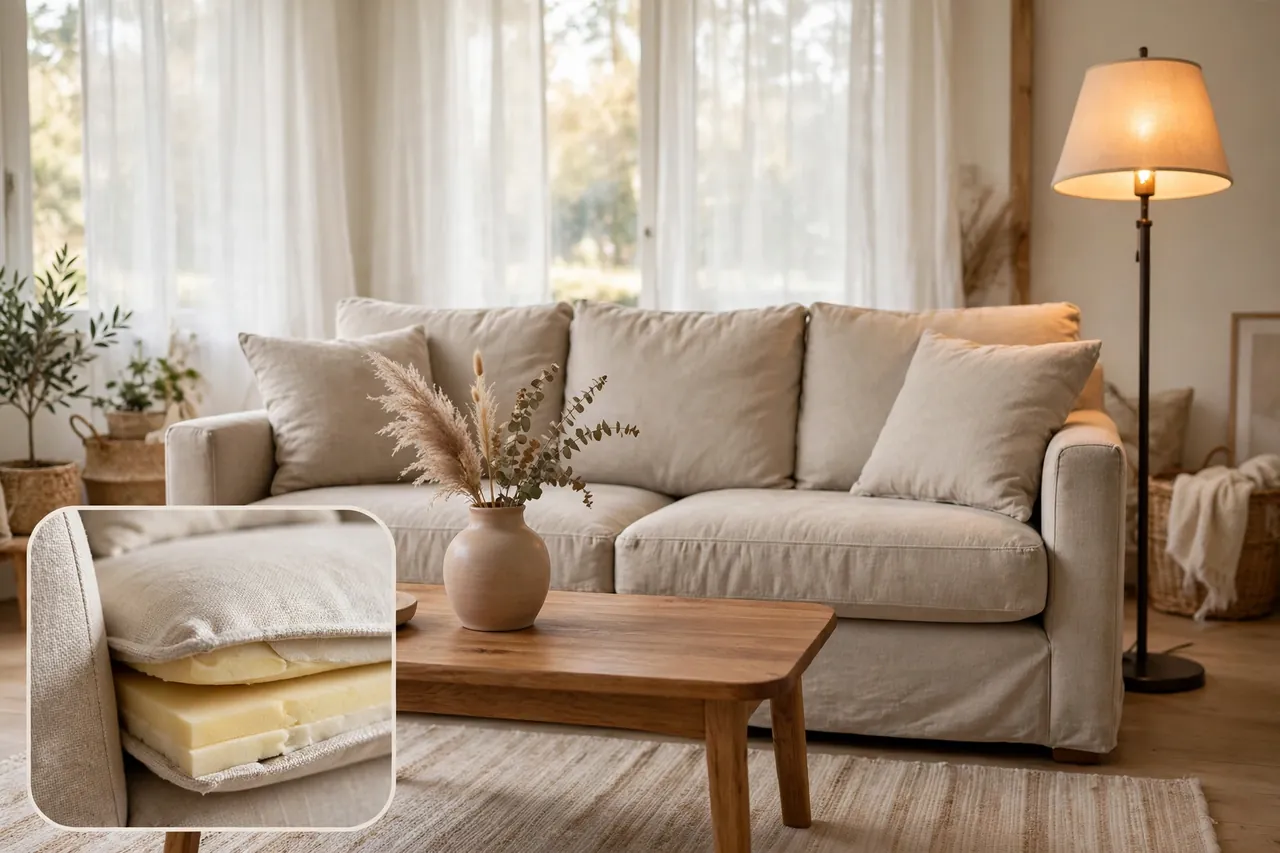
Start with the frame. Solid wood and plywood frames hold up far longer than particleboard, and the listing should name the material plainly. If it says only “wood” or “engineered wood” with no detail, treat that as a warning, not a description. Next, look at the joints: corner blocks, dowels, and screws beat staples and glue alone, and a listing or a review that mentions the joinery is worth more than one that only praises the look. For sofas and chairs, ask about the foam: high-density foam holds its shape for years, while low-density foam sags within months. The listing rarely prints a density number, so read owner reviews from six months after purchase, not from the first week.
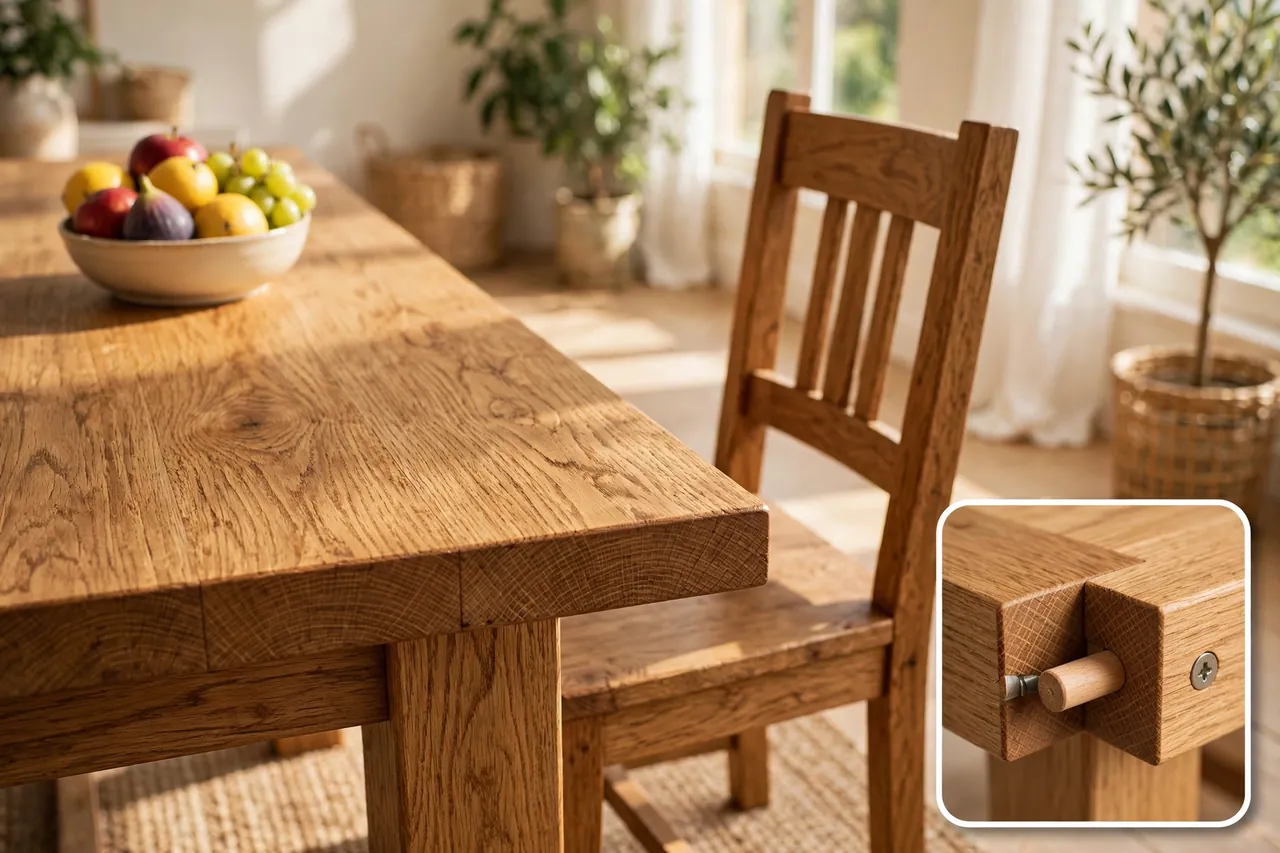
Finish is the easiest check. Run your eyes over the listing photos for even color, clean edges, and hardware that sits flush. A sloppy finish in the photos means a sloppy finish on the piece. Then read the warranty and the return policy together: a one-year warranty with a 30-day return window is normal for a budget piece, while a 90-day return window and a multi-year frame warranty signal a retailer that stands behind what it sells.
Finally, weigh the piece against its job. A side table that holds a lamp needs far less strength than a bed frame that holds two people every night, so spend your quality checks where the load is. And when the piece you buy needs a place to live, our best storage ideas for small rooms show how to fit new furniture into tight spaces without crowding the room. That fixes the buying question — but the piece still has to live in your home, and the next section rounds up the guides that help it do that.
Related Guides
New furniture changes how a room works, so plan the space around it. Our best storage ideas for small rooms help you fit a new piece without crowding the room, and our bedroom shelving ideas add storage without buying another big piece. If the new piece is going near the bathroom, our bathroom sink storage guide sorts the small stuff that usually ends up piled on top of it, and our above fridge cabinet guide puts the awkward high space above the kitchen to work. For a bigger refresh, our fireplace renovation ideas show how one statement piece can carry a whole living room.
Frequently Asked Questions
What is white label furniture?
White label furniture is furniture made by one manufacturer and sold under many retailers’ brand names. The factory builds the piece, and each store gives it its own name, photos, and price. The design is not exclusive, so the same chair, bed, or table can appear in several stores at different prices.
How to tell if something is white labeled?
Compare the exact dimensions, country of origin, materials, and finish across listings, and compare the photos for the same frame shape, legs, and joints. When all four match, it is very likely the same piece. A match on looks alone is not enough, since cheaper copies share the shape with different materials.
Is white labeling legal?
Yes, white labeling is legal and common across furniture, clothing, food, and electronics. Wholesalers sell to retailers, and retailers sell to customers under their own brand. It is a normal business model, not a scam, and the buyer still gets a real product with the retailer’s warranty.
What companies white label?
Most large furniture retailers sell white-labeled pieces, including Wayfair, Pottery Barn, Crate and Barrel, West Elm, Home Depot, Walmart, Overstock, Houzz, and Restoration Hardware. Many of them also sell exclusive private-label lines, so one store can carry both kinds at once.
Where are most white labeled items made?
Many white-labeled pieces are made overseas, mostly in China and Indonesia, where labor costs are lower, but some are also made in the United States. The listing’s country of origin tells you where a specific piece was made, and it is one of the best clues for matching the same piece across stores.
Your next step is simple: pick the piece you like, copy its exact dimensions into a search, and see who else sells it. If a twin turns up for less with the same materials and origin, buy the twin from the store with the better return policy — and keep the difference for the next room.


