
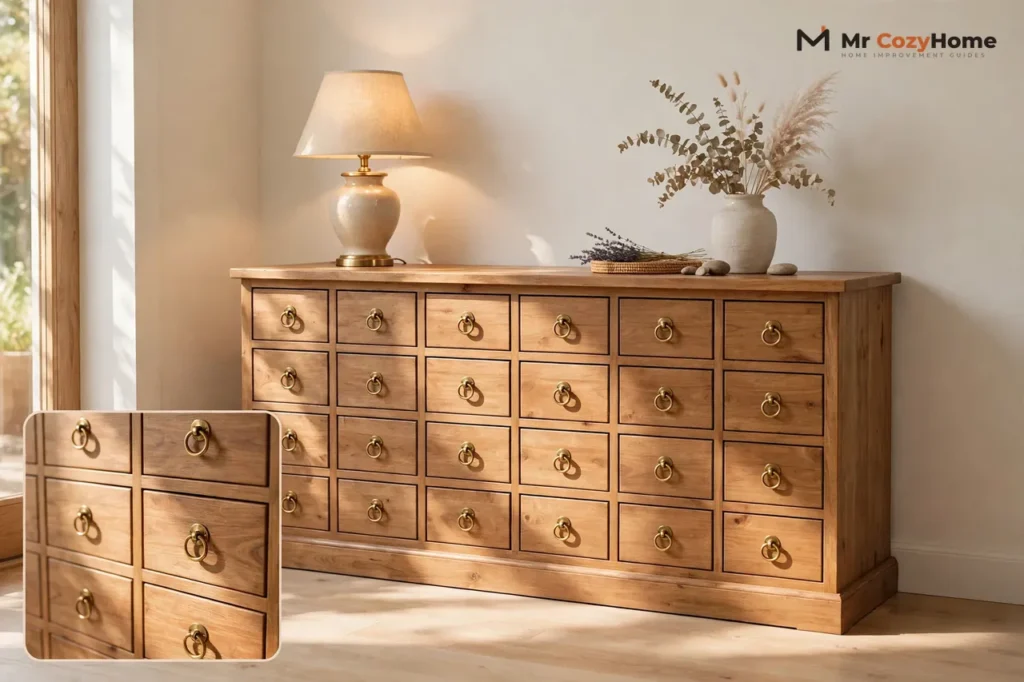
An apothecary table is a console or coffee table covered in rows of small drawers, copied from the cabinets that pharmacists used to store herbs and medicines. The drawers are the whole point: each one holds a small group of items, so keys, remotes, craft supplies, and jewelry each get their own labeled home instead of one junk drawer. One verified example, the Millwood Pines 15-drawer console on Wayfair, measures 32 inches wide, 10 inches deep, and 30 inches high and cost $799.99 when checked on Nov 10, 2026.
If you have ever bought a pretty table and then watched clutter pile up on top of it, this piece solves that exact problem. The catch is that not every table sold under this name works the same way. One item on the buying checklist below saves buyers from the most common regret, and it has nothing to do with how the table looks.
💡 Practical Home Tip: Before you shop, empty one junk drawer onto a tray and sort it into piles. The number of piles tells you how many drawers you actually need. Most buyers overestimate by half, and that count keeps you from paying for drawers you will never open.
What Is an Apothecary Table?
An apothecary table is a table whose front is a grid of small drawers, built in the style of the cabinets that apothecaries — the pharmacists of earlier centuries — used to organize dried herbs, roots, powders, and small tools. Today the name describes the look and the storage idea, not a medical use. Most modern pieces are coffee tables or console tables with apothecary-style drawer fronts, and the name alone does not prove a piece ever sat in a pharmacy, as the RoomAI furniture glossary explains.
Three features mark a real apothecary table. First, many small drawers instead of two or three big ones. Second, a flat top that works as a normal table surface for lamps, books, or drinks. Third, a grid layout that looks regular and calm, even when every drawer holds something different. Some pieces have 9 drawers, others have 30 or more, and larger antique examples can pass 50, according to 1stDibs and Smithers of Stamford.
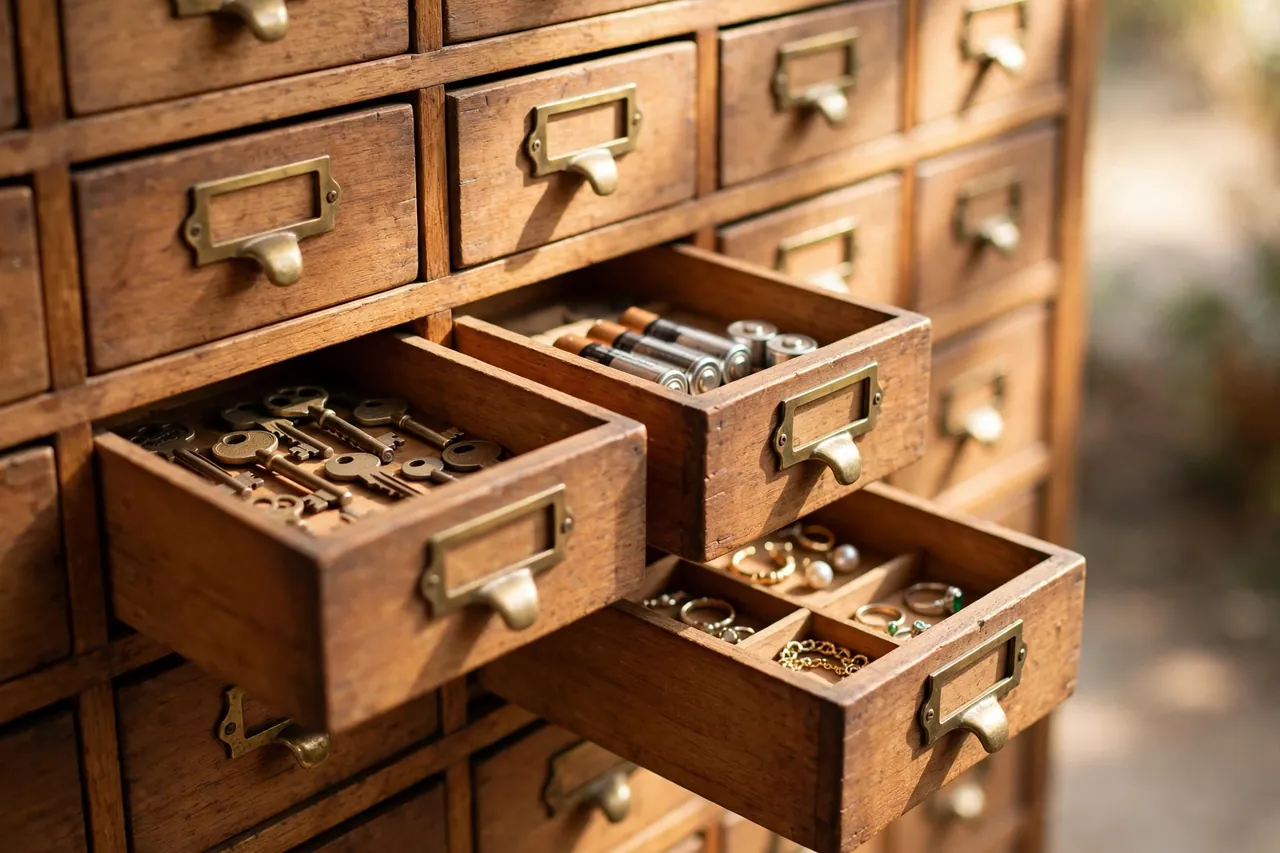
The drawers are usually shallow. That is a feature, not a flaw. A shallow drawer keeps small things visible in one layer, so you never dig through a deep pile to find a battery or a pair of scissors. If you need to store blankets or board games, this is the wrong piece, and the buying checklist below will steer you to a better one.
Where the Apothecary Table Comes From
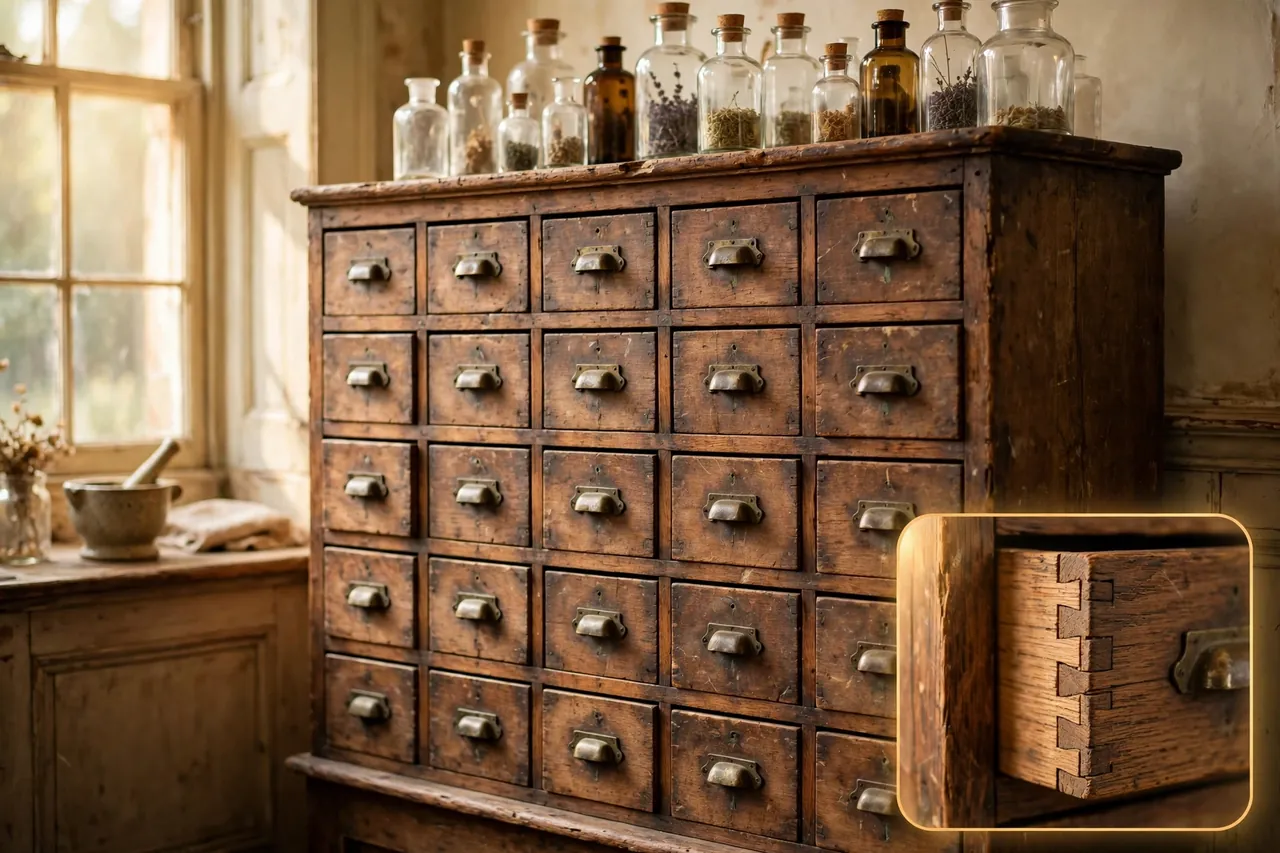
The apothecary table comes from the medicine cabinets of pharmacies and general stores, where apothecaries stored herbs, tinctures, and remedies in dozens of small labeled drawers so they could find each ingredient fast. 1stDibs traces these cabinets to the pharmacies and general stores of the 15th and 16th centuries, while other sources place their everyday use in the 1800s, when pharmacists and physicians relied on them daily. The honest answer is that the form grew over centuries, not in one year.
Each drawer once held one ingredient, and the label on the front told the apothecary what sat inside without opening it. That system is exactly why the design still works in a home. A drawer labeled for batteries, one for chargers, and one for dog treats beats a single deep drawer where everything mixes together.
The look crossed into home decor for a second reason: television. The Friends episode “The One with the Apothecary Table” aired on Jan 6, 2000, and Pottery Barn sold a reproduction of the table from the show. Millions of viewers met the piece that night, and the multi-drawer look has stayed popular ever since. That fame also created a trap, which the “what most people get wrong” section below covers.
Apothecary Table vs Apothecary Cabinet vs Card Catalog
Shoppers mix up three pieces that look alike at first glance, and buying the wrong one is the fastest way to waste money. An apothecary table is a table-height piece with a usable top surface. An apothecary cabinet is taller and deeper, built mainly for storage rather than as a table. A card catalog looks almost identical but comes from libraries, not pharmacies, and its drawers are long and narrow because they held index cards on rods.
The table below settles the difference in one look. Guess which of the three costs the most on the secondhand market before you read the last column — the answer surprises most buyers.
| Feature | Apothecary table | Apothecary cabinet | Card catalog |
|---|---|---|---|
| Main job | Table surface plus storage | Storage first | Card filing, now storage |
| Height | Table height, about 30 inches | Taller, often 36 to 54 inches | Varies, often desk height |
| Drawers | Small, shallow, in a grid | Many small drawers, some larger | Long, narrow, rod-fitted |
| Best room | Entryway, living room, bedroom | Hallway, office, dining room | Office, craft room |
| Price range seen Nov 10, 2026 | $270 to $800 new on Wayfair | $150 to $66,211 antique on 1stDibs | $107 to $790 new on Wayfair |
Here is the surprise: the antique cabinet, not the table, carries the highest prices. 1stDibs lists 1800s apothecary cabinets from $150 up to $66,211, with an average near $4,450, checked Nov 10, 2026. A new table costs far less, and that gap is why sellers sometimes call a new table an “antique cabinet” — check the label before you pay antique money.
5 Apothecary Table Styles Worth Knowing
Five styles cover almost every apothecary table you will find for sale, and each one fits a different room and budget. Knowing the style before you shop stops you from falling for a pretty photo of a piece that does not fit your home.
1. The classic console table
A long, narrow table that sits against a wall, usually 30 inches high and 10 to 14 inches deep. It fits hallways and entryways where a deep piece would block the walkway. The Millwood Pines 15-drawer console at 32 inches wide, 10 inches deep, and 30 inches high is a typical example, and it cost $799.99 on Wayfair when checked Nov 10, 2026.
2. The apothecary coffee table
A low table for the living room, about 18 to 19 inches high, with drawers on one or both long sides. It holds remotes, coasters, and games out of sight while the top stays clear for drinks and books. Measure your sofa seat height first: the table top should sit within an inch or two of it.
3. The farmhouse chest
A wider, heavier piece in distressed or reclaimed wood, often with mixed drawer sizes and iron pulls. It suits rustic and farmhouse rooms and doubles as a sideboard in a dining room. Reclaimed wood varies from piece to piece, so ask the seller for photos of the exact table, not the catalog shot.
4. The modern flat-front table
Clean lines, smooth drawer fronts, and metal or hidden pulls. It keeps the grid look without the vintage feel, so it works in modern and minimal rooms. This style hides clutter best because the flat fronts read as one calm surface from across the room.
5. The true antique cabinet
An original pharmacy or shop cabinet, usually oak, pine, or maple, with hand-cut dovetail joints and old label holders. It costs the most and needs the most care, but no reproduction matches its patina. Buy antiques only from sellers who show the drawer joints and the back of the piece in photos.
Where to Put an Apothecary Table in Your Home
An apothecary table works in any room where small things pile up, and each room uses the drawers differently. The trick is to match the drawer size to the room’s clutter, not to the room’s decor. A table that looks perfect in the wrong room still fails.
Entryway: the landing zone
The entryway is the most popular spot, and for good reason. Keys, sunglasses, mail, dog leashes, and spare change each get a drawer, and the top holds a lamp and a small bowl. A narrow console, 10 to 14 inches deep, keeps the walkway clear. For more entry-table styling ideas, see our guide to entry table decorating ideas that welcome guests without the clutter.
Living room: the remote and game keeper
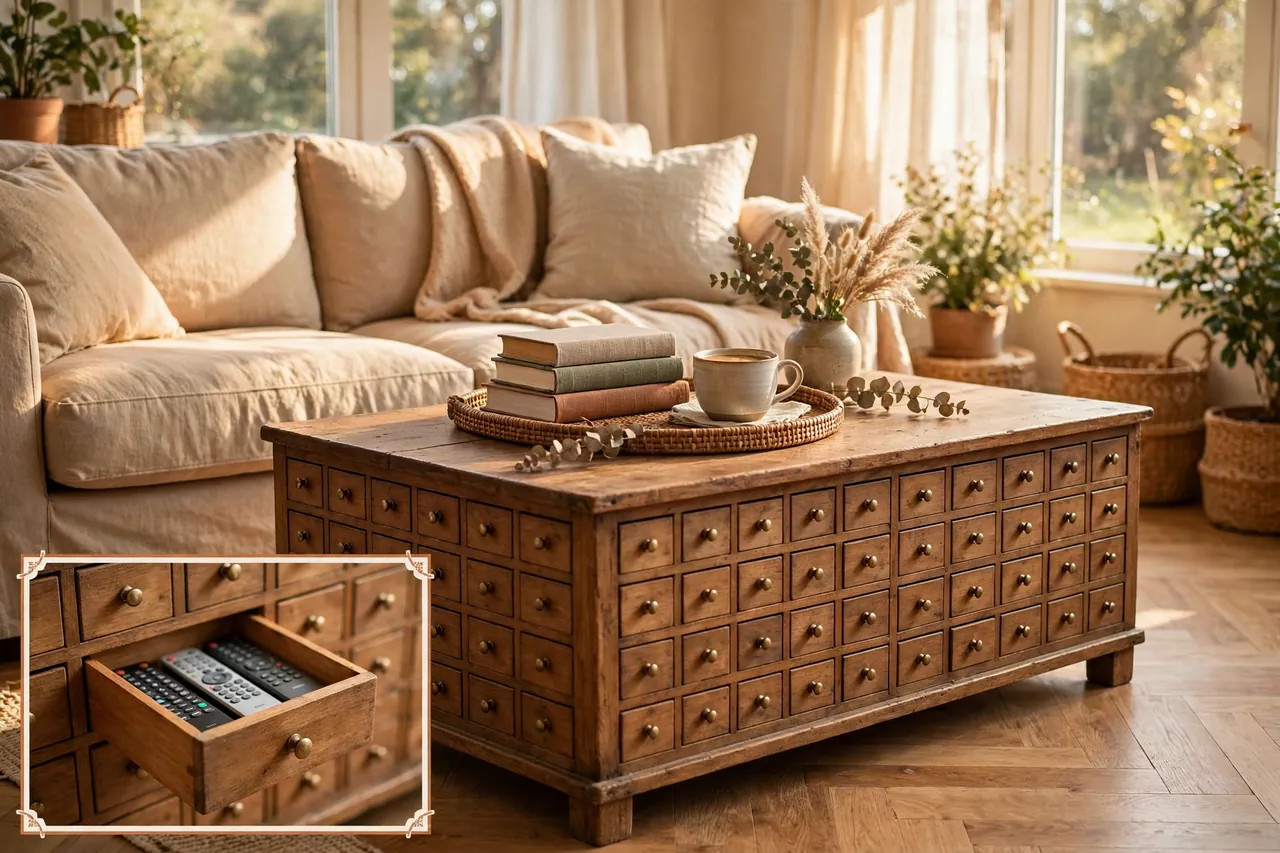
As a coffee table, it swallows remotes, coasters, chargers, and card games. One drawer per person ends the nightly hunt for the remote. Keep the top mostly clear: one stack of books and one tray is enough, and everything else lives in the drawers.
Bedroom: jewelry, socks, and small essentials
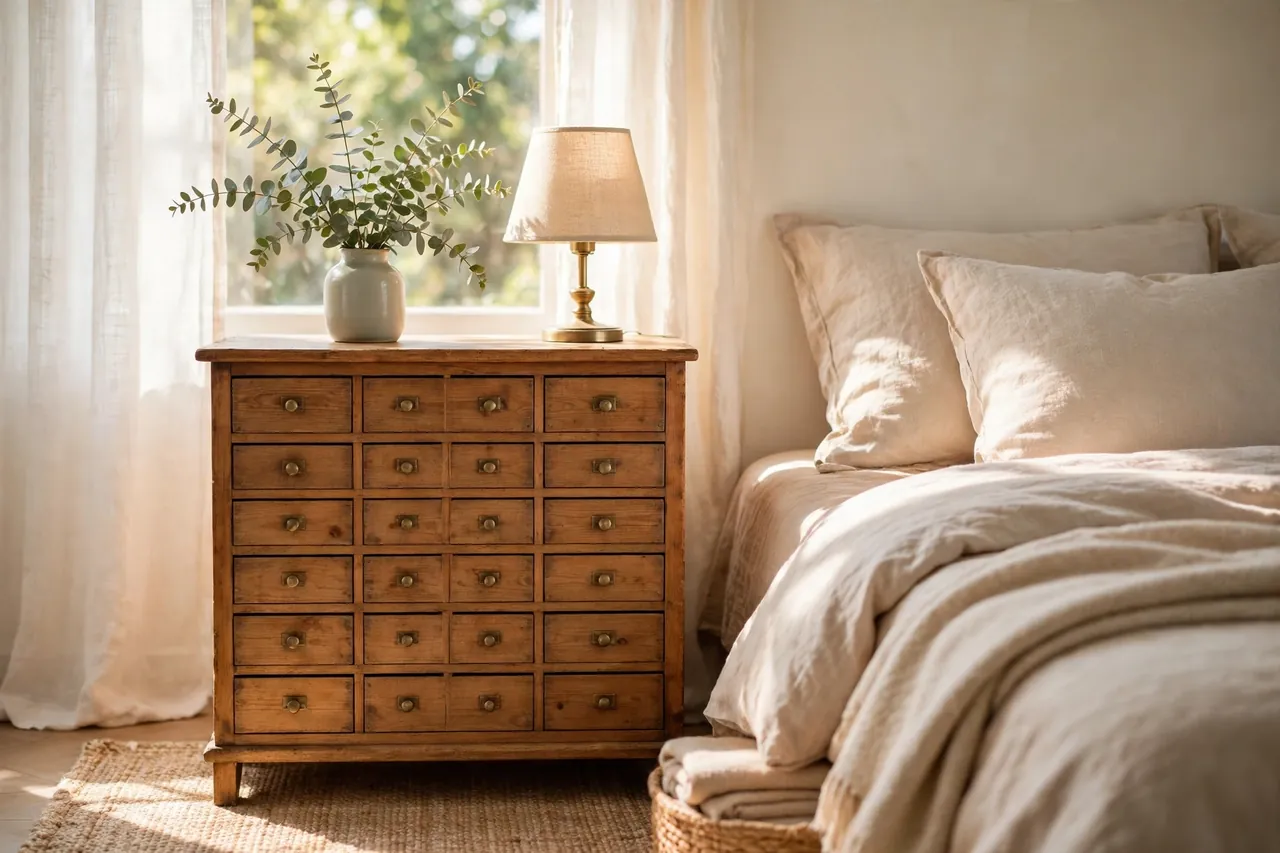
In a bedroom, the small drawers hold jewelry, ties, socks, and bedtime reading. It works as a nightstand alternative when two small cabinets flank the bed, or as a dresser-top organizer. If your bedroom storage still feels short, our guide on how to organize a bedroom so it stays that way pairs well with this piece.
Home office and craft room: the sorting station
Stationery, cables, thread, buttons, and small tools each get a labeled drawer. Crafters love this piece because a drawer per supply beats a box where everything tangles. Check drawer depth before you buy: letter-size paper will not fit most apothecary drawers, so plan for small supplies only.
Small rooms: storage without bulk
A slim apothecary console adds storage to a small room without the visual weight of a bookcase. The grid of drawers reads as a pattern, not a pile. For more ways to squeeze storage into tight spaces, see our best storage ideas for small rooms.
How to Buy an Apothecary Table in 7 Steps
Follow these seven steps in order, and you will buy a table that fits your room, holds your things, and lasts. Skip a step and you will likely pay return shipping on a heavy piece of furniture.
- Measure the spot twice. Measure the width, depth, and height of the space, then mark it on the floor with painter’s tape. Leave at least 24 inches of walkway in front of the drawers so they can open fully.
- Count your piles, not your dreams. Sort the items you plan to store into piles, as the tip at the top of this article suggests. Buy a table with at least as many drawers as piles, plus two spare drawers for growth.
- Open every drawer before you pay. In a store, pull each drawer all the way out. Online, read reviews that mention drawers sticking or falling out. A drawer that binds on day one will only get worse.
- Check what the drawer fronts hide. Some new tables glue several small drawer fronts onto one big drawer. That looks right but stores wrong. Ask the seller whether each front is a separate working drawer.
- Match the wood and build to the price. Solid oak, pine, or maple with dovetail joints lasts decades; thin veneer over particleboard suits a light-use room only. Wayfair listings checked Nov 10, 2026 ranged from about $270 for small cabinets to $3,499.99 for a nine-drawer console, so price alone does not prove quality.
- Test the weight limit. Ask how much weight the top holds before you set a television or a stack of books on it. A console top is not a bench, and overloading it bows the frame.
- Plan the delivery path. Measure your doorways, stairs, and hallway turns. A 32-inch-wide console sounds small until it meets a 28-inch doorway, and most sellers charge for a second delivery attempt.
That fourth step is the one that saves buyers the most regret. A table with fake drawer fronts is a display shelf wearing a costume, and no amount of styling fixes it. That fixes the symptom of clutter, but the part that actually fails most often is the drawer hardware, which the next section covers.
What Most People Get Wrong About Apothecary Tables
Most people get one thing wrong about apothecary tables: they assume every drawer-front piece is an antique from a real pharmacy. Most tables sold today are new reproductions, and that is fine — but it changes what you should pay. An honest reproduction in solid wood is a good buy at a few hundred dollars. The same piece sold as a 200-year-old original at antique prices is a bad buy.
Here is how to tell the difference. A true antique shows hand-cut dovetail joints, uneven drawer sizes, worn label holders, and a back made of old, rough boards. A reproduction shows machine-cut joints, perfectly even drawers, and a clean plywood back. Neither is better in every home, but only one deserves antique money. The Science Museum Group holds a genuine 17th- or 18th-century pill-preparation table with a stone slab set into its wooden top, and that kind of documented history is what real antique prices pay for.
The second mistake is buying for looks and ignoring drawer size. Tiny drawers look charming in photos and frustrate owners daily when nothing useful fits inside. Measure the inside of one drawer, not the outside of the table, before you commit.
How to Style an Apothecary Table Without the Clutter
Styling an apothecary table means leaving most of the top empty, because the drawers already give the piece its visual interest. A crowded top fights the grid below it and turns a calm piece into a busy one. Three objects on top is the sweet spot for most tables.
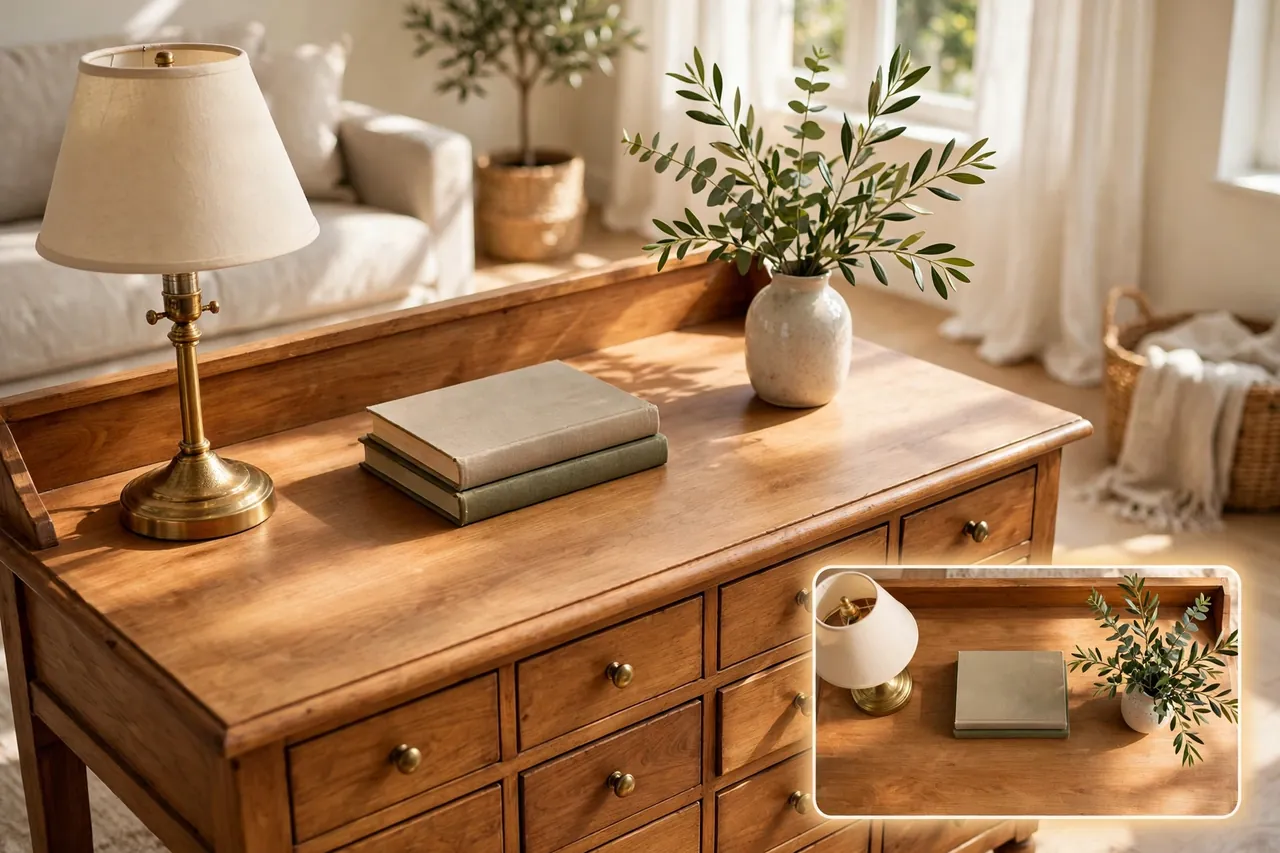
Start with one tall object on one side, such as a lamp or a vase with branches. Add one low, wide object in the middle, such as a stack of two books or a tray. Finish with one small personal object on the other side, such as a framed photo or a small plant. That is the whole formula, and it works on consoles and coffee tables alike.
Candles add warmth to the top, but keep them in a tray and away from drawer fronts so drips never reach the wood. Our guide to candle home decoration covers safe placement room by room. Label the drawers only if the labels help you: small brass label holders look right on vintage pieces, while plain fronts suit modern ones. A label that says “batteries” saves a search; a label that says “miscellaneous” just decorates a junk drawer.
Seasonal styling is easy because the drawers never change. Swap only the top: a small wreath in winter, fresh branches in spring, a bowl of fruit in summer. The table stays the same, and the room feels new.
How to Care for Your Apothecary Table
An apothecary table needs little care, but the drawers need regular attention because they are the working parts. Dust the drawer fronts weekly with a dry cloth, and wax the drawer runners once a year with a plain candle stub rubbed along the wood. That old trick keeps wooden drawers sliding smoothly without chemicals.
Keep the table out of direct sun and away from radiators, since dry heat shrinks wood and makes drawers stick. Wipe spills at once, especially on reclaimed wood, where water finds every crack. If a drawer sticks in humid weather, wait for a dry week before sanding anything: most stuck drawers free themselves when the wood dries.
For a matching storage upgrade in the bedroom, our bedroom shelving ideas show how to add open storage above a drawer piece without crowding the room. And when the drawers finally force a real sort-out, the same habit helps everywhere: our guide on how to declutter a garage without making a bigger mess uses the same pile-by-pile method on a larger scale.
Related Guides
Keep going with these guides from MrCozyHome: holiday table centerpiece ideas for Christmas for styling the top of your table through the holidays, and Christmas table decoration for a warm, welcoming table without the stress.
Frequently Asked Questions
What is an apothecary table used for?
Today, an apothecary table usually works as a coffee or console table with drawer storage. Its top holds drinks, books, lamps, or decor, while its small drawers organize remotes, chargers, stationery, jewelry, and other small items. It suits entryways, living rooms, bedrooms, and offices.
What is the meaning of apothecary?
An apothecary was a person who prepared and sold medicines, much like a modern pharmacist. The word also described the shop itself. Apothecaries mixed herbs, powders, and tinctures into remedies, and they stored each ingredient in its own labeled drawer.
What was an apothecary cabinet used for?
Apothecary cabinets were used by pharmacists and physicians, mainly in the 1800s, to store medications, elixirs, and herbs. Each small drawer held one ingredient or tool, and labels on the fronts let the apothecary find it fast without opening every drawer.
What goes in an apothecary cabinet?
Originally, apothecary cabinets held medicines, herbs, and small medical supplies. Today, the small drawers hold pill bottles, bandages, makeup, jewelry, craft supplies, stationery, batteries, and other small household items that need sorting instead of piling up. In a bathroom, the same drawers keep pill bottles, bandages, and makeup sorted and easy to reach.
What is the difference between an apothecary chest and a card catalog?
An apothecary chest organized medicinal materials in small drawers, while a library card catalog held index cards describing books. Card-catalog drawers are typically long and narrow, often with rods that held punched cards. Both store small items well today, but they come from different jobs.
Start with the tape on your floor and the piles on your tray. If the drawers fit your real clutter and the table fits your real wall, you have found your piece — and the next time someone asks where the batteries are, you will know the exact drawer.


