
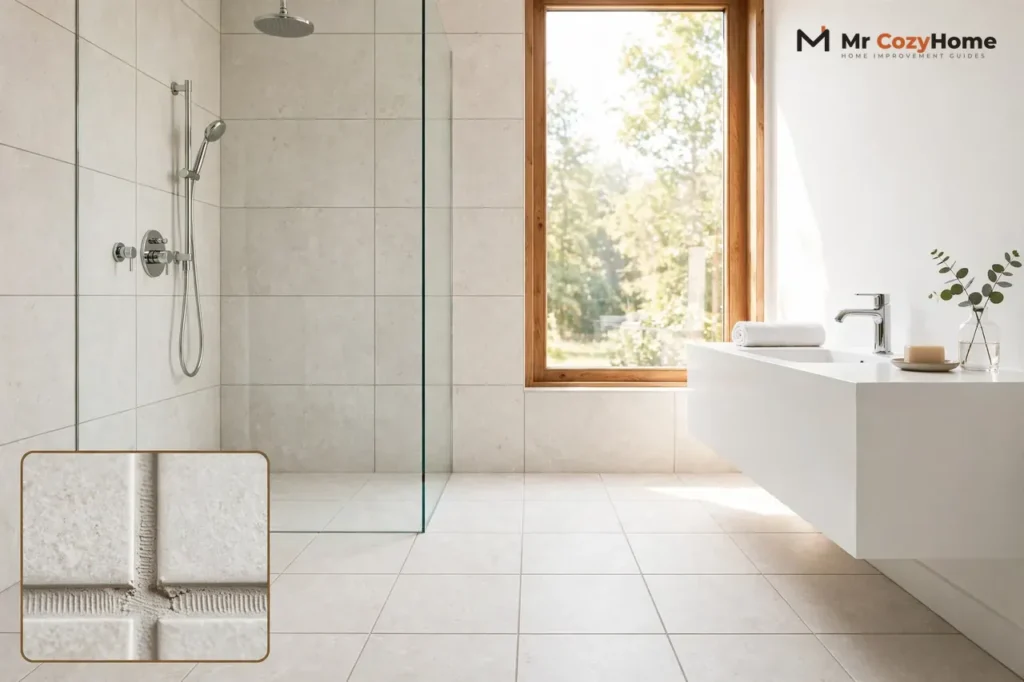
A tiler is a skilled tradesperson who installs tile on floors and walls in kitchens, bathrooms, and other rooms — and in the US, that labor runs $3 to $15 per square foot, or $60 to $120 per hour, according to Angi’s 2026 cost guide. A good tiler does far more than stick tiles to a wall: they prepare the surface, waterproof wet areas, cut tiles to fit around pipes and corners, and finish the joints so the work lasts for decades.
One line on a quote can quietly add $450 to $750 to your bill, and it is the line most homeowners skip past. Keep reading and you will know exactly which line it is, what a fair price looks like for your room, and how to spot a good tiler before you hand over a deposit.
💡 Practical Home Tip: Before the tiler starts, photograph the bare wall after waterproofing goes on. That one photo proves the membrane is there, and it settles any argument later about whether the step was done. Keep it with your quote and your spare tiles.
What Does a Tiler Do?
A tiler prepares surfaces and installs ceramic, porcelain, stone, and glass tile on floors and walls, then grouts and seals the joints so the surface stays watertight and looks straight. Their work covers the whole job, from checking that the floor is flat to cleaning up the finished room.
The job starts before a single tile goes down. A tiler checks the surface for flatness, damage, and moisture, because tile laid on a bent or damp surface will crack or come loose. They remove old tile when needed, fix the surface underneath, and fit a rigid backing such as cement backer board in wet areas. In a shower, they add a waterproofing membrane behind the tile, since grout alone does not stop water.
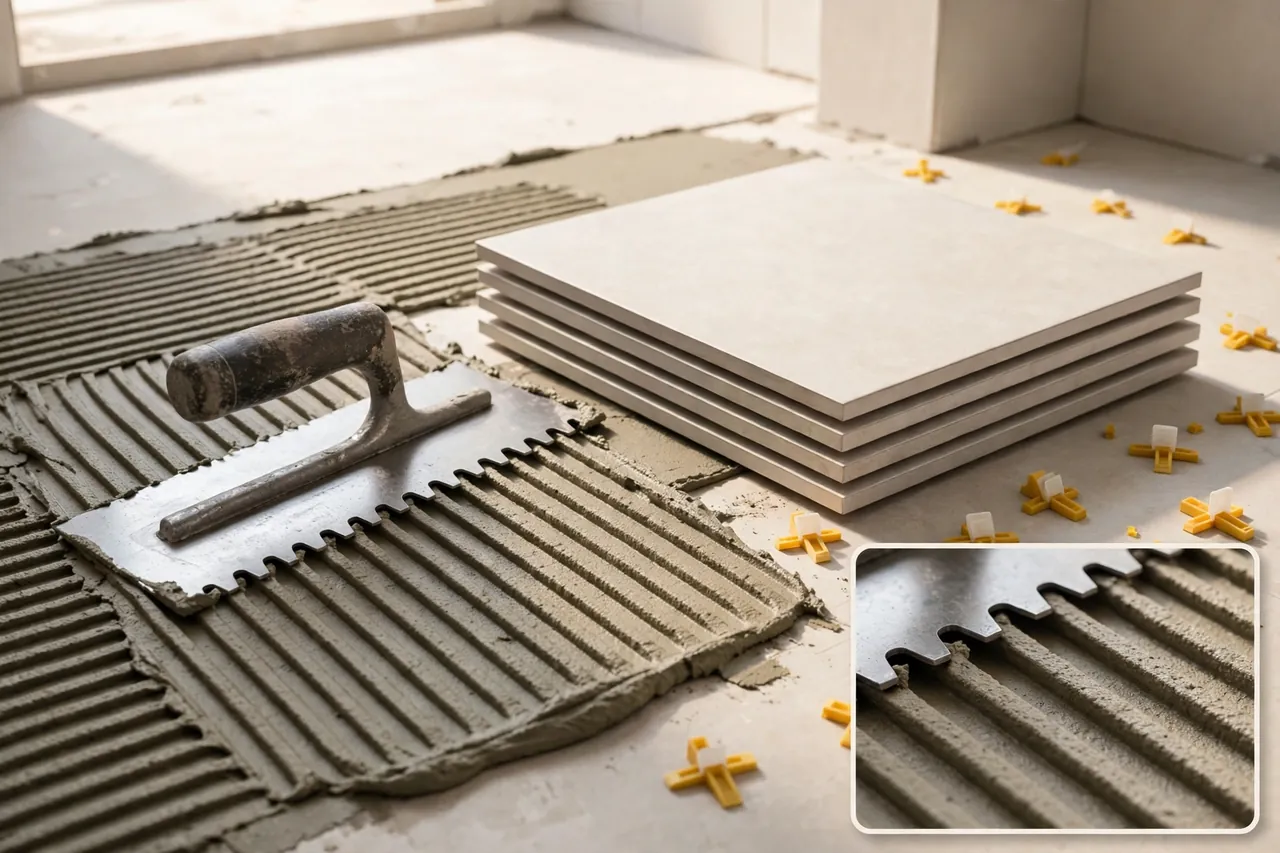
Next comes the layout. The tiler measures the room, plans where full tiles and cut tiles will fall, and marks level lines so grout joints stay straight even when the ceiling or floor is not. Then they spread thin-set mortar with a notched trowel, set each tile with spacers, and cut tiles around pipes, outlets, and corners. Once the mortar cures, they fill the joints with grout, wipe the surface clean, and seal edges where tile meets a tub, sink, or countertop.
Many tilers also handle repairs. They replace cracked tiles, regrout worn joints, and fix loose tiles before the damage spreads to the surface below. Some specialize: shower and wet-room work, large-format tile, natural stone, mosaics, or outdoor tile. If your job needs one of these, ask whether the tiler does it often, not just whether they can do it.
What Jobs Can You Hire a Tiler For?
You can hire a tiler for any job where tile goes on a floor or a wall: bathroom floors and walls, kitchen floors and backsplashes, shower surrounds, entryways, laundry rooms, and fireplace surrounds. Small repair jobs count too, such as replacing six cracked tiles or regrouting a shower.
Bathrooms are the most common call. A tiler can retile a whole bathroom, tile only a shower, or lay a new bathroom floor over a sound surface. Kitchens come next: floors take the most wear, while a backsplash is a small job that changes the whole look of the room. Hallways and entryways suit tile because it handles muddy shoes and wet coats better than wood.

Tilers also work beyond the usual rooms. A tiled fireplace surround is a classic job, and if your fireplace needs other work first, our guide to repairing a fireplace shows what to fix before the tile goes on. Outdoor patios and pool edges need tile rated for freeze and thaw, so tell the tiler the tile will live outside. Commercial jobs such as restaurant floors and shop walls use the same skills at a bigger scale.
Here is the problem with that list: it makes every job sound the same, and it is not. A backsplash takes a day, while a full bathroom takes most of a week. The next section shows what each job should cost, so you can tell a fair quote from a padded one.
How Much Does a Tiler Cost?
A tiler costs $3 to $15 per square foot for labor, or $60 to $120 per hour, according to Angi’s 2026 cost guide, updated September 10, 2026. HomeGuide puts floor-tile labor higher, at $8 to $20 per square foot, and the gap comes from scope: Angi’s low end covers simple straight-set floors, while HomeGuide’s range includes trickier layouts and prep. Plan on the combined range and get local quotes for your exact room.
The national average tile installation costs $2,000, with most homeowners spending $400 to $4,250, Angi reports. That total includes tile and materials. Installed prices run $5 to $45 per square foot, and the tile you pick moves the number more than anything else: plain ceramic sits at the low end, while natural stone and glass climb fast.
| Project | Typical cost | What drives it |
|---|---|---|
| Kitchen floor | $800–$3,000 | Room size, tile type |
| Bathroom floor | $300–$1,300 | Room size, tile size |
| Shower surround | $1,800–$5,000 | Waterproofing, cuts, pattern |
| Backsplash | $480–$1,500 | Tile type, outlets, edges |
| Whole-project average | $2,000 | Most jobs: $400–$4,250 |
Three add-ons catch people out. Removing old tile runs $2 to $7 per square foot. Waterproofing a shower costs $450 to $750 on average — that is the line most homeowners skip past, and skipping it is how a new shower rots the wall behind it. Subfloor repair adds $3 to $10 per square foot, and disposal runs $150 to $200. Ask every tiler to list these lines separately, so you can compare quotes line by line instead of guessing what each one includes.
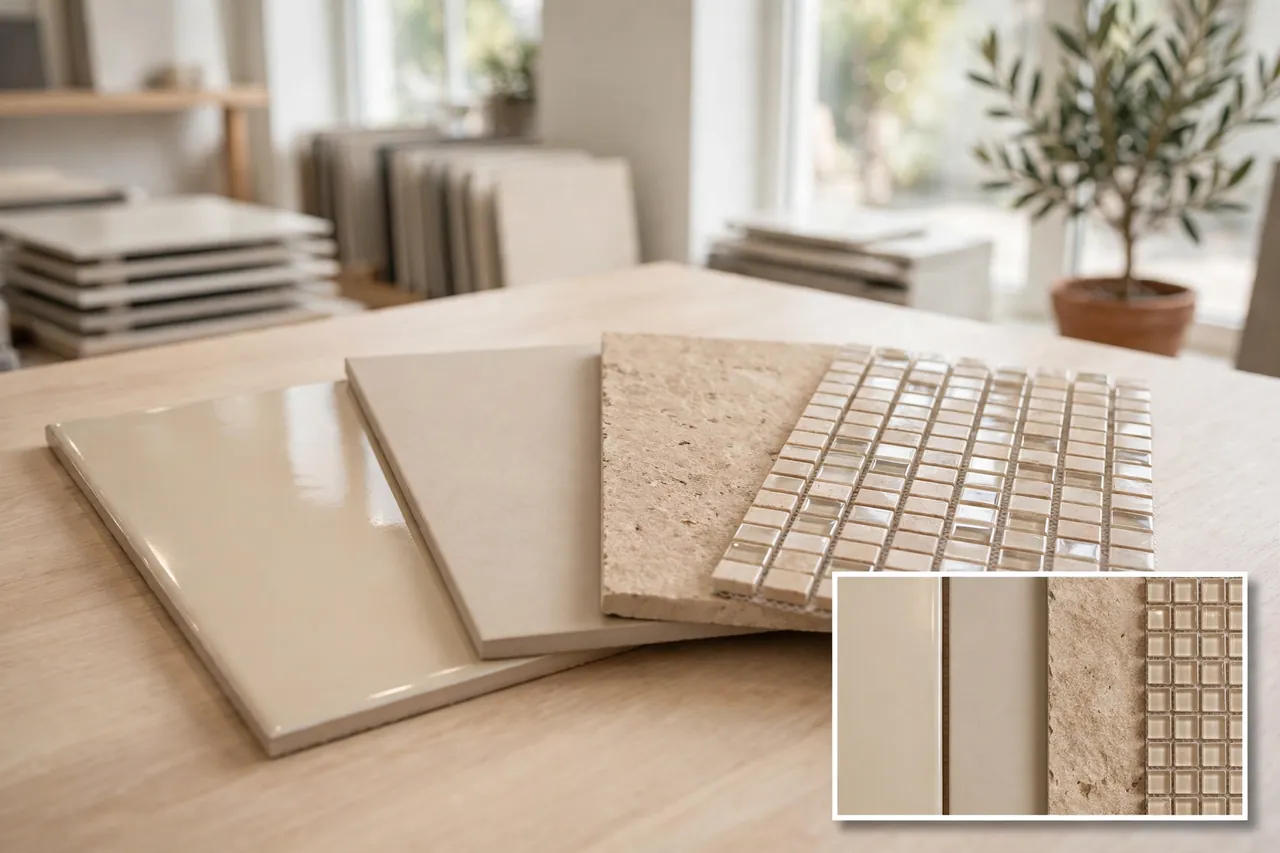
Tile itself is a separate cost. Ceramic runs about $1 to $8 per square foot for the tile alone, porcelain $4 to $14, natural stone $7 to $25, and glass $12 to $35, according to HomeGuide figures reported in October 2026. Order 10% to 15% more tile than the room measures, because cuts and breakage eat into the count, and spare tiles save you later when one cracks.
But the numbers said something else about the cheapest quote. A low labor rate often means prep and waterproofing were left out, not that you found a bargain. The next section shows when paying a pro beats doing it yourself — and when it does not.
Hire a Tiler or Do It Yourself?
Hire a tiler for showers, large floors, natural stone, and any job where a mistake means water damage. Do it yourself only for small, dry, simple jobs, such as a straight backsplash, where a crooked tile costs you an afternoon, not a wall. That one rule saves most homeowners from their most expensive tiling mistake.
Guess which job costs $30 in tools and which costs $3,000 to fix? A backsplash is the $30 job: a few tiles, simple cuts, and no water pressure behind it. A shower is the $3,000 fix: one missed waterproofing step, and water works behind the tile for months before you see the stain. Angi puts the DIY saving at around 30% of the total cost, which is real money — but only when the job is one you can afford to redo.
| Factor | Hire a tiler | Do it yourself |
|---|---|---|
| Best for | Showers, large floors, stone, mosaics | Small backsplash, simple floor |
| Cost | $3–$15 per sq ft labor | Save ~30%; tools $50–$1,000 to buy |
| Time | Pro tiles a bathroom in 6–8 hours of laying | DIY takes 10–16 hours for the same room |
| Risk | Pro carries the waterproofing know-how | Water damage hides for months |
| Finish | Straight lines, level surface, clean cuts | Good with practice; lippage is common |
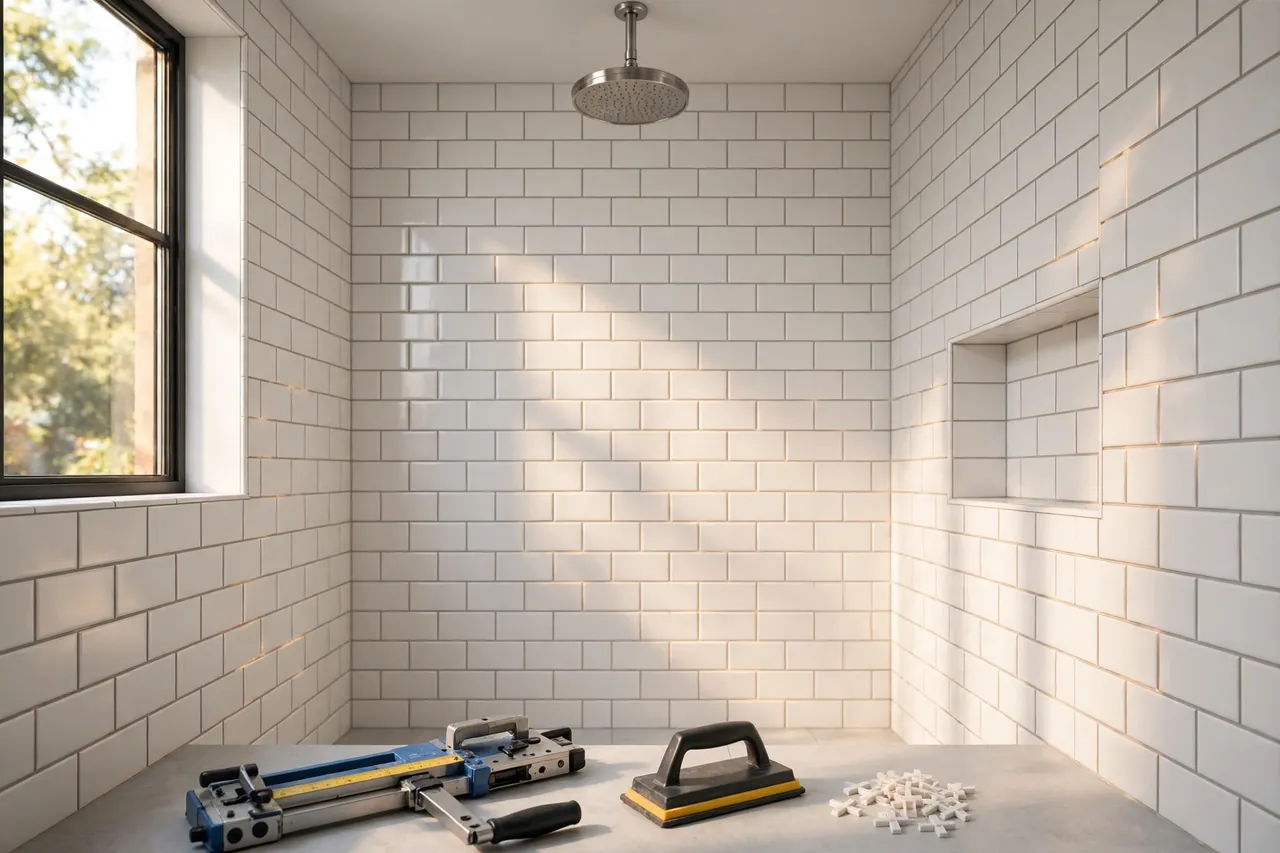
Time matters too. Angi notes that a professional can lay a bathroom’s tile in 6 to 8 hours, while a first-timer often needs 10 to 16 hours for the same room — and that counts only the laying, not prep and curing. A pro also owns the tools: a good tile cutter costs $50 to $1,000 to buy, while renting one runs about $20 to $70 per day, Angi reports. If you DIY, rent the cutter and buy a spare box of tile before you start.
That fixes the symptom, though. The part that actually fails in DIY jobs is not the tile you see — it is the prep you cannot see. The next section names the three mistakes that cause most failures.
What Most People Get Wrong About Tiling
Most people get tiling wrong in three ways: they think grout keeps water out, they think tile sticks to any surface, and they think the cheapest quote saves money. Each belief is common, and each one costs real money when it meets a wet wall.
First, grout is not waterproof. Grout fills joints and looks neat, but water passes through it, which is why showers need a waterproofing membrane behind the tile. A tiler who skips that step hands you a shower that looks finished and fails quietly. Second, tile needs a flat, sound, dry surface. Tile glued to crumbling plaster, a bouncy wood floor, or a damp wall will crack or pop off, and no adhesive fixes a bad base. Third, the cheapest quote often leaves out prep, removal, and waterproofing, so the final bill lands higher than the mid-priced quote that listed everything.
Another common mix-up: a tiler is not a bathroom fitter. A tiler installs and finishes tile. A bathroom fitter runs the whole renovation — baths, basins, plumbing, and tile together. If you only need tile work, hire a tiler. If you are gutting the whole bathroom, you need someone to run all the trades, and the tiler is one of them.
Now you know what can go wrong. The next section turns that knowledge into a hiring checklist you can use on the phone in ten minutes.
How to Hire a Good Tiler
Hire a good tiler by getting three written quotes, checking recent work in person or in photos, and confirming in writing what prep, waterproofing, and cleanup the price includes. A tiler who answers these questions clearly before you pay a deposit is usually the one who works clearly too. Checkatrade’s guide to hiring a tiler walks through the same checks: scope, quotes, and what to confirm before work starts.
Follow these seven steps in order. Each one takes a few minutes, and together they filter out most bad hires before any tile is ordered.
- Ask for three written quotes. Give every tiler the same room size, tile type, and scope, then compare the quotes line by line. A quote that lists prep, removal, waterproofing, tile, grout, and cleanup separately is easier to trust than one lump sum.
- Check recent work. Ask for photos of two or three finished jobs like yours, ideally from the last year. Look for straight grout lines, neat cuts around pipes, and level floors. If you can, ask a past customer whether the job finished on time and on budget.
- Ask how they waterproof wet areas. A good tiler names the membrane or board they use and explains where it goes. A vague answer here is a red flag, because waterproofing is the step you cannot see after the job.
- Ask what happens if a tile cracks or a line goes crooked. A pro has a plain answer: they fix it, and they say so before work starts. Get any fix promise in writing with the quote.
- Confirm the schedule and the cure time. Ask how many days the job takes, when you can walk on the floor, and when you can use the shower. Tile adhesive and grout need curing time, and a tiler who rushes you back in early is cutting corners.
- Check insurance and references. Ask whether the tiler carries liability insurance and whether they have worked in homes like yours. Trade groups such as the National Tile Contractors Association set the standards good tilers follow, and the Ceramic Tile Education Foundation explains those standards in plain terms.
- Pay in stages, never all up front. A small deposit to book the date, a payment when tile is laid, and the final payment after you check the finished work is the normal shape. If a tiler wants the full price before starting, walk away.
Hiring well takes an hour of calls, and it protects a job worth thousands. But the numbers on the quote are only half the story — how the job runs day to day is the other half.
What to Expect While the Tiler Works
Expect noise, dust, and a room you cannot use for a few days, with the tiler working through prep, laying, curing, and grouting in that order. A standard bathroom retile takes 2 to 4 days of work, spread over more calendar days because adhesive and grout need time to cure between steps.
Day one is usually prep: old tile comes off, the surface gets fixed and leveled, and backer board or waterproofing goes on. This is the dusty day, so seal the doorway with plastic sheeting and move anything you care about out of the room. Day two is often the main laying day, when the room starts to look like a finished space. Then comes a cure wait — often overnight — before grouting. The final day covers grout, sealing, and cleanup.
Plan around water. You cannot use a shower for at least 24 hours after grouting, and often 48 to 72 hours before it sees full use, so ask your tiler for the exact wait. Floors need a similar wait before heavy furniture goes back. Keep pets and kids out of the room while adhesive cures, and keep the room ventilated while grout and sealant dry.
Good tilers keep you in the loop. They show you the layout before they set the first tile, flag a problem the moment they find one — a rotten board, a pipe in the wrong place — and leave the site tidy each night. If the layout looks wrong to you, say so before the tile sets, because moving a tile costs minutes then and hours later.
How to Check the Finished Tile Work
Check finished tile work with your eyes, your hands, and a level: grout lines should run straight, tiles should sit flat with no raised edges, and the surface should sound solid when tapped. Walk the room slowly before you make the final payment, because fixes are free before you pay and a negotiation after.
Run through this checklist in daylight, when flaws show best.
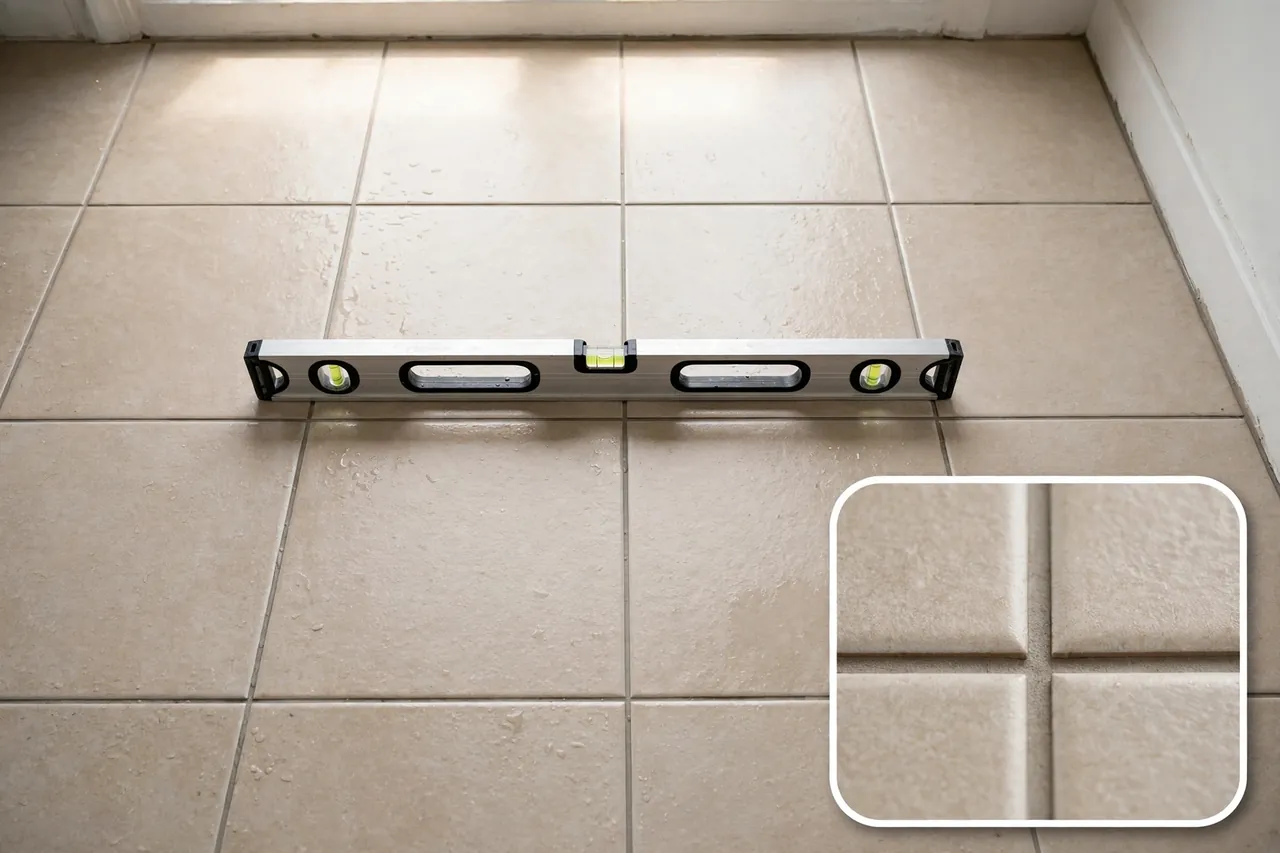
- Sight along each grout line. Lines should stay straight and evenly spaced from one end of the room to the other.
- Run your hand across the joints. One tile edge sticking up above its neighbor is called lippage, and the trade standard allows only 1/32 of an inch for narrow joints and 1/16 of an inch for wider ones, per ANSI A108, as the Ceramic Tile Education Foundation explains.
- Tap tiles lightly. A hollow sound can mean a void under the tile, which may crack later under weight.
- Check cuts around pipes, outlets, and corners. Edges should sit tight with no wide gaps filled with grout.
- Look at edges and corners. Trim pieces should cover raw tile edges, and silicone sealant — not grout — should fill the joint where tile meets a tub or countertop.
- Run water in the shower. Watch for leaks at corners and around the drain, and check that water runs toward the drain instead of pooling.
- Ask for spare tiles. Keep a few spares from the same batch, because dye lots change and a future repair needs a match.
If you find a flaw, point it out before the final payment and ask the tiler to fix it while their tools are still on site. A good tiler expects this check and welcomes it. And if the tiler also worked around a fireplace, the finish matters there too — our fireplace renovation ideas show how tile can finish that surround, while the right caulk for sealing tile edges keeps water and drafts out of the joints.
Related Guides
fireplace renovation ideas · repairing a fireplace · best exterior caulk · deep cleaning house checklist · Laticrete Grout Colors: Pick the Right Shade the First Time (40 Colors, Zero Regrets)
Frequently Asked Questions
What does a tiler do?
A tiler prepares surfaces and installs wall and floor tiles in kitchens, bathrooms, and hallways. They measure and plan the layout, cut tiles to fit around pipes and corners, set them in thin-set mortar, grout the joints, and seal the edges. Many tilers also remove old tile, repair damaged tile, and regrout worn joints.
How much does tile installation or repair cost?
Tile installation costs $5 to $45 per square foot installed, with labor at $3 to $15 per square foot, according to Angi’s 2026 guide. Most projects total $400 to $4,250, averaging $2,000. Small repairs cost less: regrouting and tile repair average $250 to $650. Always get three written local quotes before you commit.
How long does it take to tile a bathroom?
A standard bathroom retile takes 2 to 4 days of work, plus curing time between steps. A professional can lay the tile in 6 to 8 hours, while a first-timer often needs 10 to 16 hours. Showers need 24 to 72 hours after grouting before full use, so plan the whole job at about a week.
How much does it cost to demo and retile a bathroom?
Removing old tile costs about $2 to $7 per square foot, and a full shower retile averages $2,700, ranging from $1,800 to $5,000, according to Angi’s 2026 guide. A bathroom floor retile runs $300 to $1,300. Prep, waterproofing, and disposal add to the total, so ask for them as separate lines on the quote.
Should you hire a professional tiler or do it yourself?
Hire a professional for showers, large floors, natural stone, and any wet area where a mistake means water damage. DIY fits small, dry, simple jobs like a straight backsplash, where you can save around 30% and a crooked tile costs an afternoon. If the job needs waterproofing, hire the pro.
Your next step is simple: measure your room, pick your tile, and call three tilers with the same details. Compare their quotes line by line, check one finished job each, and book the tiler whose answers were the clearest — not the one whose price was the lowest. The tile you walk on every morning is worth that one hour of calls.


