
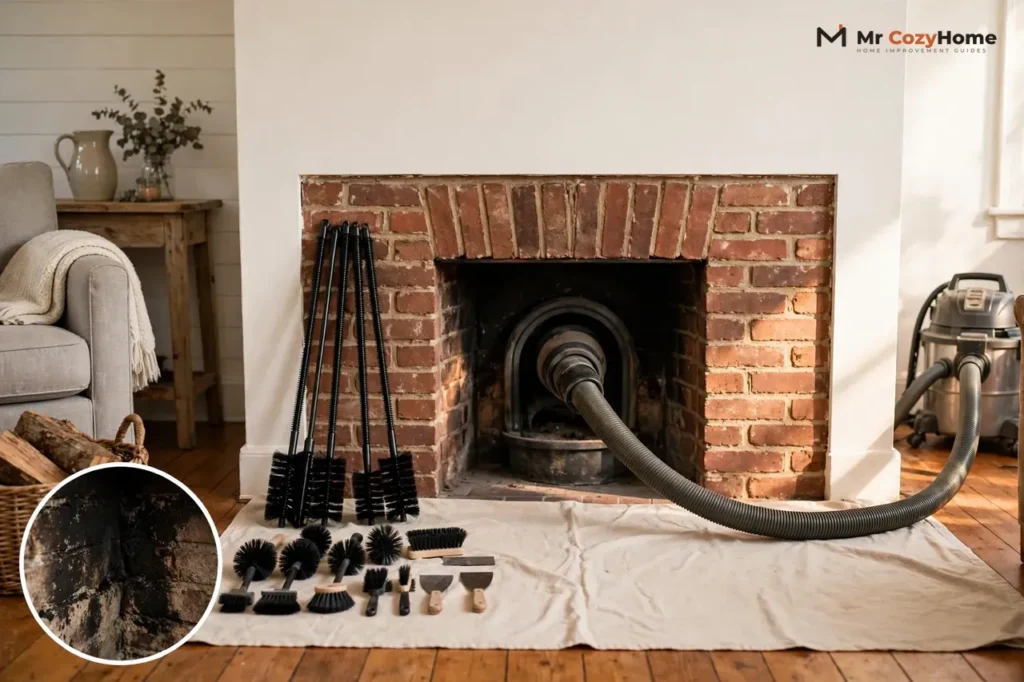
A chimney sweep costs $129 to $381 in the United States, and most homeowners pay about $254, according to Angi’s 2026 data from 19,349 verified projects (checked Nov 9, 2026).
HomeGuide’s 2026 cost guide tells a very similar story: a standard chimney sweep runs $150 to $375, with a national average of $275. Most standard visits include a basic visual inspection, so the price you pay usually covers both the cleaning and a safety check in one trip.
This guide breaks down the full chimney sweep cost by fireplace type, inspection level, and number of flues, plus what drives the price up and how to hire a good sweep without overpaying.
How Much Does a Chimney Sweep Cost?
For a normal single-flue chimney in good shape, expect to pay $150 to $375. That is the HomeGuide range for a standard sweep with a Level 1 inspection included, and it covers most American homes with a wood-burning fireplace.
Your final bill depends on what you burn, how tall your chimney is, and how long it has been since the last cleaning. A small gas fireplace vent costs far less to clean than a tall masonry chimney with heavy creosote buildup.
Chimney Sweep Cost by Fireplace and Chimney Type
The type of fireplace you have is the biggest single driver of chimney sweep cost. Wood leaves soot and creosote behind. Gas burns much cleaner, so the job is faster and cheaper. A prefabricated metal chimney has no brickwork to work around, which also keeps the price down.
Chimney sweep cost by type
| Fireplace or chimney type | Average cost | What is included |
|---|---|---|
| Wood-burning fireplace, masonry chimney | $150 to $375 | Full sweep plus Level 1 inspection |
| Gas fireplace | $80 to $150 | Vent and firebox cleaning |
| Prefabricated chimney | $90 to $175 | Metal flue and vent cleaning |
| Wood or pellet stove | $130 to $300 | Stove, vent, and liner check |
All four prices above come from HomeGuide’s 2026 cost guide (checked Nov 9, 2026). The wood-burning masonry chimney is the most common setup in American homes, so its $150 to $375 range is the number most readers should budget around. Gas costs $80 to $150 because it leaves little residue behind. A prefabricated chimney runs $90 to $175 because its smooth metal flue cleans quickly, and wood or pellet stoves land at $130 to $300.
HomeYou’s 2026 guide lands in the same area, putting a basic chimney sweep at $135 to $393, with an average of $274. When two independent cost guides agree this closely, you can trust the range.
Chimney Sweep and Inspection Cost by Level
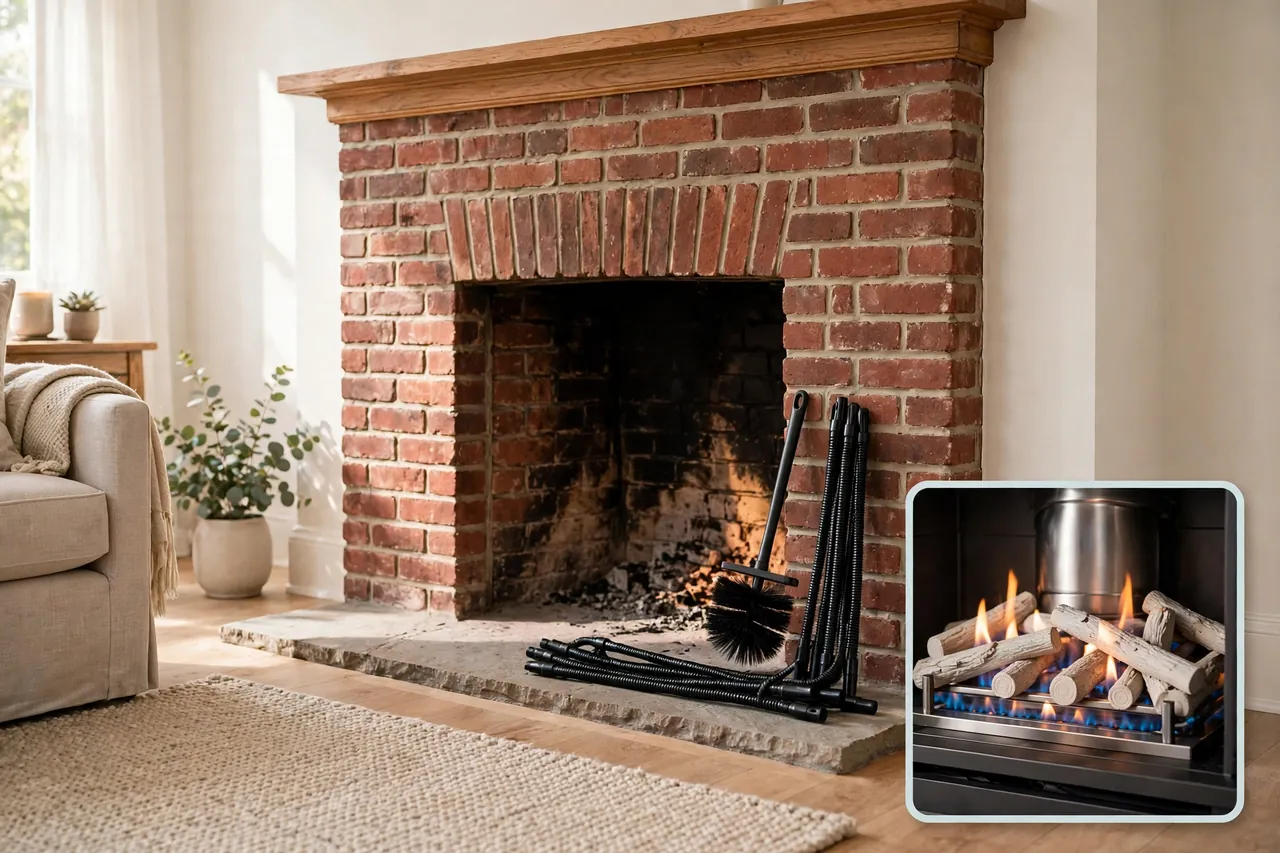
A chimney sweep and inspection cost is not one flat service. The inspection comes in three levels, defined by the National Fire Protection Association in its NFPA 211 standard. The level you need decides a large part of your bill, so it pays to know the difference before you book.
Chimney inspection cost by level
| Inspection level | Average cost | When you need it |
|---|---|---|
| Level 1 | $100 to $250 | Annual check, nothing has changed |
| Level 2 | $250 to $600 | Buying or selling, after a chimney fire |
| Level 3 | $900 to $5,000 | Serious or hidden structural damage |
All three prices come from HomeGuide’s 2026 cost guide (checked Nov 9, 2026). A Level 1 inspection is a visual check of the parts of the chimney the sweep can readily see and reach. It is the standard annual check, and it is usually bundled into the price of a normal sweep.
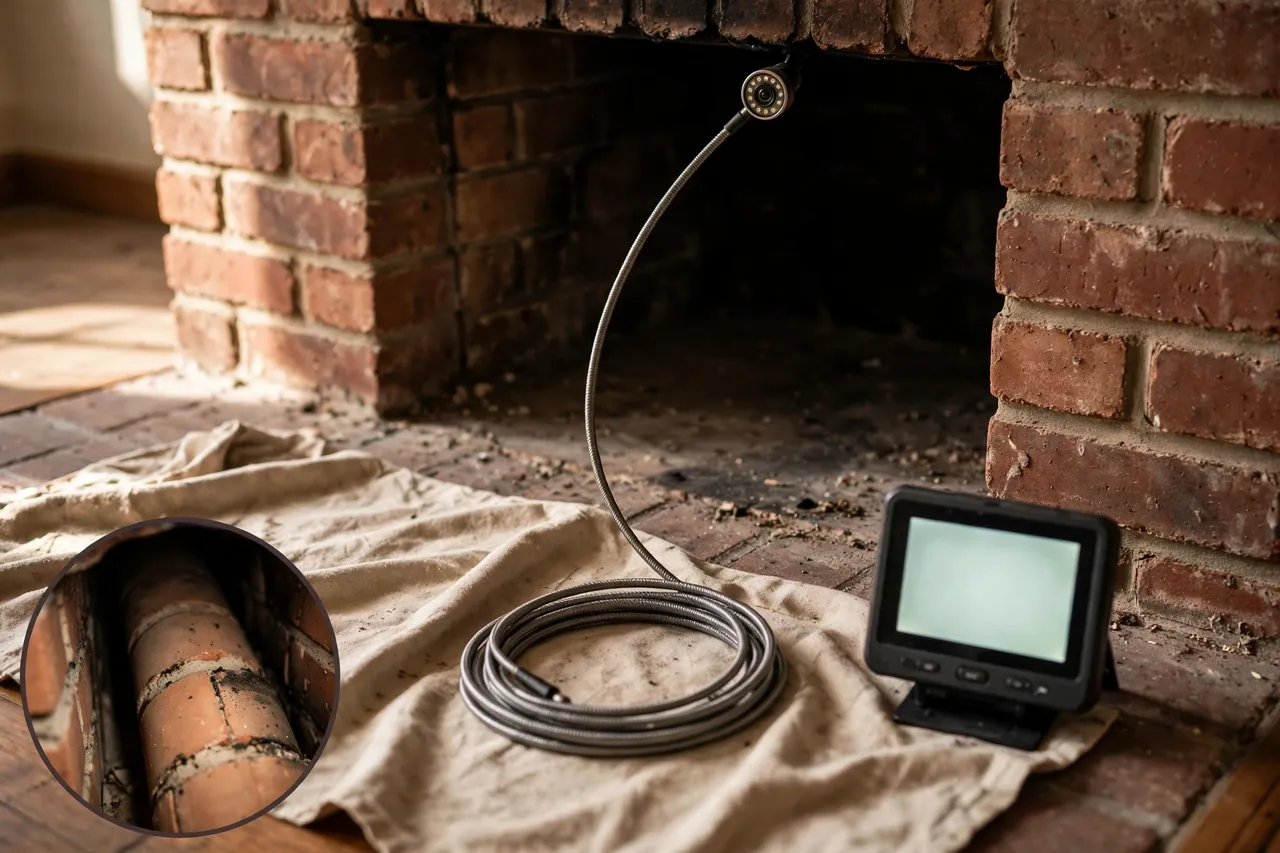
A Level 2 inspection adds a video camera scan of the full flue interior. The camera records every joint, tile seam, and liner section, so the sweep can see damage that eyes alone would miss. NFPA 211 calls for a Level 2 when you buy or sell a home, change the connected appliance or fuel type, or after a chimney fire.
A Level 3 inspection is the deepest check. The sweep removes parts of the chimney, such as the cap, bricks, or drywall, to find the source of serious damage. It costs $900 to $5,000 because it includes the opening-up work and some standard repair work. Most homeowners never need one.
What Does a Chimney Sweep Include?
A professional chimney sweep does far more than push a brush up the flue. A standard visit follows the same basic flow, and knowing it helps you judge whether you got your money’s worth.
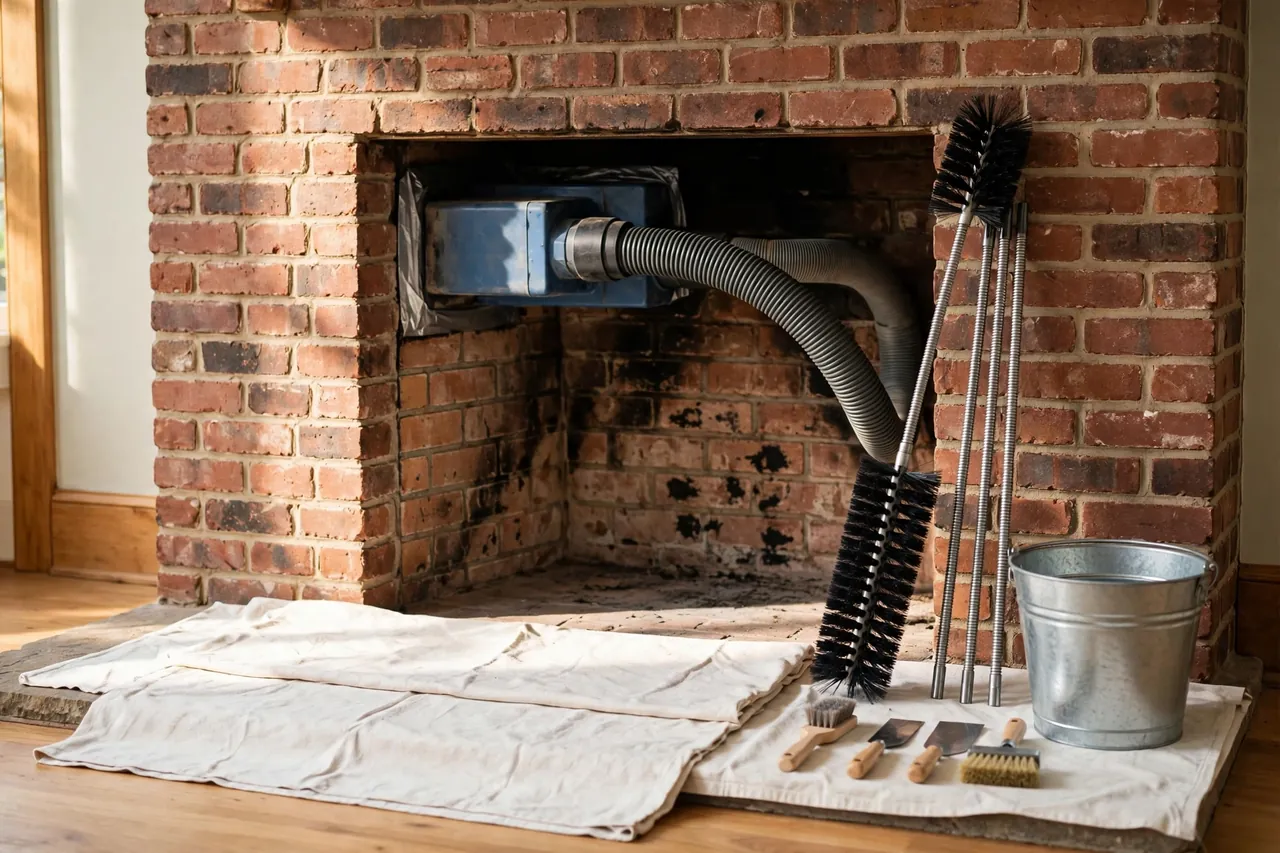
- The sweep protects your home first. Drop cloths go down around the fireplace, and a powerful vacuum seals the firebox opening so soot stays out of your living room.
- The sweep brushes the flue. A flexible rod with a stiff brush scrubs soot and loose creosote off the flue walls, from the roof down or from the firebox up.
- The sweep cleans the firebox, smoke shelf, and damper. Ash and soot come out of the firebox, and the damper gets checked to make sure it opens and closes fully.
- The sweep inspects as it cleans. While the flue is open, the sweep looks for cracked tiles, a damaged liner, loose mortar, and animal nests.
- The sweep vacuums and reports. The area gets vacuumed clean, and you get a report of what the sweep found, with photos when a camera was used.
The whole visit usually takes 1 to 2 hours for a well-kept chimney, according to HomeGuide. A chimney that has not been cleaned in more than a year, or one with damage to investigate, can take twice as long. Ask before the visit what your quote covers: cleaning, inspection, vacuuming, and a written report should all be in it.
After the sweep, the firebox often looks much better, but the brick around it may still show years of smoke stains. If that bothers you, a gentle clean can lift a surprising amount of grime without harming the brick. Our guide to how to clean a brick fireplace walks you through the safe methods step by step.
What Makes the Price Go Up or Down?
Two neighbors can pay very different prices for a chimney sweep, and both bills can be fair. These are the factors that move your price inside the $129 to $381 range.
Chimney height and roof access
Tall chimneys take longer to clean and need more equipment. A steep roof or a chimney that is hard to reach adds labor time, and some sweeps charge extra for two- or three-story homes. Ask about this when you get your quote.
How much buildup is inside
Light soot brushes off quickly. Heavy creosote, especially the shiny glazed kind, needs power sweeping or chemical treatment and far more time. HomeYou puts dedicated creosote removal at $169 to $564, with an average of $345 (checked Nov 9, 2026).
Chimney type and condition
A damaged liner, cracked tiles, or crumbling mortar slows the job down because the sweep must stop, look closely, and report the problem. A chimney in poor shape can also need a Level 2 camera inspection before anyone can say what the repair will cost.
Where you live
Sweeps in large cities and high-cost areas charge more than sweeps in small towns, because labor, insurance, and travel all cost more there. If your home sits outside a company’s normal service area, expect a travel fee on top of the sweep price.
Time of year
Fall is the busy season. Everyone wants a sweep before the first fire of the year, so wait times grow and prices rise. HomeGuide notes that the cheapest rates usually come in late spring and summer, when demand is low.
Chimney Sweep Cost by Number of Flues
A flue is the passage that carries smoke and gases out of your home. Some chimneys have one flue, and some have two or three serving different fireplaces or appliances. Each flue gets cleaned on its own, so more flues mean a bigger bill, though the price per flue drops a little.
Chimney sweep cost by number of flues
| Number of flues | Average cost |
|---|---|
| 1 flue | $100 to $250 |
| 2 flues | $250 to $400 |
| 3 flues | $400 to $700 |
These prices come from HomeGuide’s 2026 cost guide (checked Nov 9, 2026). Get every flue checked, even the ones you never use. An unused flue can still hold a bird’s nest or crumbling debris, and a blocked flue can push carbon monoxide back into your home.
Extra Services That Can Add to Your Bill
Sometimes the sweep finds a problem that cleaning alone cannot fix. These are the most common add-ons, with HomeGuide’s 2026 prices (checked Nov 9, 2026). Treat them as planning numbers, not quotes.
- Chimney cap replacement: $200 to $850. A cracked or missing cap lets rain, debris, and animals into the flue.
- Animal removal: $600 to $1,500. Birds, squirrels, and raccoons nest in warm chimneys. Removal includes the nest, the animal, and a cleanup of the mess it left behind.
- Chimney crown repair: $150 to $1,500. The crown is the concrete slab on top of the chimney. Small cracks are cheap to seal, while a full crown replacement costs far more.
- Chimney liner installation: $1,500 to $4,000. A cracked or missing liner is a serious safety problem, because heat and gases can escape into the walls of your home. This is a job for a qualified professional, never a DIY fix.
- Chimney sealing: $150 to $400. A waterproof sealant protects the outside brickwork from rain and freeze damage.
- Repointing: $500 to $2,500. Old mortar joints get raked out and refilled, which keeps the chimney stack solid and weather-tight.
Always ask for a written quote before you approve any extra work. A good sweep explains the problem, shows you photos, and gives you time to decide. If someone pressures you to approve a costly repair on the spot, get a second opinion first.
How Often Should You Have Your Chimney Swept?
Have your chimney inspected at least once a year, and sweep it as often as needed. That is the rule from the National Fire Protection Association’s NFPA 211 standard, quoted by the Chimney Safety Institute of America (CSIA): chimneys, fireplaces, and vents shall be inspected at least once a year for soundness, freedom from deposits, and correct clearances.
The CSIA adds a clear trigger for the sweep itself: sweep all masonry fireplaces when soot reaches 1/8 inch of buildup, and sooner if any glazed creosote is present. That amount of buildup is enough to feed a chimney fire that can damage the chimney or spread to the house. Factory-built fireplaces should be swept when any appreciable buildup appears.
In practice, most wood-burning households need one sweep a year, done in late summer or early fall before burning season starts. Heavy users, or anyone burning unseasoned wood, may need a second sweep mid-season. Gas fireplaces need less frequent cleaning, but they still need their annual inspection, because a blocked vent can push carbon monoxide indoors even when there is no soot to see.
Should You Sweep Your Own Chimney?
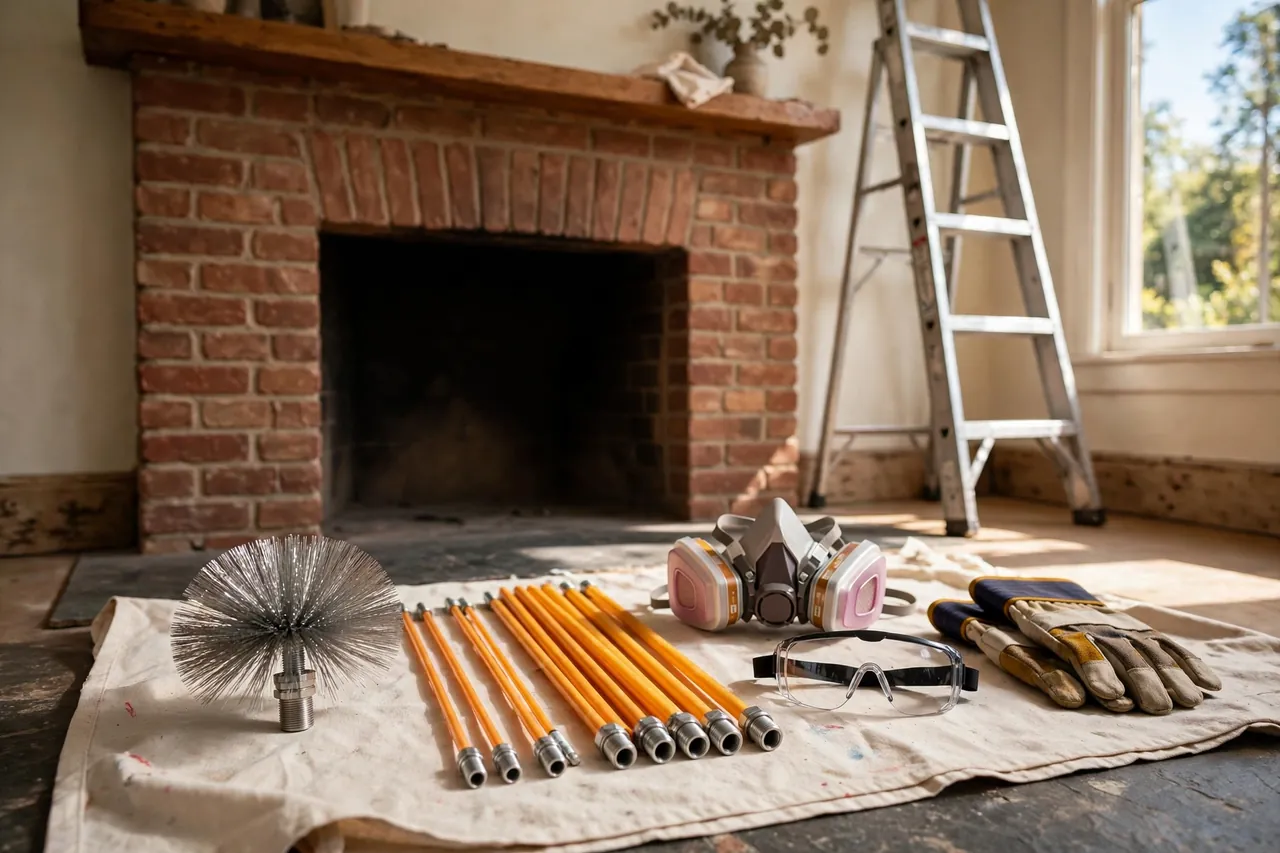
You can sweep your own chimney if you have the right brushes, rods, and safety gear. HomeGuide confirms this, but it also warns that building codes in some states require an annual inspection that only a certified technician can do properly. A do-it-yourself sweep never replaces that professional inspection.
Be honest with yourself before you climb up there. Roof work is dangerous, and a fall from a roof can cause serious injury. Soot and creosote dust are also bad to breathe, so you need a proper respirator and eye protection. A brush that is the wrong size can damage the flue liner, and a damaged liner raises the risk of fire and carbon monoxide leaks.
Think about what can go wrong before you start. If you damage the liner while cleaning, you may not see the harm, but the risk stays in the walls of your home. If you miss glazed creosote high in the flue, the fire risk stays too. For most homeowners, the safer choice is a professional sweep once a year, and the money saved on a DIY kit rarely covers the cost of fixing a mistake.
Do not attempt gas or structural work yourself. If the sweep finds a cracked liner, a damaged crown, or a gas vent problem, hire a qualified professional.
How to Save Money on a Chimney Sweep
A chimney sweep is a modest yearly cost, and a few smart habits keep it at the low end of the range.
- Book in late spring or summer. Demand is low, wait times are short, and sweeps often offer off-season rates.
- Sweep every year without fail. Annual sweeping stops light soot from turning into heavy glazed creosote, which is the expensive cleaning to fix.
- Burn only seasoned, dry wood. Wet or unseasoned wood burns cooler and leaves far more creosote behind.
- Bundle services into one visit. Ask whether the sweep can inspect the chimney, clean the dryer vent, or fit a new cap in the same trip for a lower combined price.
- Get three quotes. Compare at least three local sweeps, and check that each quote covers the same work: cleaning, inspection, vacuuming, and a written report.
- Ask about maintenance plans. Some sweeps offer lower yearly rates if you sign up for regular service.
Do not chase the lowest bid blindly. HomeGuide warns that the cheapest quote can mean a rushed inspection or skipped steps, and a missed crack or nest costs far more later than the money you saved.
How to Hire the Right Chimney Sweep
The person you hire matters as much as the price you pay. A good sweep is trained, insured, and happy to answer questions. Use this checklist before you book.
- Look for CSIA certification. A CSIA Certified Chimney Sweep has passed the industry’s recognized exam. The Chimney Safety Institute of America also runs a free sweep locator on its website, so you can find certified sweeps by ZIP code.
- Check insurance and licensing. Ask for proof of liability insurance, and check whether your state requires a chimney technician license or a home improvement contractor license.
- Ask what the quote covers. Cleaning, a Level 1 inspection, vacuuming, and a written report should all be included. Ask whether there is an extra charge for tall or hard-to-reach chimneys.
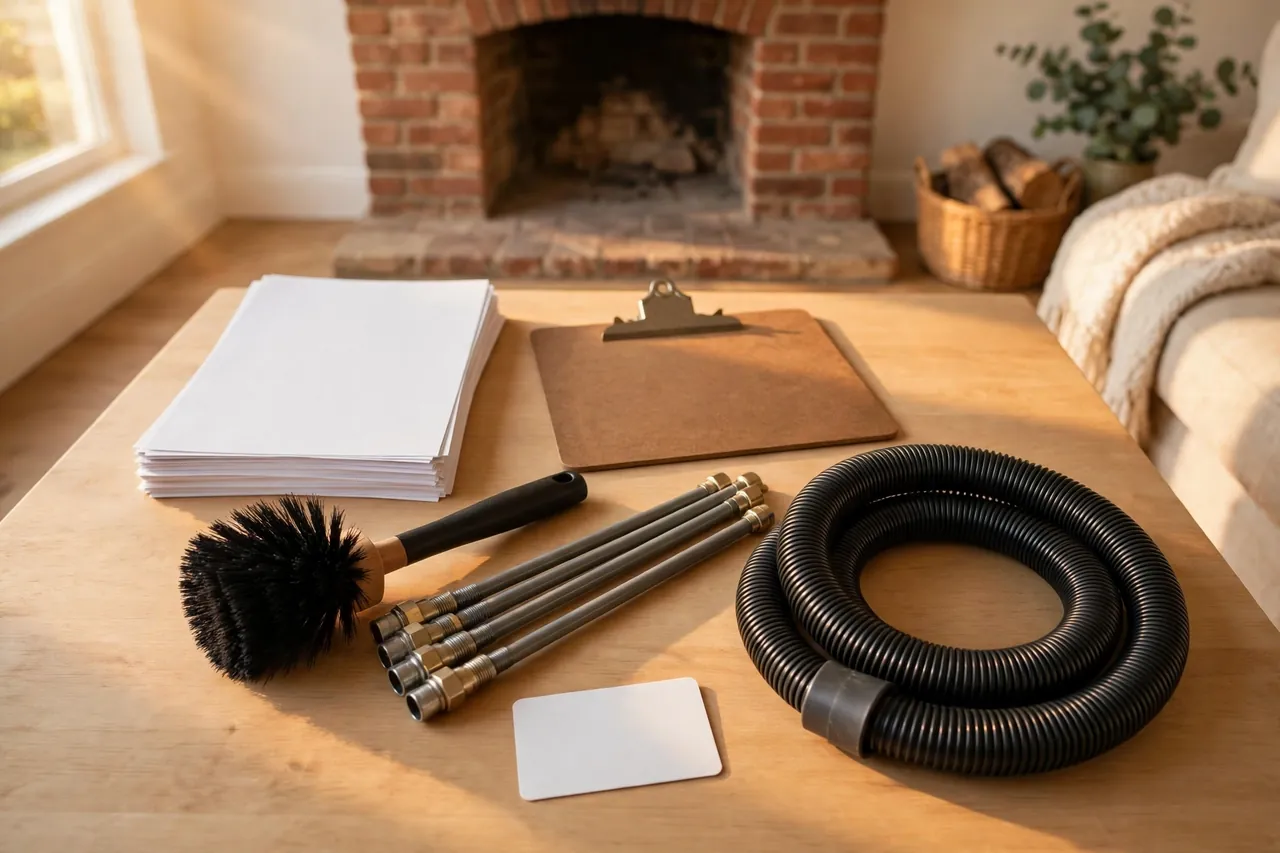
- Ask about their tools and process. A professional uses proper brushes, rods, and a high-powered vacuum, and can show you video footage when a camera inspection is done.
- Read recent reviews. Look at reviews on Google and HomeGuide, and ask the sweep for references from recent local jobs.
- Get the quote in writing. A written quote that lists the work and the price protects you if extra repairs come up during the visit.
Angi’s 2026 hiring guide gives the same advice: schedule a CSIA-certified inspection and cleaning every one to two years, and expect costs that typically run $130 to $380. Treat the visit as routine safety care for your home, not a luxury.
Signs You Need a Chimney Sweep Now
Do not wait for your yearly booking if you see any of these warning signs. Any one of them is a good reason to call, and two or more together mean you should stop using the fireplace until a professional has looked at it. A blocked or damaged flue can push smoke and carbon monoxide into your home.
- The fire burns weakly or is hard to start.
- Smoke pours into the room when you light a fire.
- You can see soot building up in and around the fireplace.
- A bad smell comes from the fireplace when you are not using it.
- White or black deposits form inside the chimney or on the flue walls.
- More than a year has passed since the last cleaning.
- You see signs of birds, animals, or nests in the chimney.
- Damp patches or moisture appear inside the chimney or on the brickwork.
- Masonry or creosote debris falls into the firebox.
- Walls or ceilings near the fireplace look stained or discolored.
Any one of these signs is a good reason to call. Two or more together mean you should stop using the fireplace until a professional has looked at it.
Once the chimney is clean and safe, many homeowners look at the fireplace itself with fresh eyes. If the brick looks tired or dated after years of soot, a new finish can change the whole room. Our comparison of limewash vs whitewash brick fireplace explains which finish suits your brick and your style.
Please Read This Before You Book or DIY
Chimney sweeping involves heights, soot, and fire risk, and gas or structural repairs carry their own dangers. This guide gives general cost and safety information for American homeowners, and it is not a substitute for professional advice about your own chimney. Homes, chimneys, and local codes vary, so your sweep may find conditions that change the work or the price.
Never use a fireplace or stove that a professional has told you is unsafe, and never attempt gas, liner, or structural repairs yourself. If you smell gas, hear a roaring sound in the chimney, or see flames where they should not be, leave the house and call your gas company or the fire department. Keep working smoke and carbon monoxide alarms in your home, and test them every month.
Disclaimer: This article is general guidance only, not professional advice. Prices vary by region, chimney condition, and provider — get a written quote from a CSIA-certified sweep before booking, and never use a fireplace with a blocked or damaged flue.
Related Guides
Chimney Cap Replacement · Chimney Cap Repair · Gas Fireplace Upkeep
- How to Clean a Brick Fireplace Without Damaging the Brick — safe methods for lifting soot and smoke stains off brick after your chimney is clean.
- Limewash vs Whitewash Brick Fireplace: Which One Should You Choose? — a side-by-side comparison to help you refresh a tired-looking fireplace once the chimney is safe.
Frequently Asked Questions
What is a chimney sweep?
A chimney sweep is a licensed technician with a fire safety background who removes debris and flammable buildup from inside the flue and its connections. The sweep also inspects the chimney while cleaning, to make sure it is safe to use. A standard sweep costs $150 to $375 in the US, according to HomeGuide (checked Nov 9, 2026).
How often do you sweep a chimney?
Sweep your chimney 1 to 2 times a year. Once a year is the minimum, even if you have not used the chimney much. The National Fire Protection Association and the Chimney Safety Institute of America both recommend an annual inspection for safety, because nests and hidden damage can form even in an unused flue.
How long does a chimney sweep take?
A chimney sweep takes 1 to 2 hours on average, or less for a cleaning and visual check on a well-kept chimney. If the chimney has not been cleaned in more than a year, or there is major damage to investigate, the visit can take twice as long.
What happens if I don’t sweep my chimney?
Skipping the sweep leaves three serious risks. Creosote buildup in the flue can catch fire and start a house fire. A damaged liner can leak carbon monoxide into your home. Pests such as bats and squirrels can nest in the chimney, enter your home, and spread disease.
Can you sweep your own chimney?
You can sweep your own chimney if you have the right equipment, but building codes in some states require an annual inspection that only a certified technician can do properly. A DIY sweep also risks roof falls and liner damage, and it never replaces the professional inspection. Most homeowners are safer hiring a certified sweep once a year.
When is the best time to hire a chimney sweep?
The best time to hire a chimney sweep is late spring or summer, when demand is low and rates are often cheapest. Most people book in the fall before cold weather arrives, which means longer waits and higher prices. Book early and you save money and stress.
A chimney sweep costs most homeowners $129 to $381 a year, and that one visit protects your home from fire, keeps carbon monoxide out of your living room, and keeps your fireplace burning well. Book your sweep in the off-season, choose a CSIA-certified professional, and ask for a written quote before the work starts.


