
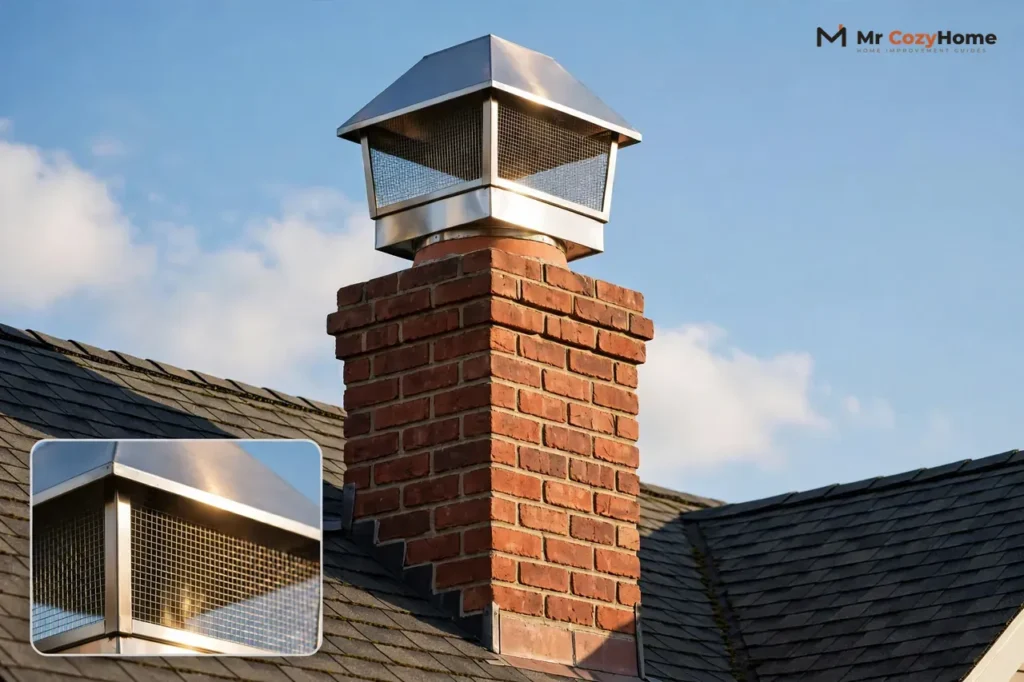
A chimney topper is a protective cover that sits on top of your chimney flue and keeps rain, animals, and debris out while letting smoke escape, and four standard sizes fit 90 to 95 percent of chimneys, according to chimney-cap maker HY-C.
Most people know it as a chimney cap, a flue cap, or a rain cap. The names all point to the same job: closing the open hole at the top of your chimney without closing off the smoke. Without one, every rainstorm pours water straight down your flue, and birds, squirrels, and leaves treat the opening like an open door. This guide explains what a chimney topper is, the types and materials to choose from, how to size one, what it costs, and when to replace it.
What Is a Chimney Topper?
A chimney topper is the cover that finishes the top of a chimney. It sits above the flue opening, which is the hollow channel smoke travels up. The topper blocks what should stay out and lets smoke and gases flow out freely.
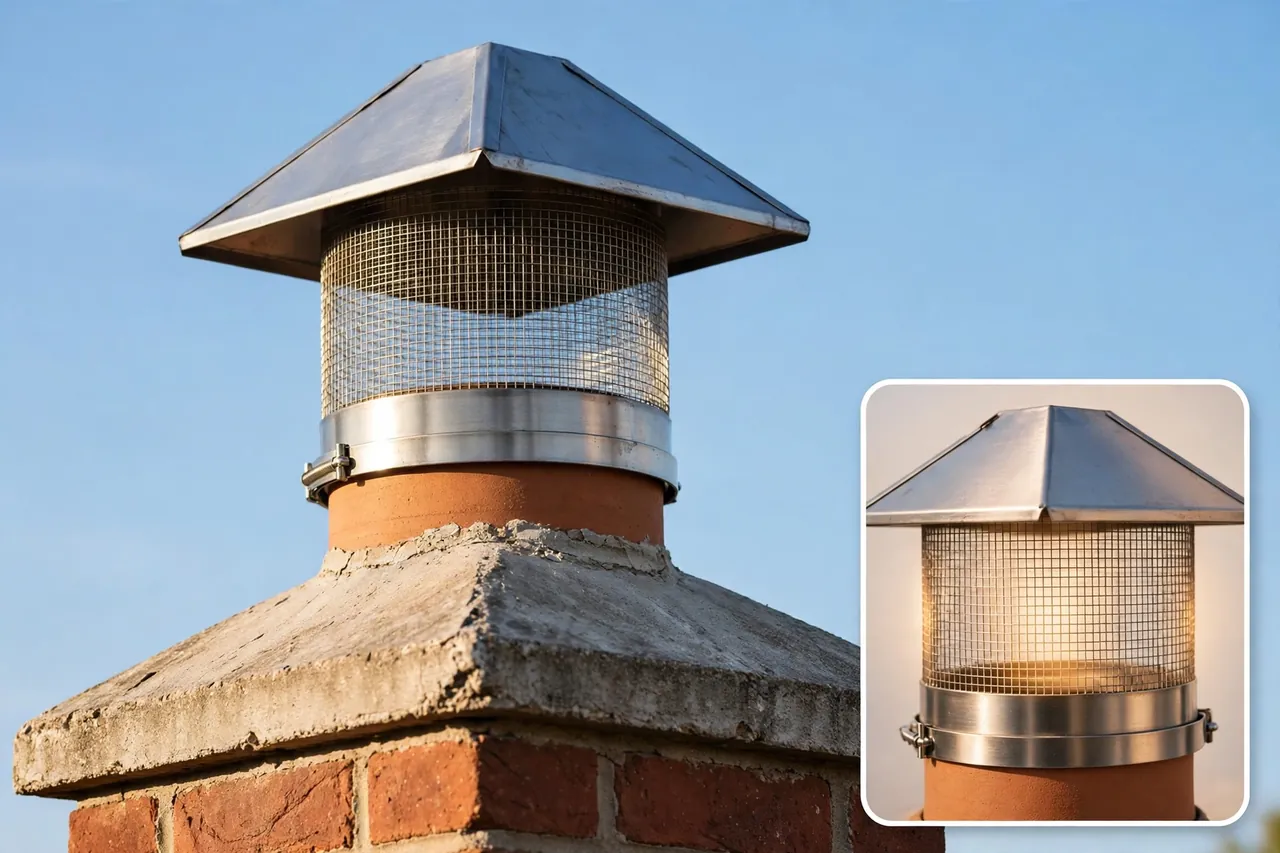
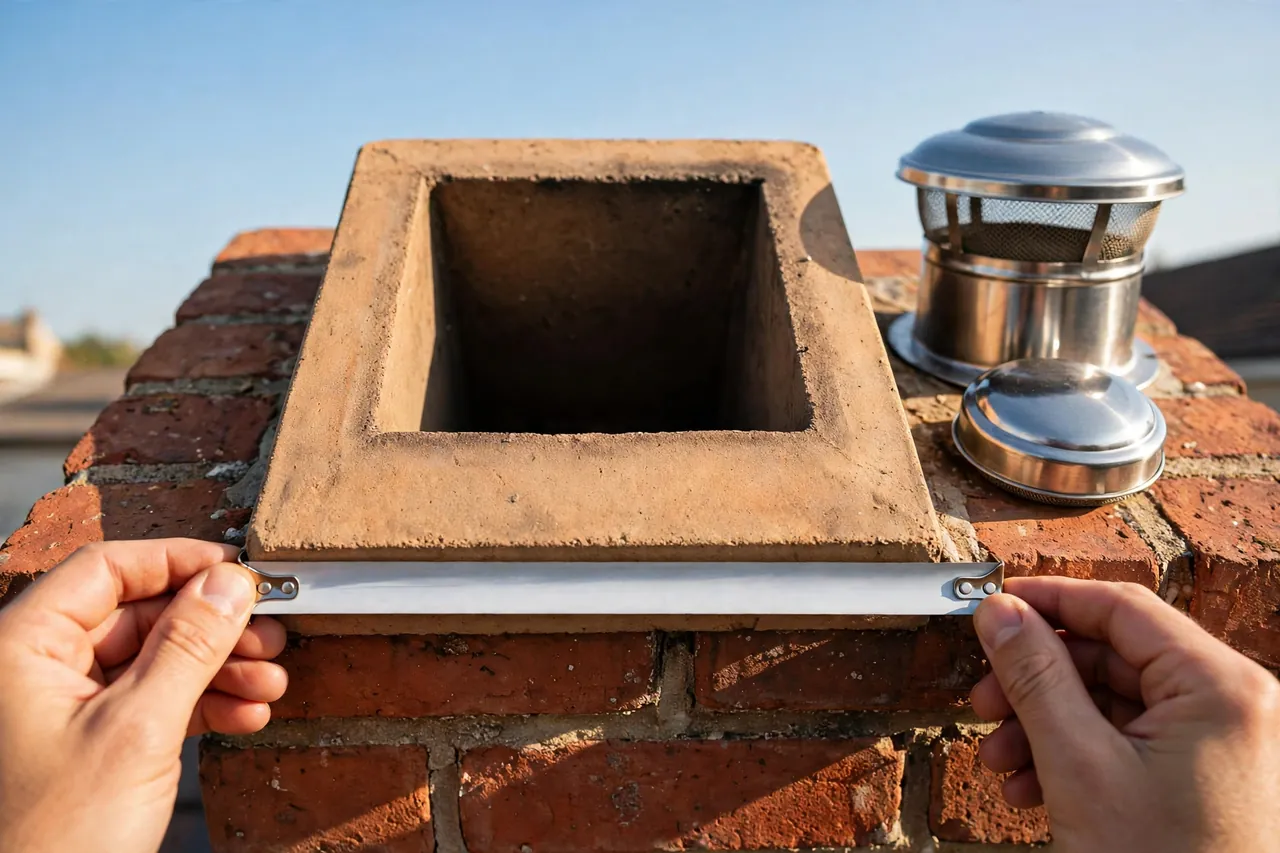
A basic metal chimney topper has three parts, as manufacturer HY-C describes them: a solid metal band or base at the bottom, a wire mesh body around the sides, and a solid metal hood welded on top. The hood sheds rain like a tiny roof. The mesh keeps animals and leaves out and catches sparks on their way up. The base grips the flue tile or bolts to the chimney crown.
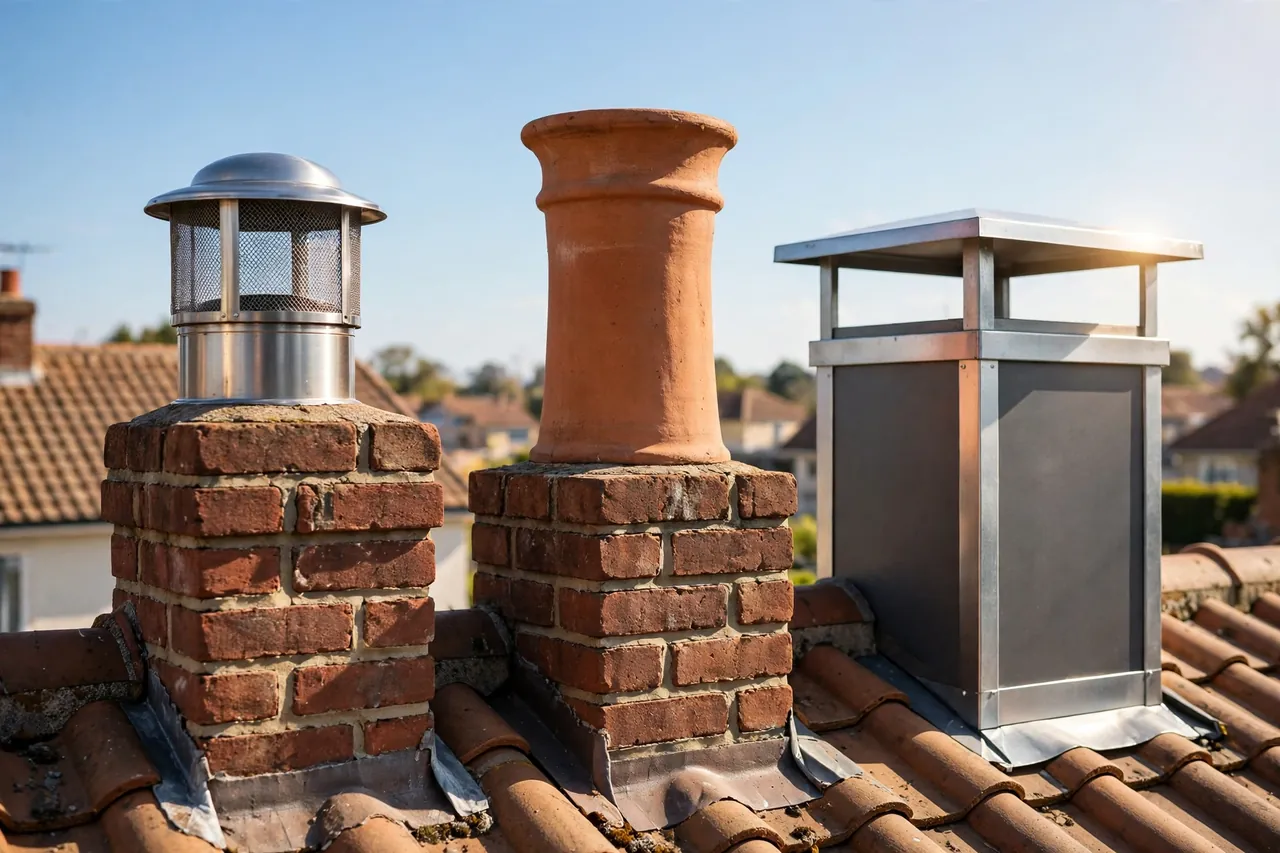
People use several names for the same idea. A chimney cap, a flue cap, a rain cap, and a chimney cover usually mean the same thing in everyday talk. A chimney topper is the broadest term, since it also covers chimney pots and chase tops, which look different but do the same protective job. When you shop, check what the product actually covers: a single flue opening, several flues, or the whole chimney top.
Do not mix up a topper with the parts below it. The crown is the concrete slab that seals the top of a masonry chimney around the flue and slopes so water runs off. The flue liner is the clay or metal channel inside the chimney. The topper sits on top of both and guards the opening. A cracked crown still needs its own fix, and a topper will not save it.
How a Chimney Topper Protects Your Home
A topper does five quiet jobs at once, and you only notice them when one fails.
First, it keeps water out. Rain and snow fall straight down an open flue into the firebox, soak the flue liner, and seep into the brick and mortar. Over time that moisture cracks masonry in freeze-thaw weather, rusts the damper so it sticks, and stains the firebox. A topper breaks that cycle before it starts.
Second, it keeps animals out. Birds, squirrels, raccoons, and bats look for warm, sheltered spots, and an open chimney is a perfect nest site. A nest blocks the flue, and a blocked flue pushes smoke and carbon monoxide back into your home. The mesh on a topper stops animals from getting in while smoke still gets out. If you ever hear scratching or smell something dead near the fireplace, a missing or broken topper is a likely cause.
Third, it fights downdrafts. Wind blowing across a bare chimney top can push air down the flue and shove smoke back into the room. A topper shapes the airflow at the exit so smoke rises cleanly instead of reversing. This Old House notes that a chimney pot does the same thing by creating a more aerodynamic exit point for smoke and gases.
Fourth, it catches sparks. On a wood fire, embers ride the hot air up the flue. The mesh acts as a spark arrestor, so glowing bits cool and fall back instead of landing on your roof or dry leaves nearby. In California and Oregon, HY-C notes that ⅝-inch mesh is the required size for this job.
Fifth, it keeps leaves and debris out. Debris narrows the flue, weakens the draft, and can trap moisture against the liner. A clean, covered flue draws better and stays drier. If your fireplace smokes into the room on windy days or after rain, look at the top of the chimney first. And if your carbon monoxide alarm ever sounds, treat it as an emergency and follow the steps in our guide on what to do if your carbon monoxide alarm goes off before you check the chimney.
Types of Chimney Toppers
Not every chimney needs the same topper. The right type depends on how many flues you have, whether your chimney is masonry or a framed chase, and how much you care about looks.
Single-Flue Chimney Caps
A single-flue cap covers one flue opening. It is the most common type on a standard brick chimney with one fireplace. The base slips over the flue tile and tightens with screws or a clamp, so it fits snugly without drilling into the crown. Choose this type when your chimney has one flue and the crown around it is sound. Common sizes run 9 by 9 inches, 9 by 13 inches, 13 by 13 inches, and 13 by 18 inches.
Multi-Flue Chimney Caps
A multi-flue cap covers two or more flue openings with one wide unit. Instead of gripping a flue tile, it screws directly into the concrete crown. Pick this type when your chimney serves two fireplaces or a fireplace plus a furnace flue. One cap means fewer parts to inspect, but it must match the crown size exactly, so measure the whole crown, not just the flues.
Band-Around Brick Chimney Caps
A band-around cap wraps around the outside of the brickwork at the top of the chimney instead of sitting on the flue or the crown. A metal band hugs the brick and the cap covers the full chimney top. This style suits chimneys with an uneven or damaged crown, since it does not depend on the crown for its grip. It also protects the crown itself from rain, which slows cracking.
Chimney Chase Tops
A chimney chase top, also called a chase cover or rain pan, is a flat metal lid that seals the top of a framed chimney chase. You see chases on factory-built or prefabricated fireplaces, where a wood-framed box runs up the outside of the house. The lid looks like a shoebox cover and often pairs with a decorative shroud that hides the vent pipe. Chase tops come in galvanized steel, aluminum, copper, and stainless steel. The cheap galvanized lids that come standard with many prefab units rust through fast, and Housworth Construction reports they often need replacing within 7 to 10 years.
Chimney Pots
A chimney pot is a tall clay or metal tube that extends the flue upward and finishes the chimney with real character. Terracotta pots have topped European roofs for centuries, and they still suit traditional homes. Modern metal pots come in stainless steel, copper, or galvanized steel and add spark arrestors and animal guards. Pots improve the draft by raising the exit point, and they look beautiful. But they are heavy. Some English-made clay pots weigh up to 200 pounds, according to This Old House, and setting one may need a mason and a lift. Have a mason check that your chimney can carry the weight before you commit to a clay pot.
Decorative Shrouds and Top-Sealing Dampers
A shroud is a larger decorative cover that wraps the whole chimney top and hides the flue caps inside it. It adds curb appeal and extra rain protection. A top-sealing damper is different: it is a cap with a seal that closes the flue completely when the fireplace is not in use, which stops warm air from escaping up the chimney. A damper-topper can save energy on a wood fireplace, but never fit a sealing damper on a gas fireplace. Gas logs make carbon monoxide, so a gas flue must stay open at all times.
Chimney Topper Materials Compared
Material decides how long your topper lasts, how it looks, and what you pay. Here is how the common choices stack up.
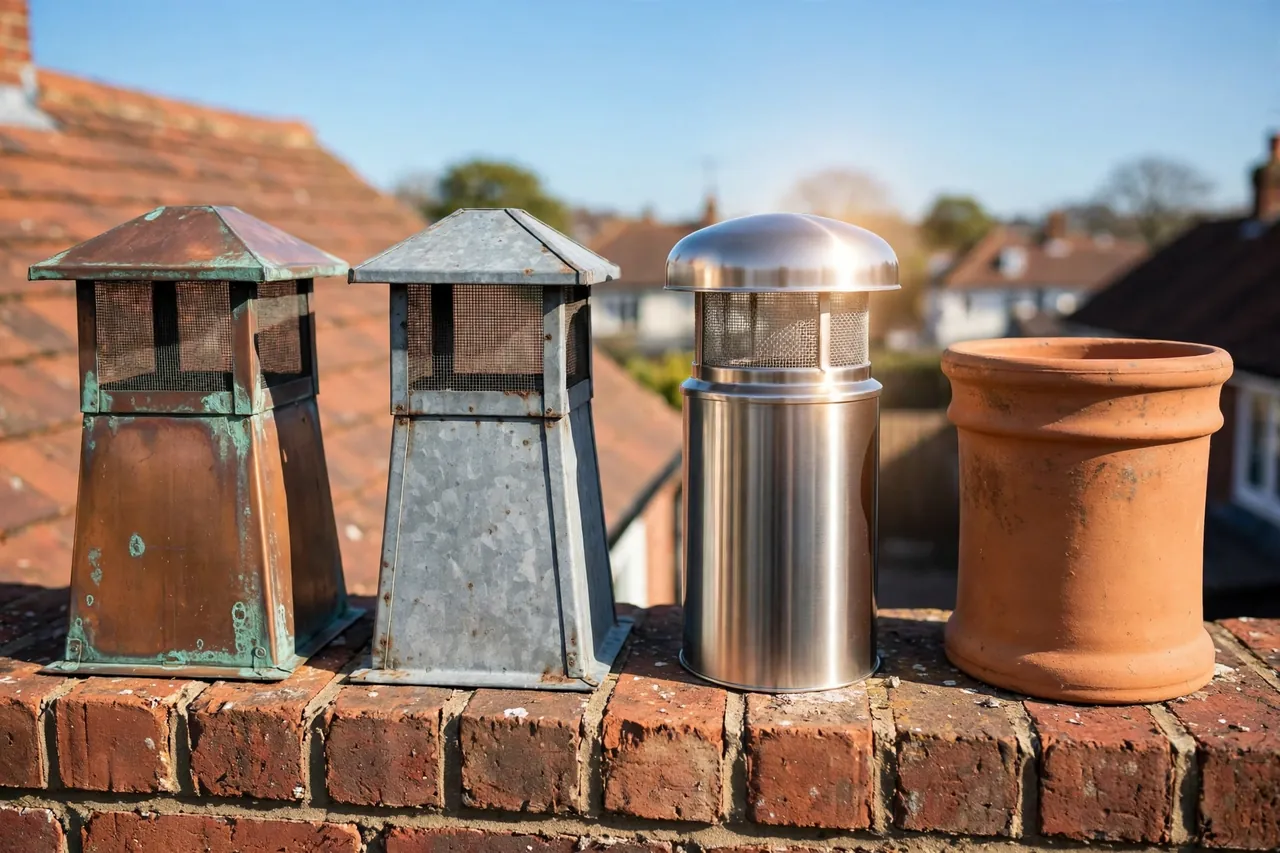
Galvanized steel is the cheapest option and the most common on basic caps. A zinc coating protects the steel at first, but the coating wears through, and then the steel rusts. In mild weather a galvanized cap can last many years, but Adam Chimney Sweep reports that a cheap galvanized cap may give only five to ten years in harsh weather before rust takes it.
Stainless steel is the workhorse choice. It resists rust, handles harsh weather, and needs little care. HY-C says a properly installed stainless steel cap can last 50 years or more, while sweeps in the field usually quote 15 to 25 years or more for a good stainless cap. Either way, stainless is the best value for most homes: it costs more than galvanized on day one and far less over the life of the roof.
Copper is the premium pick. It never rusts, lasts for decades, and ages into a soft green-brown patina that suits older brick and historic homes. The catch is price: a copper cap costs roughly five times its galvanized twin. Choose copper when looks matter and you plan to stay in the home a long time.
Aluminum is light and never rusts, but it is softer than steel and can dent or bend in storms. It suits mild climates and light-duty use. Clay and terracotta belong to chimney pots, not mesh caps. They handle heat beautifully and look timeless, but they are heavy, can crack in a hard freeze, and need a sound chimney to sit on.
| Material | Cost | Rust resistance | Best for |
|---|---|---|---|
| Galvanized steel | Lowest | Low — rusts in 5 to 10 years in harsh weather | Tight budgets, mild climates |
| Stainless steel | Mid-range | High — 15 to 25 years or more | Most homes, best overall value |
| Copper | Highest | Highest — lasts decades | Historic homes, long-term owners |
| Aluminum | Low to mid-range | High — never rusts | Mild climates, light use |
| Clay / terracotta | Mid-range to high | Not applicable — can crack in freezes | Chimney pots on traditional homes |
One honest note on lifespan claims: manufacturers quote best-case numbers, and sweeps quote what they see on real roofs. Both are useful. A stainless cap that a maker rates at 50 years will still fail early if it sits under a dripping tree or in salty sea air. Your climate and your roof are part of the answer.
What Does a Chimney Topper Cost?
A standard chimney topper is one of the cheapest pieces of chimney protection you can buy. The product itself usually costs less than the damage an open flue invites. HY-C, a maker that has built chimney caps for over 75 years, lists these product-only prices for single-flue caps, checked Nov 9, 2026:
| Size | Galvanized steel | Stainless steel | Copper |
|---|---|---|---|
| 9 x 9 inches | $56 | $79 | $376 |
| 9 x 13 inches | $60 | $92 | $398 |
| 13 x 13 inches | $67 | $99 | $422 |
| 13 x 18 inches | $74 | $125 | $446 |
Those are product-only prices. Installation is extra and varies with roof height, roof pitch, and your area, so get a quote from a local chimney sweep or roofer before you budget. Custom multi-flue caps, band-around caps, and chase tops cost more because they are cut to fit your chimney, and copper costs several times more than steel in every size. HY-C puts it plainly: a small $60 to $100 investment in a chimney cap can save you thousands of dollars in damage from a bird, raccoon, or bat later on.
How to Size a Chimney Topper
A topper that does not fit is barely better than no topper. Gaps let rain and animals in, and an oversized cap can wobble loose in a storm. Measure before you order, and measure twice.
Start by finding your flue type. A single-flue cap needs the outside dimensions of your flue tile, not the inside. A multi-flue or band-around cap needs the outside dimensions of the whole chimney crown or the brickwork at the top. Note the flue shape too: round, square, or rectangular flues take different caps.
- Climb up only if you can do so safely, or ask a sweep to measure during a routine visit. Never step onto a steep, wet, or icy roof.
- Measure the outside length and width of the flue tile at its top, in inches. Write both numbers down.
- Measure how far the flue tile sticks up above the crown. A tall tile changes which base style fits.
- Count your flues. Two or more flues usually mean one multi-flue cap instead of separate caps.
- Match your numbers to the maker’s size chart. Four standard sizes cover about 90 to 95 percent of chimneys, according to HY-C: 9 by 9, 9 by 13, 13 by 13, and 13 by 18 inches.
- Check the fit rule for pots and wide caps. This Old House advises that a chimney pot should extend at least 5 inches beyond the flue opening on all sides, so the cap sheds water clear of the flue.
For a healthy draft, size also matters below the roofline. This Old House masonry contractor Mark McCullough notes a 10-to-1 rule: the cross-sectional area of the flue, including any pot extension, should be about one-tenth the area of the firebox opening. A topper that chokes the flue opening can weaken the draft and push smoke back into the room, so never pick a cap with a smaller opening than your flue needs. When in doubt, size up the mesh area and ask a sweep to confirm the pick.
How to Tell When Your Chimney Topper Needs Replacing
A topper fails slowly, then all at once in a storm. Catch the early signs and you replace a small part instead of repairing a chimney.
Walk outside and look up at the chimney from the ground once a year, ideally before the burning season. This Old House recommends exactly that: a yearly look from the ground for rust, cracks, and loose mortar. Here is what to watch for.
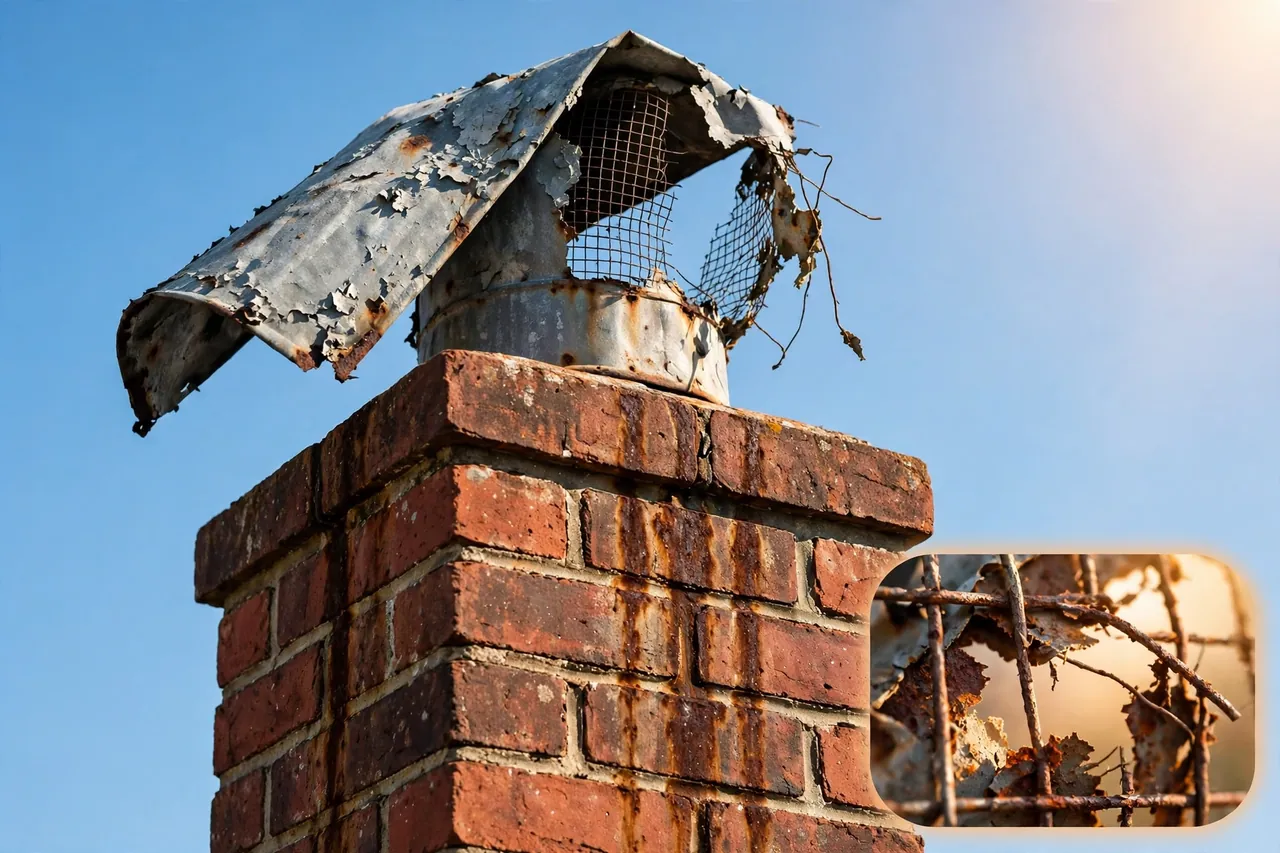
- Rust or holes in the mesh. Rust stains running down the brick, flaking metal, or holes in the screen mean animals and rain can already get through.
- A loose, tilted, or missing cap. High wind works a loose cap free a little at a time. A cap that leans or rattles will not survive the next big storm.
- Water in the firebox. Puddles, damp ash, or water stains inside the fireplace after rain point to a failed topper or a cracked crown above it.
- Animals or nesting material. Twigs, feathers, or scratching sounds in the flue mean the mesh has failed or the cap is gone.
- Smoke spilling into the room. A crushed or clogged cap can choke the draft. Soot stains above the fireplace opening are another clue.
- White stains on the brick. White crusty marks, called efflorescence, show water is moving through the masonry. A failed topper often starts that chain.
Water damage from a failed topper does not stop at the chimney. It stains the firebox brick and can ruin a fresh finish on the surround. If you are planning to refresh the brickwork, read our guide on limewash vs whitewash brick fireplace after the topper is fixed, so the new finish does not sit under a leaking chimney. And if soot and grime have already built up inside, our guide on how to clean a brick fireplace shows how to clean the brick without damaging it.
Replace a storm-damaged cap outright rather than bending it back into shape. HY-C warns that a cap blown off in a gale should be replaced, not reinstalled, because hidden damage leaves it weak. A galvanized cap that has rusted through has also reached the end of its life, even if it still looks whole from the ground.
Can You Install a Chimney Topper Yourself?
Stop and think about the roof before you think about the cap. Installing a topper looks simple: set it on the flue, tighten the screws, and seal the base. The hard part is getting there. A chimney top is the highest point on most homes, the roof may be steep, and a fall can cause severe injuries. HY-C, the company that makes the caps, recommends against climbing your roof to install one yourself and says to leave it to a chimney sweep or a roofer who works at heights every day.
If your roof is low, flat, and dry, and you are comfortable working at height, a single-flue cap is a realistic do-it-yourself job. Even then, work with a helper on the ground, wear shoes with good grip, and never work on a wet or windy day. If the roof is steep, two stories up, or you feel unsure at any point, hire a professional. The labor cost is small next to a hospital bill.
When a professional installs your topper, here is what a good job looks like.
- The sweep or roofer inspects the crown and flue tile first and flags cracks or loose mortar before the new cap goes on.
- They clean the crown so the cap sits flat and the sealant bonds.
- They set the cap level, center it over the flue, and fasten it with the right screws or clamps.
- They seal the base with a waterproof sealant rated for outdoor heat and cold.
- They check the mesh and the hood from the ground and confirm the cap does not block the flue opening.
Ask the installer to confirm the mesh size your area requires and to show you the cap from the ground when they finish. A chimney sweep or roofer is also the right person to fit a heavy clay pot, since some pots weigh up to 200 pounds and need a mason and a lift. You can find a certified sweep through the Chimney Safety Institute of America at csia.org.
How to Maintain Your Chimney Topper
A good topper asks for very little. A short yearly routine keeps it working for decades.
Look at it from the ground once a year, before winter. Check that it still sits level, the mesh has no holes, and no rust streaks run down the brick. After a big storm, look again. High wind is the most common reason a cap goes missing.
Clear the mesh when your sweep visits. Leaves, soot, and creosote can pack into the screen over a burning season and choke the draft. A sweep cleans the mesh and the flue in the same visit, which is the simplest way to keep both clear. Between visits, never poke at the cap with a pole from the ground. You can bend the mesh or knock the cap loose.
Fold the topper check into your fall home prep. Our home winterization checklist covers the whole house before the first freeze, and the chimney top is one of the cheapest items on it to verify. A five-minute look from the driveway beats a midwinter leak every time.
Chimney Topper Mistakes to Avoid
- Buying the wrong size. A cap that is too small leaves gaps, and one that is too big rocks in the wind. Measure the flue tile, not the chimney, for a single-flue cap.
- Picking galvanized steel for a coastal home. Salt air eats through the zinc coating fast. Stainless steel or copper costs more upfront and lasts far longer by the sea.
- Skipping the mesh. A solid rain hat with no screen stops rain but invites birds and lets sparks out. Mesh is part of the job, not an extra.
- Sealing a gas flue shut. A top-sealing damper saves energy on wood fires, but a gas fireplace must stay vented at all times because gas logs produce carbon monoxide.
- Setting a heavy clay pot on a weak chimney. A cracked crown or soft mortar cannot carry a 200-pound pot. Fix the masonry first.
- Ignoring a missing cap. An open flue can go years without an obvious problem, then one wet season or one nesting bird causes damage that costs far more than the cap would have.
Before you buy, confirm your chimney type. A masonry chimney takes a flue cap or a pot. A framed chase takes a chase top. A gas fireplace vented through a chimney still needs a cap, but it must never be sealed shut. Getting the type right matters more than getting the prettiest cap.
A Quick Word on Safety
Chimney work mixes heights, fire, and carbon monoxide, so respect all three. Never use a fireplace with a blocked or damaged flue, and never burn anything but the fuel your fireplace is built for. If smoke backs into the room or your carbon monoxide alarm sounds, stop using the fireplace, air out the house, and call a qualified chimney sweep or your local fire department for guidance.
This guide is general home advice, not a substitute for a professional inspection. Chimneys, roofs, and local building codes vary, so have a certified sweep inspect your chimney before you change a topper or relight a fireplace that has sat unused. When in doubt, hire a professional rather than climbing the roof yourself.
A chimney topper is a small part with an outsized job. It keeps water, animals, sparks, and wind out of your chimney while letting smoke out freely. Pick the right type for your flue, size it to your measurements, choose stainless steel or copper when you want it to last, and check it from the ground once a year. Do that, and the most exposed part of your home quietly protects everything below it for decades.
Disclaimer: This article is general guidance only, not professional advice. Chimney work involves heights, fire, and carbon monoxide — have a certified chimney sweep inspect your chimney before any work, and hire a qualified professional for installation or repairs.
Related Guides
Chimney Cap Replacement · Chimney Cap Repair · How to Clean a Brick Fireplace Without Damaging the Brick
- How to Clean a Brick Fireplace Without Damaging the Brick — clear soot and grime from the firebox and surround safely.
- Limewash vs Whitewash Brick Fireplace: Which One Should You Choose? — pick the right finish once the chimney top is watertight.
- What to Do If Your Carbon Monoxide Alarm Goes Off — the emergency steps for a blocked flue or CO alarm.
- Home Winterization Checklist: Get Your Whole House Ready Before the First Freeze — fold the yearly topper check into your fall prep.
Frequently Asked Questions
Do I need a chimney cap?
Yes, in almost every case. A cap keeps rain, snow, leaves, and animals out of your flue, which prevents moisture damage and blockages. A mesh cap also stops birds and squirrels from nesting inside and helps prevent downdrafts that push smoke and harmful gases back into your home.
How long does a chimney cap last?
A chimney cap usually lasts 3 to 25 years, depending on its material, your climate, and how often you use the fireplace. Galvanized steel wears out fastest, often in 5 to 10 years in harsh weather. Stainless steel and copper last far longer, often 15 to 25 years or more with regular inspections.
Do gas fireplaces need chimney caps?
Yes, if your gas fireplace vents through a chimney, a cap is highly recommended. It keeps rain, debris, and animals out and helps prevent downdrafts that could push carbon monoxide back into your home. Never seal a gas flue shut, though: gas fireplaces must stay vented at all times.
What size chimney cap do I need?
Size depends on the outside dimensions of your flue tile and whether you have one flue or several. Four standard sizes — 9 by 9, 9 by 13, 13 by 13, and 13 by 18 inches — fit about 90 to 95 percent of chimneys. A wrong size leaves gaps, so measure the flue tile before you order.
Do I need a cap on every flue if I have more than one?
Yes. Each flue needs its own protection, either as a separate single-flue cap or as one multi-flue cap that covers the whole crown and every opening at once. An uncapped flue is just as exposed to rain, animals, and downdrafts as a chimney with no cap at all.


