
Yes, many doctors do suggest an air purifier for asthma and allergies, but no single model carries a doctor’s stamp of approval. What allergists actually recommend is a type of purifier: one with a True HEPA filter, sized to your room with a strong Clean Air Delivery Rate, and no ozone. This guide shows you how to pick that purifier, which models meet the doctor-backed checklist, and which ones to skip.
That honest framing matters. You will see boxes that say “doctor recommended” and “medical grade,” but those words are marketing, not a medical endorsement. The real guidance from doctors and health groups points to the same few features again and again. Learn those features, and you can judge any purifier on the shelf in about two minutes.
What “Recommended by Doctors” Really Means
Doctors do not sit down and vote on one best air purifier. No medical group publishes a ranked list of models for you to buy. What they do publish is clear advice about the kind of purifier that helps people with asthma and allergies, and the kind that can make breathing worse.
An allergist quoted by HealthCentral puts it plainly. “Air purifiers tend to be especially helpful for people with asthma or allergic rhinitis, homes with cats and dogs, those sensitive to dust or pollen, or people living in areas with poor outdoor air quality,” says Sonali Majmudar, M.D., an allergist and spokesperson for the American College of Allergy, Asthma and Immunology. That is the closest thing to a doctor’s recommendation you will find: a named allergist, speaking for a real medical college, saying who benefits and why.
Dr. Majmudar names the most crucial feature in the same article. “The most crucial feature to look for is a true HEPA filter,” she advises. “HEPA filters capture at least 99.97% of particles down to 0.3 microns.” That one sentence does most of the buying work for you. If a purifier has a True HEPA filter, it can trap pollen, dust mite bits, pet dander, mold spores, and fine smoke particles while they float in the air.
She also names what to avoid. “Steer clear of ozone-producing devices and fragrance-emitting air purifiers, as they are lung irritants and may worsen asthma symptoms,” Dr. Majmudar says. Keep that warning beside every other claim in this guide. A purifier that adds ozone to your air works against the very lungs you want to protect.
The US Environmental Protection Agency (EPA) says the same thing in its own words, in its Guide to Air Cleaners in the Home. The EPA warns readers to avoid portable air cleaners that intentionally produce ozone, because ozone is a lung irritant. It also states plainly that the EPA does not certify or recommend specific brands or models of air filters or portable air cleaners. So when a box claims the EPA recommends it, that claim is false.
One independent certification does carry real weight. The Asthma and Allergy Foundation of America (AAFA), working with Allergy Standards Limited, runs the asthma & allergy friendly® Certification Program. It tests air cleaners in a lab and only certifies the ones that pass strict tests. That is not a doctor picking a favorite brand. It is a patient charity testing products against a published standard, which is far more useful.
So here is the honest answer to the keyword in this article’s title. The best air purifier recommended by doctors is not one model. It is any purifier that meets the checklist doctors and health groups agree on: True HEPA filtration, a Clean Air Delivery Rate that fits your room, activated carbon if smells or gases bother you, quiet running so you actually leave it on, and zero ozone. The rest of this guide walks you through that checklist, then shows you four models that meet it in different ways.
What Doctors Actually Look For in an Air Purifier
Doctors care about what the machine does to the air, not how it looks on a shelf. Five features decide whether a purifier helps a sensitive household or just hums in the corner.
True HEPA filtration comes first
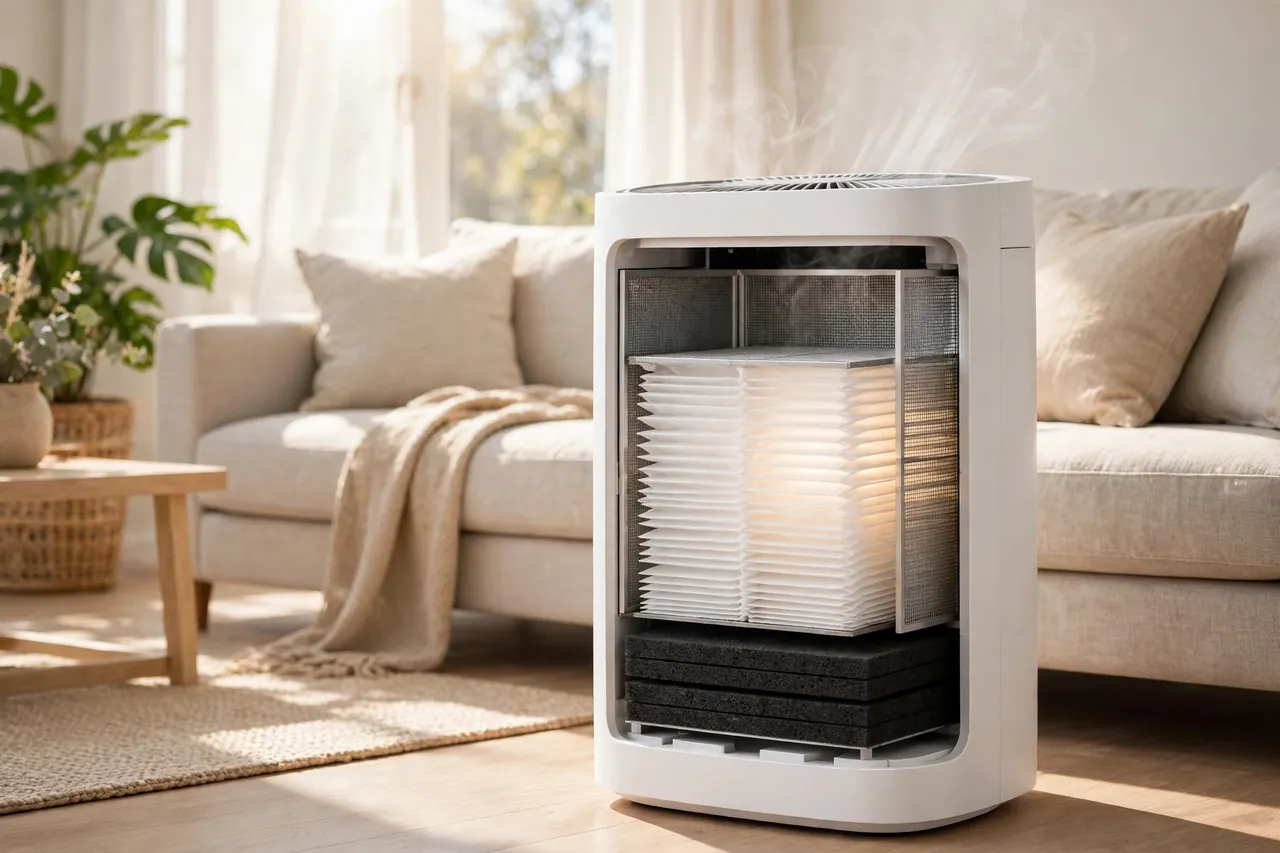
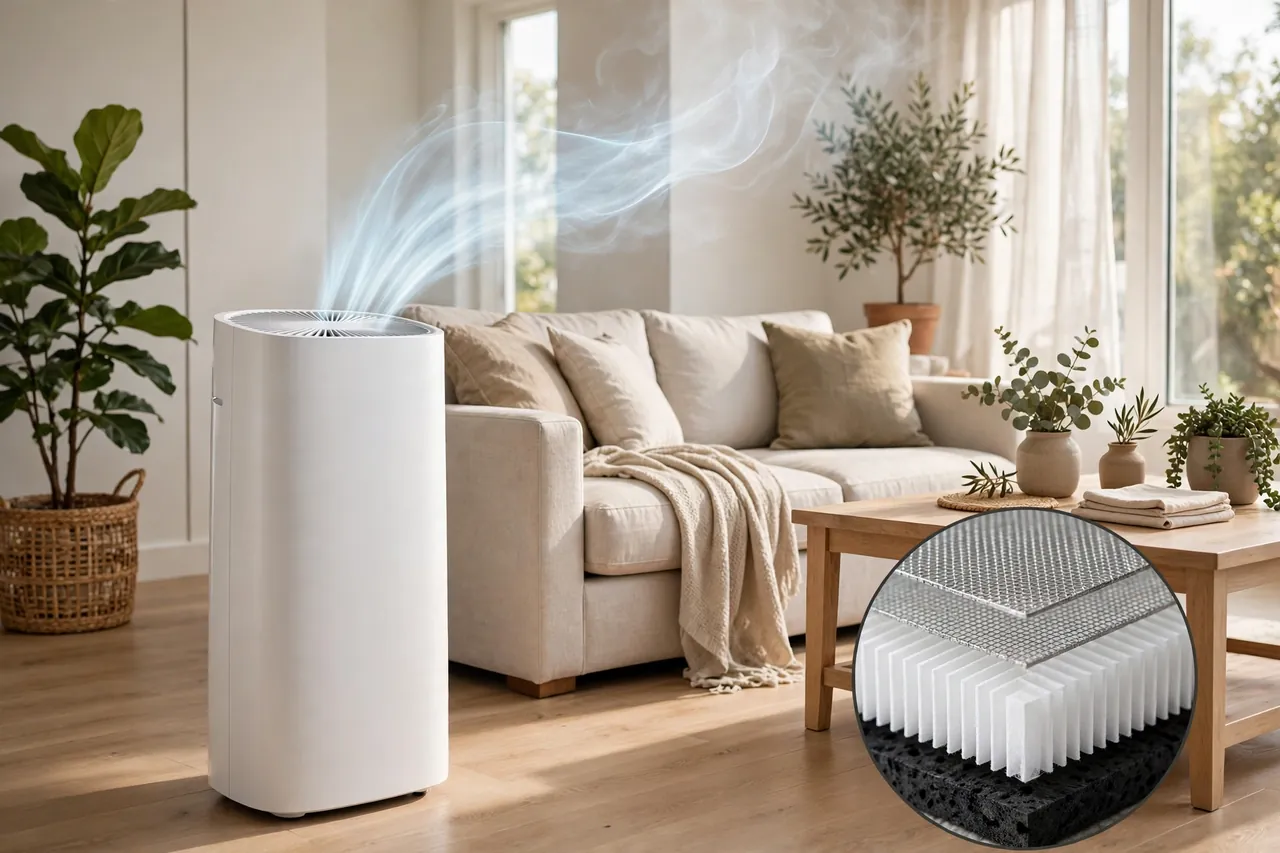
HEPA stands for high-efficiency particulate air. A True HEPA filter traps at least 99.97% of particles as small as 0.3 microns in a single pass through the filter. That size covers the worst triggers for allergies and asthma: pollen, fine dust, mold spores, and pet dander.
Watch the label closely. “True HEPA” and “HEPA” with a real test standard mean something. “HEPA-type,” “HEPA-style,” and “HEPA-like” do not. Those words are marketing labels with no fixed standard behind them, and a filter that carries one can let fine allergens slip through. If the box does not say True HEPA, treat it as a no.
Also check that the filter seals well inside the machine. Air that leaks around the filter never gets cleaned, no matter how good the filter media is. A sealed design, where all the air must pass through the filter, matters as much as the filter itself.
Clean Air Delivery Rate tells you the real cleaning speed
Clean Air Delivery Rate, or CADR, measures how much clean air a purifier delivers each minute, in cubic feet per minute. The Association of Home Appliance Manufacturers (AHAM) tests it independently, and the best listings show three CADR numbers: one for smoke, one for dust, and one for pollen. Smoke is the hardest test, because smoke particles are the smallest, so the smoke CADR is the number to compare first.
A high CADR on a small machine means little if the room is large. CADR only helps when it matches the room. The next section shows you the simple math, and the EPA’s own sizing table, so you can check any model in seconds.
Activated carbon handles smells and gases
A HEPA filter traps particles, but it cannot trap gases. Cooking smells, smoke odors, fresh paint fumes, and cleaning-product vapors pass straight through it. An activated carbon filter absorbs many of those gases and odors.
The EPA notes that carbon filters work best when they hold a large amount of carbon material, and that there is no widely used performance rating for gas removal the way CADR rates particle removal. So treat carbon as a useful extra, not a measured promise. If odors or chemical smells set off your asthma, pick a model with a real carbon stage, not a thin carbon sheet.
Quiet running decides whether you leave it on
A purifier only helps while it runs. A loud machine gets switched off at bedtime, and that is exactly when you breathe the same bedroom air for six to ten hours straight. Check the noise rating on the lowest setting, and look for a sleep mode with dimmed or dark lights.
As a rough guide, the EPA notes that a noise rating around 50 decibels is about as loud as a modern refrigerator. For a bedroom, look for far less than that on the low setting, ideally in the 20s. If you cannot find a published noise figure, that is a warning sign by itself.
No ozone, no fragrance, no ionizer you cannot switch off
This is the safety line, and doctors draw it firmly. Ozone is a lung irritant. It can cause coughing, throat irritation, chest tightness, shortness of breath, and worse asthma. The EPA advises against air cleaners that intentionally produce ozone, and notes that some ionizers, electrostatic precipitators, and plasma cleaners can emit ozone as a side effect.
Some purifiers add fragrance to the air on purpose. Fragrance is also a lung irritant for many people with asthma, so skip it. If a model has an ionizer, make sure you can switch the ionizer off and leave it off. If you cannot switch it off, pick a different model.
How to Match CADR to Your Room Size
Room size is where most buyers go wrong. A purifier rated for a small bedroom will not keep up in a large living room, and a giant unit in a tiny room wastes money and space. Use the EPA’s sizing rule, and you will not need to guess.
The EPA’s Guide to Air Cleaners in the Home gives a simple table for particle removal, based on an 8-foot ceiling. A 100-square-foot room needs a minimum CADR of 65. A 200-square-foot room needs 130. A 300-square-foot room needs 195. A 400-square-foot room needs 260. A 500-square-foot room needs 325. And a 600-square-foot room needs 390. If your ceiling is higher than 8 feet, go one size up.
A quicker rule from the same guidance says the tobacco smoke CADR should be at least two-thirds of the room’s area in square feet. So a 120-square-foot bedroom, which is 10 feet by 12 feet, needs a smoke CADR of at least 80. A 300-square-foot living room needs a smoke CADR of at least 200. For allergy or asthma use, size up rather than down, because faster air turnover gives the filter more chances to catch triggers before you breathe them in.
Follow these steps to size any purifier before you buy it.
- Measure your room. Multiply its length by its width to get the square footage. For an open floor plan, measure the whole connected space, not just the corner where the purifier will sit.
- Find the smoke CADR on the box or the maker’s spec page. Use the AHAM Verifide listing when you can, because AHAM tests the number independently instead of taking the maker’s word for it.
- Check the smoke CADR against the two-thirds rule. If the number is below two-thirds of your room size, the unit is too small for that room.
- Check the room size on the box against your own measurement. If the box claims a far bigger room than the CADR supports, trust the CADR, not the box.
- Pick the quiet setting you will actually use. A unit that only hits its rated CADR on a loud top speed will not help you at night if you turn it down to sleep.
One more sizing tip saves many buyers from disappointment. It is fine to use a purifier rated for a bigger room than yours. You can run it on a lower, quieter speed and still get plenty of clean air. It is never fine to use one rated for a much smaller room and hope for the best.
What to Avoid When You Buy an Air Purifier
Some purifiers look helpful and quietly make the air worse for sensitive lungs. Learn the four traps before you shop, and you will dodge most of them.
Ozone generators
An ozone generator makes ozone on purpose and sells it as cleaning. The EPA states that at levels that do not exceed public health standards, ozone is generally ineffective at controlling indoor air pollution, and at levels that do harm health, it can cause long-term lung damage. No federal agency has approved ozone generators for use in occupied rooms. Never run one in a room where people sleep, work, or spend time.
Watch for soft names that hide the same idea. “Activated oxygen,” “energized oxygen,” and “pure air” sometimes describe ozone production. If a product does not state plainly that it produces no ozone, treat that silence as a no.
Ionizers and plasma cleaners you cannot switch off
An ionizer charges particles so they stick to surfaces or plates. That sounds clever, but the process can produce ozone as a side effect, and some models push indoor ozone above public health standards. Plasma and electrostatic cleaners carry the same risk. The EPA notes that electronic air cleaners are not recommended for smoke removal, and advises using only air cleaners certified by the California Air Resources Board (CARB), which limits ozone to 0.050 parts per million.
If you already own a purifier with an ionizer, switch the ionizer off. If the model has no off switch for it, use the purifier only in a room where no one with asthma or allergies spends time, or replace it with a filter-only model.
“HEPA-type” and “HEPA-like” filters
These labels borrow the good name of HEPA without meeting its standard. A HEPA-type filter may catch large dust, but it can let the fine particles that trigger asthma pass through. The fix is simple: buy only filters labeled True HEPA, and check that the whole machine, not just one spare filter, uses that standard.
Fragrance, scent pods, and essential oil diffusers built in
Some purifiers add scent to the air they clean. For a person with asthma, that scent is a trigger, not a bonus. Skip scent pods, fragrance cartridges, and built-in diffusers. Clean air should smell like nothing at all.
Big room claims with no CADR behind them
A box that claims a huge room size but lists no CADR is asking you to trust a marketing number. CADR is the tested number. Room-size claims without it are guesses. Check the AHAM Verifide directory for the model before you pay, and walk away from any purifier that hides its CADR.
The Best Air Purifiers by the Doctor-Backed Checklist
No doctor has ranked these models, and this article does not pretend otherwise. The four purifiers below earn their places because they meet the checklist from the earlier sections in ways you can verify: True HEPA filtration, a published CADR or room size that fits a real room, no-ozone design or a switchable ionizer, and, for two of them, independent AAFA certification. They suit different rooms and budgets, so match the model to your room, not to a ranking.
Use this table to compare them at a glance. The “why it fits the checklist” column is the ranking rule for this guide: a model earns its place by meeting the published criteria, not by being a favorite.
Comparison of four purifiers against the doctor-backed checklist
| Purifier | Filter and certification | Room fit | Why it fits the checklist |
|---|---|---|---|
| Coway Airmega Mighty (AP-1512HH) | True HEPA plus carbon filter | About 361 sq ft at nearly 5 air changes per hour | Strong all-round pick for a large room, with a washable pre-filter and an air quality light |
| Alen BreatheSmart 75i | Medical-grade HEPA; AAFA asthma & allergy friendly certified | About 1,400 sq ft at 2 air changes per hour | The only pick here with AAFA certification for the whole line, built for very large spaces |
| Rabbit Air MinusA2 (SPA-780A) | True HEPA; AAFA asthma & allergy friendly certified | About 815 sq ft standard coverage; 408 sq ft for allergy sufferers | Certified design with a carbon stage and a smoke CADR of 180 |
| Germ Guardian 4-in-1 | True HEPA plus charcoal filter | Medium room; about 153 sq ft at nearly 5 air changes per hour | Budget pick that still meets the core checklist for a bedroom or small room |
Coway Airmega Mighty (AP-1512HH): best all-round pick for a large room
HealthCentral names the Coway Airmega Mighty its best overall air purifier, and the reasons line up with the doctor-backed checklist. It uses a True HEPA filter as part of a filter pack that also holds a washable pre-filter and a carbon filter for odors. In a 361-square-foot room it delivers almost five air exchanges per hour, which is the fast turnover that allergy households need. In a much larger 874-square-foot room it still manages two air exchanges per hour.
The extras help in daily use. An air quality light shifts from blue to purple to red as indoor pollution rises, and the fan speeds up to clean the air faster. The filter set lasts 6 to 12 months. Pick this one when your main room is large and you want one machine to do the heavy lifting without fuss.
Alen BreatheSmart 75i: best pick for a very large space, with AAFA certification
The Alen BreatheSmart 75i stands out for one reason no other pick here can match: independent certification. The Asthma and Allergy Foundation of America (AAFA) announced on May 8, 2025 that the BreatheSmart 35i, 45i, and 75i earned its asthma & allergy friendly® Certification. To earn it, a purifier must cut airborne allergen levels by at least 90%, trap at least half of the allergen it removes inside its filter instead of stirring it back into the room, and keep ozone below 0.05 parts per million. You can read the full criteria in the AAFA announcement for the BreatheSmart line.
The 75i covers serious square footage. HealthCentral reports that it exchanges the air two times an hour in a 1,400-square-foot space, and once an hour in a 2,800-square-foot area. Its medical-grade HEPA filter removes 99.9% of viruses and allergens down to 0.1 micron, according to the same report. One caution matters: the 75i has an optional ionizer, so keep that button off if anyone in the home has a lung condition. Pick this one when you need to cover a large open space and you want the strongest independent certification behind the purchase.
Rabbit Air MinusA2 (SPA-780A): best certified pick for a bedroom or living room
The Rabbit Air MinusA2 carries the same AAFA asthma & allergy friendly® certification as the Alen line. Rabbit Air states that certified models must reduce bio-allergen levels in a defined space, remove the allergen instead of just moving it around, and add no ozone to the home. Its BioGS HEPA filter traps common allergens such as pet dander and dust mite matter, and the six-stage design adds an activated carbon filter for odors and gases.
The published specs make the room fit easy to judge. Rabbit Air lists a smoke CADR of 180, a dust CADR of 193, and a pollen CADR of 200, with standard coverage of 815 square feet and allergy-sufferer coverage of 408 square feet. Its lowest noise level is 25.6 decibels, quiet enough for a bedroom. Pick this one when you want a certified machine for a bedroom or a medium living room, with strong odor control as well.
Germ Guardian 4-in-1: best budget pick for a small or medium room
A tight budget does not force you to give up the checklist. HealthCentral names the Germ Guardian 4-in-1 its best budget air purifier, and it carries a True HEPA filter plus a charcoal filter for odors. It delivers almost five air changes in a 153-square-foot room, which makes it a good fit for a bedroom, and it still covers a larger open living and dining area at a slower rate.
It also has an optional UV-C light and five speeds, including a very quiet one. The design is basic, and you cannot switch off the touchscreen lights, but the core job, trapping allergens with a True HEPA filter and no ozone, is solid. Pick this one when you need a bedroom purifier and you want to spend the least while still meeting the checklist.
A final note on this short list: it is a starting point, not a complete market survey. Any purifier that meets the same checklist, True HEPA, a CADR that fits your room, carbon if you need it, quiet running, and no ozone, can serve you just as well. Check the specs yourself before you buy, and let the checklist, not the brand name, make the decision.
Where to Put It and How to Run It
The best purifier in the wrong room helps no one. Placement and running habits decide how much of your day you spend breathing filtered air.
Start with the bedroom. You spend six to ten unbroken hours there each night, breathing the same air, and nighttime symptoms hit hardest for many people with asthma. A purifier in the bedroom gives you the longest stretch of clean air for the money. If you can only buy one machine, put it where you sleep.
Next, cover the room where you spend the most waking hours, often the living room. If your home has an open plan, treat the whole connected space as one room when you size the purifier, and place the unit where air can flow freely around it.
Run the purifier continuously, not just when the air smells bad. The EPA notes that higher fan speeds and longer run times filter more air, and that an air cleaner filters less air at a lower speed. Triggers build back up within hours once the machine stops, so a purifier that runs all day on a low, quiet setting beats one that runs on high for an hour and then sits idle.
Keep the airflow clear. Place the unit on the floor or a table as the maker directs, away from curtains, furniture, and walls that block the intake or the outlet. If the draft bothers you, point the outlet away from where you sit or sleep instead of switching the machine off.
Change the filters on schedule. The EPA warns that a dirty, overloaded filter will not work well. Mark the change date on your calendar when you install a new filter, and check the maker’s interval for both the HEPA filter and the carbon filter, because they often differ. A purifier with a clogged filter is just a noisy box. If a new filter does not bring the airflow back, or the machine starts making strange noises, check our air purifier repair guide before you buy a replacement, because a stuck fan or a loose seal is often a cheap fix.
Pair the purifier with basic source control. Keep windows shut during high pollen days, wash bedding in hot water each week, and vacuum with a HEPA-filter vacuum. A purifier catches what floats in the air, but it cannot clean a dusty mattress or a damp carpet. For a full cleaning routine that cuts the dust load a purifier has to handle, follow a deep cleaning house checklist room by room, so the air stays cleaner between filter changes.
What a Purifier Cannot Do
An honest guide must say where the help stops. A purifier is one tool in a bigger plan, and expecting it to do everything leads to disappointment.
A purifier cannot cure asthma or allergies. The EPA states that studies with portable HEPA air cleaners have found improvements in one or more allergy or asthma symptoms, but the studies do not always show major improvements, and they do not show improvements in all symptoms. Think of a purifier as a way to lower your daily trigger load, not as a treatment. Keep taking your prescribed medicine and follow your asthma action plan exactly as your doctor set it.
A purifier cannot reach dust mites where they live. Dust mites spend nearly all their time inside mattresses, pillows, bedding, and carpet, and they rarely float in the air. A HEPA filter only catches them in the brief moments they get stirred up, such as when you change the sheets. Washing bedding in hot water, using allergen-proof covers on the mattress and pillows, and keeping indoor humidity between 40% and 60% do far more against dust mites than any air filter can.
A purifier cannot fix mold. The EPA states that portable air cleaners do not address the cause of mold and musty odors, because mold grows from a water or moisture problem in the building. A purifier may catch some mold spores and cut some odor, but it will not solve the damp problem. Fix the leak, dry the area, and clean up the mold first.
A purifier cannot remove carbon dioxide or replace fresh air. It filters the air already in the room, but it does not bring in oxygen or push out the carbon dioxide you breathe out. You still need ventilation with clean outdoor air. Sealing air leaks helps here too: gaps around windows and doors let pollen and outdoor pollution drift in all day, so tightening the shell of your home cuts the load on the purifier. If drafts and gaps are part of the problem, learn how to improve home insulation and seal the worst leaks first.
Finally, a purifier cannot clean a room it cannot reach. One small unit in the bedroom does nothing for the living room. Size each room on its own, and add a second unit only where the first one cannot cover the space.
A Simple Buying Checklist
Take this list to the store or keep it open while you shop online. If a purifier passes every line, it meets the doctor-backed standard in this guide.
- True HEPA filter, stated on the box, with a sealed design so air cannot leak around it.
- Smoke CADR at least two-thirds of your room’s square footage, checked against the AHAM Verifide listing when possible.
- Activated carbon filter if smells, smoke, or chemical fumes bother you.
- Quiet low setting you can sleep next to, ideally in the 20s of decibels, with a dark sleep mode.
- No ozone production, stated plainly by the maker, and any ionizer switched off or absent.
- No fragrance, scent pods, or built-in diffuser.
- Filter cost and change interval you can live with, checked before you buy.
- AAFA asthma & allergy friendly® certification if you want independent proof, not just a marketing claim.
If a model fails the first line, stop there. No smart app, sleek design, or low price makes up for a filter that cannot trap the particles that trigger your symptoms.
Related Guides
If your purifier already runs but still struggles, or you want to cut the dust load at its source, these guides help next. Air Purifier Repair walks through fixing a purifier you already own, from weak airflow to strange noises. Deep Cleaning House Checklist covers the room-by-room cleaning that keeps allergens down between filter changes.
Frequently Asked Questions
Do Doctors Recommend Air Purifiers?
Yes, many doctors and allergists suggest air purifiers for patients with asthma or allergies, paired with allergen avoidance and prescribed treatment. They point to True HEPA models, sized to the room, and they warn against ozone-producing devices. A purifier works best in the bedroom, where you spend a large share of your time.
Do air purifiers help with asthma?
They can help by reducing the environmental triggers that set off symptoms, but they do not treat asthma. Lowering exposure to airborne allergens is standard environmental-control advice from allergists. An air purifier supplements, and never replaces, your prescribed medication and your doctor’s asthma action plan.
What is the best type of air purifier for asthma?
For airborne triggers such as pollen, dander, and smoke, a True HEPA purifier sized to your room is best. For settled triggers such as dust mites and mold in bedding and carpet, surface control matters more than air filtration. Many asthma households combine HEPA for the air with washing, encasements, and humidity control for surfaces.
Should people with asthma avoid ionizers and ozone air purifiers?
Yes, they are the type to avoid. Ozone is a respiratory irritant that can make asthma worse, and ionizers can generate ozone as a byproduct. Health authorities specifically warn people with asthma away from ozone-generating air cleaners. Choose devices that state they produce no ozone.
Can air purifiers cure asthma?
No, an air purifier is not a cure for asthma. The right purifier can help control asthma symptoms, especially when used alongside medication and other asthma management strategies. If your symptoms change or worsen, talk to your doctor instead of changing your treatment on your own.
This article gives general information only, not medical advice. An air purifier can lower the triggers in your home, but it cannot diagnose or treat asthma, allergies, or any lung condition. Talk to your own doctor about asthma and allergy decisions, keep taking prescribed medicine as directed, and follow your asthma action plan.
Start with your bedroom, measure the room, and pick a True HEPA purifier whose smoke CADR fits that space with no ozone. That one choice, made with the checklist above, gives you cleaner air tonight and a calmer breathing routine for the months ahead.


