
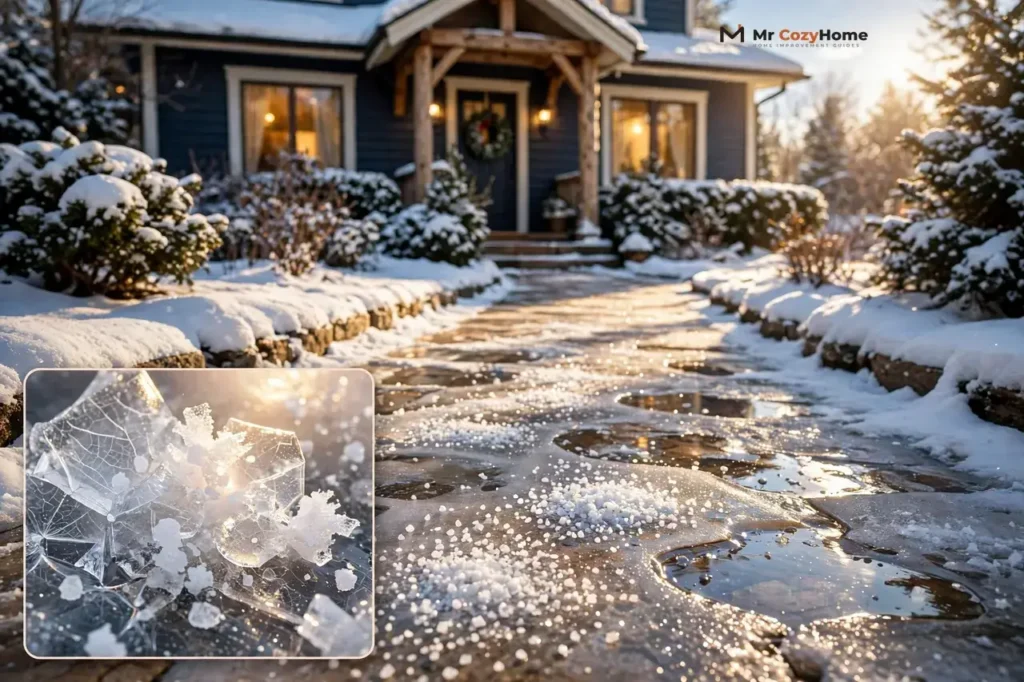
Yes, Epsom salt melts ice, but only in mild cold, only slowly, and only on small patches. It stops working when the temperature drops into the mid-20s, and it costs about five times as much per pound as rock salt. If you already have a bag in the house and the freeze is light, it can help on a few icy steps. For a driveway, a long walkway, or a real cold snap, reach for a real de-icer instead.
That short answer surprises a lot of people, because the tip shows up everywhere online. Epsom salt looks like salt, it feels like salt, and it does lower the freezing point of water. But the chemistry sets a hard limit on how far it can go, and that limit sits far above the temperatures where winter does its worst work. The rest of this guide shows you exactly where that limit is, how Epsom salt compares with rock salt and calcium chloride, what it does to concrete, plants, and pets, and what to use instead.
Why Epsom Salt Can Melt Ice at All
Epsom salt is not table salt. Its real name is magnesium sulfate, and the crystals you buy in a bag are magnesium sulfate heptahydrate, which means each crystal already holds seven water molecules inside it. When you sprinkle it on ice, the crystals start to dissolve in the thin film of water that always sits on an icy surface.
As the crystals dissolve, they split into magnesium ions and sulfate ions. Those ions get in the way of water molecules trying to lock together into ice. The salty water that forms now needs a colder temperature to freeze than plain water does. Scientists call this freezing-point depression, and it is the same trick every de-icer uses. Plain water freezes at 32 degrees Fahrenheit. Mix in enough salt, and the mixture stays liquid at colder temperatures, so the ice around it starts to melt.
So the idea behind the tip is real. Epsom salt does lower the freezing point of water. The problem is how little it lowers it, and how slowly it gets there. That is where the tip falls apart in real winter weather.
How Cold Is Too Cold for Epsom Salt?
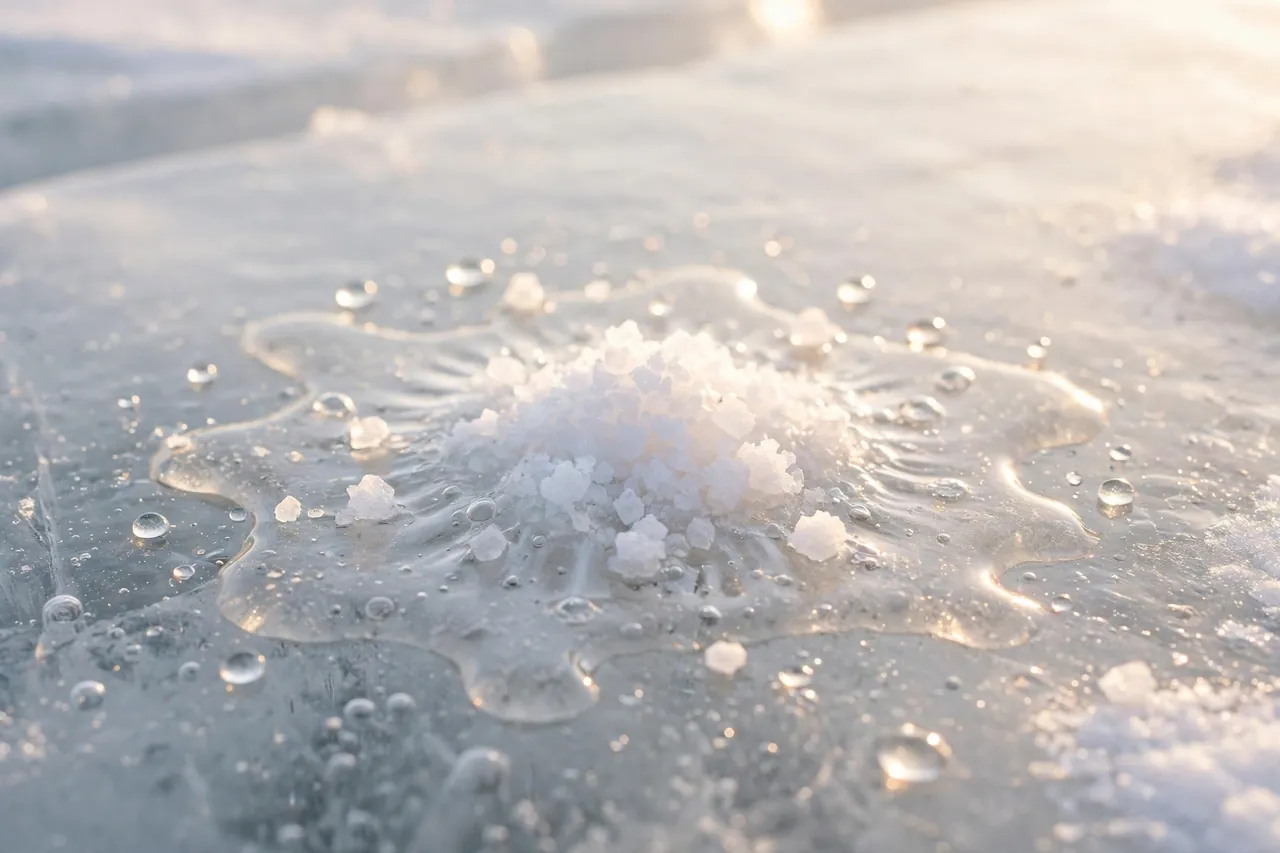
Here is the number that decides everything. Researchers who mapped the magnesium sulfate and water system found that the coldest brine it can form stays liquid only down to minus 3.7 degrees Celsius, or about 25 degrees Fahrenheit, at a mix of about 17 percent magnesium sulfate. The Journal of Chemical and Engineering Data published that measurement, and it is the hard floor for Epsom salt. Below about 25 degrees, no Epsom-salt brine can stay liquid at all, so no melting happens.
In real life it quits even sooner. Dry crystals dissolve slowly in cold water, and on a driveway they almost never reach that ideal 17 percent mix. The salt sits on the ice, melts a little water, and then the cold wins. Several practical guides put the working cutoff near 20 degrees Fahrenheit, but the chemistry says the ceiling is really about 25 degrees, and the melting gets weak well before that. Plan on Epsom salt only when the air stays in the upper 20s or warmer.
Now compare that with the de-icers made for the job. Kansas State University Extension lists the lowest working temperature for each common type: rock salt, or sodium chloride, works down to about 12 degrees Fahrenheit, magnesium chloride works down to about 5 degrees, and calcium chloride keeps working down to minus 25 degrees. The K-State Extension guide to choosing an ice melt product names calcium chloride as its horticulture department’s first pick, because it works in the deepest cold and stays gentle on plants when you use it as directed.
That gap is the whole story. On a 28-degree morning, Epsom salt can help a little. On a 15-degree night, it does nothing, while rock salt still works and calcium chloride barely notices the cold. Winter rarely warns you which kind of night is coming, so a de-icer with a 25-degree ceiling is a gamble.
Epsom Salt vs. Rock Salt vs. Calcium Chloride
Put the four common choices side by side and the trade-offs get clear fast. Epsom salt is the gentlest of the group, but it is also the weakest and the most expensive per pound. Rock salt is cheap and easy to find, but it quits in real cold and it is hard on concrete and plants. Calcium chloride costs the most per bag, but it melts the fastest, works in the deepest cold, and you need less of it.
Table: How the common de-icers compare
| De-icer | Works down to | Speed | Cost per pound |
|---|---|---|---|
| Epsom salt | About 25 F | Slow | About $0.85 |
| Rock salt | About 12 F | Medium | About $0.17 |
| Calcium chloride | About -25 F | Fast | About $1.10 |
| Magnesium chloride | About 5 F | Fast | About $0.96 |
| Sand | Melts nothing | Traction only | About $0.10 |
The temperature limits in this table come from Kansas State University Extension and from the published eutectic measurement for magnesium sulfate. The prices come from US retail listings checked on 5 November 2026: an 8-pound bag of store-brand Epsom salt at $6.79, a 50-pound bag of rock salt at $8.25, a 50-pound bag of calcium chloride pellets at $54.97, a 50-pound bag of magnesium chloride flakes at $47.99, and a 50-pound bag of play sand at about $5. Prices change by store and by season, so treat these as a snapshot, not a quote.
Read the cost column with care. Epsom salt costs about five times as much per pound as rock salt, and you need more of it, because it melts less ice per scoop. Calcium chloride looks pricey per pound, but it melts ice faster and keeps working far below the point where the cheaper salts give up, so a bag goes further in a cold snap. Sand is the cheapest option of all, but it melts nothing. It only gives your shoes grip, which still matters on a night when no salt can work.
What Epsom Salt Does to Concrete, Plants, and Pets
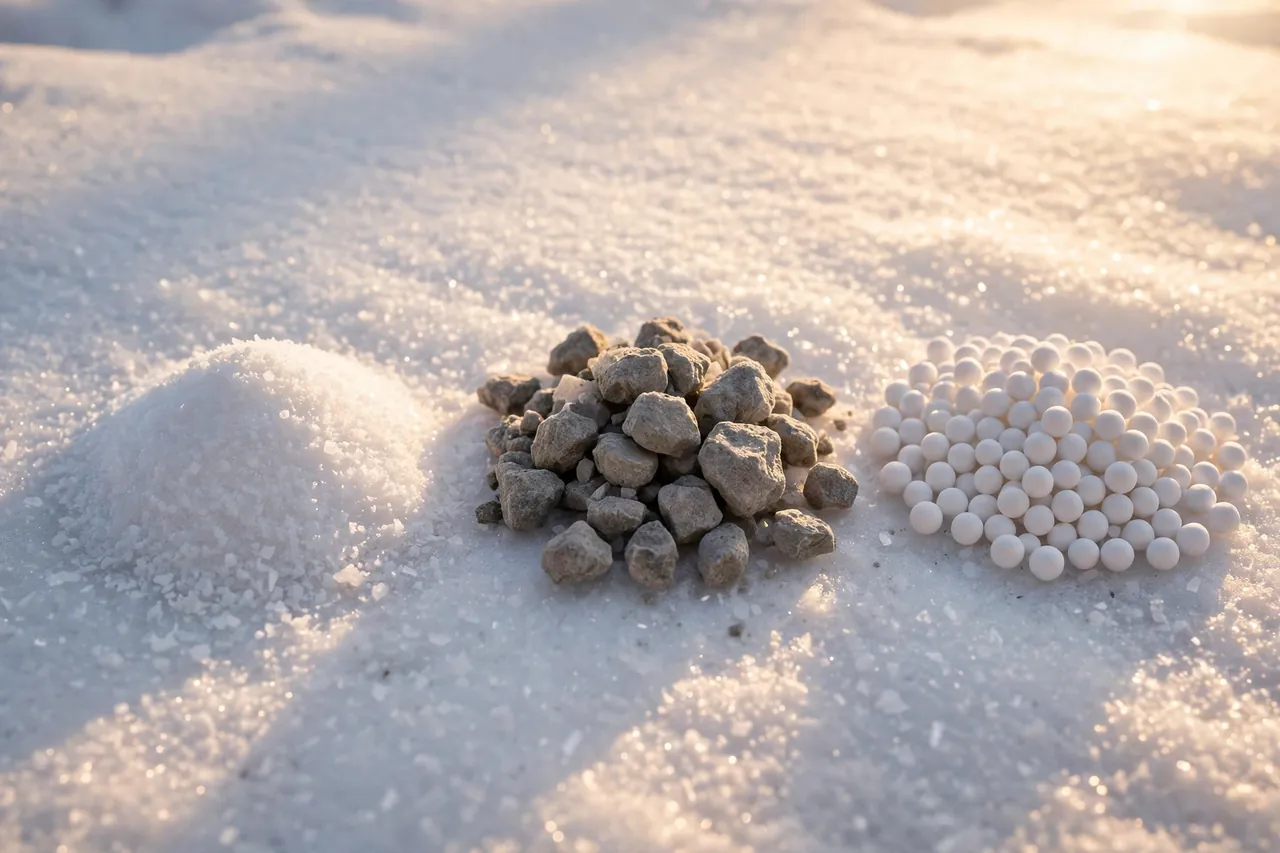
The main reason people reach for Epsom salt is the hope that it is the gentle option. That hope is mostly fair, but gentle does not mean harmless, and it does not mean free of side effects. Here is what actually happens on each surface you care about.
Concrete and metal
Epsom salt is less corrosive than rock salt, and that is a real advantage. Rock salt is well documented for damaging unsealed concrete, because it drives extra freeze-and-thaw cycles in the pores of the surface and it corrodes metal railings and car parts. Magnesium sulfate is kinder in both ways. Even so, it is still a salt. If you pile it on and leave the residue there all winter, the buildup can still wear on a surface, so rinse the area with plain water once the weather warms up. Never use any de-icer, Epsom salt included, on concrete less than a year old. Fresh concrete is still curing, and salt of any kind can scar it for good.
Plants and soil
This is where Epsom salt earns its good name. Magnesium and sulfur are both plant nutrients, and a small amount washing into a garden bed can help soil that is short on magnesium. Rock salt, by contrast, burns lawn edges and shrubs, and Kansas State University Extension warns against letting it wash off walkways into lawns and flower beds. But the dose decides the effect. A heavy dose of Epsom salt can throw soil nutrients out of balance, because too much magnesium blocks roots from taking up calcium. Gardeners know this problem well: blossom end rot on tomatoes is a calcium problem, and extra magnesium makes it worse, not better. So treat Epsom salt as the least harmful salt for plants, not as a fertilizer. Use a little, keep it off the beds when you can, and never dump a whole bag on one spot.
Pets
Epsom salt is safer for pets than rock salt, which stings paws and upsets stomachs. A dog that licks a little Epsom salt off its paws after a walk will usually be fine. But a dog that eats a pile of it can still get vomiting and diarrhea, so store the bag where pets cannot reach it and wipe paws after walks on any treated surface. If your dog eats a large amount, call your vet. The same rule covers children: Epsom salt is a chemical, not food, so keep it out of reach and wash hands after handling it.

How to Use Epsom Salt on Ice the Right Way
If you decide to use the bag you already own, use it the way that gives it the best chance. Dry crystals on thick ice in deep cold will disappoint you. A brine on thin ice in mild cold can actually help. Follow these steps.
- Check the temperature first. Only bother if the air is above the mid-20s and the ice is thin, no more than a light glaze or a thin sheet on steps or a walkway. If it is colder, or the ice is thick, save the Epsom salt and use a real de-icer.
- Make a brine. Dissolve Epsom salt in warm water until no more will dissolve, about one part salt to two parts warm water. Warm water matters, because the crystals dissolve slowly in cold water and barely dissolve at all on freezing pavement.
- Pour or spray the brine over the ice with a watering can or a garden sprayer. A liquid spreads the salt evenly and starts working right away, while dry crystals sit on top and wait for melt water that may never come.
- Wait ten to fifteen minutes, then scrape. The brine loosens the bond between the ice and the pavement. Push the slush off with a shovel or a scraper instead of waiting for the salt to melt everything.
- Sweep up the leftover slush. Melt water that refreezes overnight turns into a fresh sheet of ice, often smoother and more dangerous than the first one.
One tip you will see in many guides is to mix Epsom salt with sugar in a one-to-one ratio. The Old Farmer’s Almanac repeats this tip in its guide to de-icing alternatives. Sugar does lower the freezing point a little, so the mix can help slightly. But it does not change the temperature ceiling, and now you are paying for two ingredients to do a weak job. Treat it as a small boost for a pinch situation, not a fix.
Never use Epsom salt as a pre-treatment before a storm. A real brine made from rock salt or calcium chloride can stop ice from bonding to pavement, but Epsom salt is too weak and too costly for that job, and a storm that drops the temperature below the mid-20s will freeze right over it.
Try This Quick Test Before You Trust It
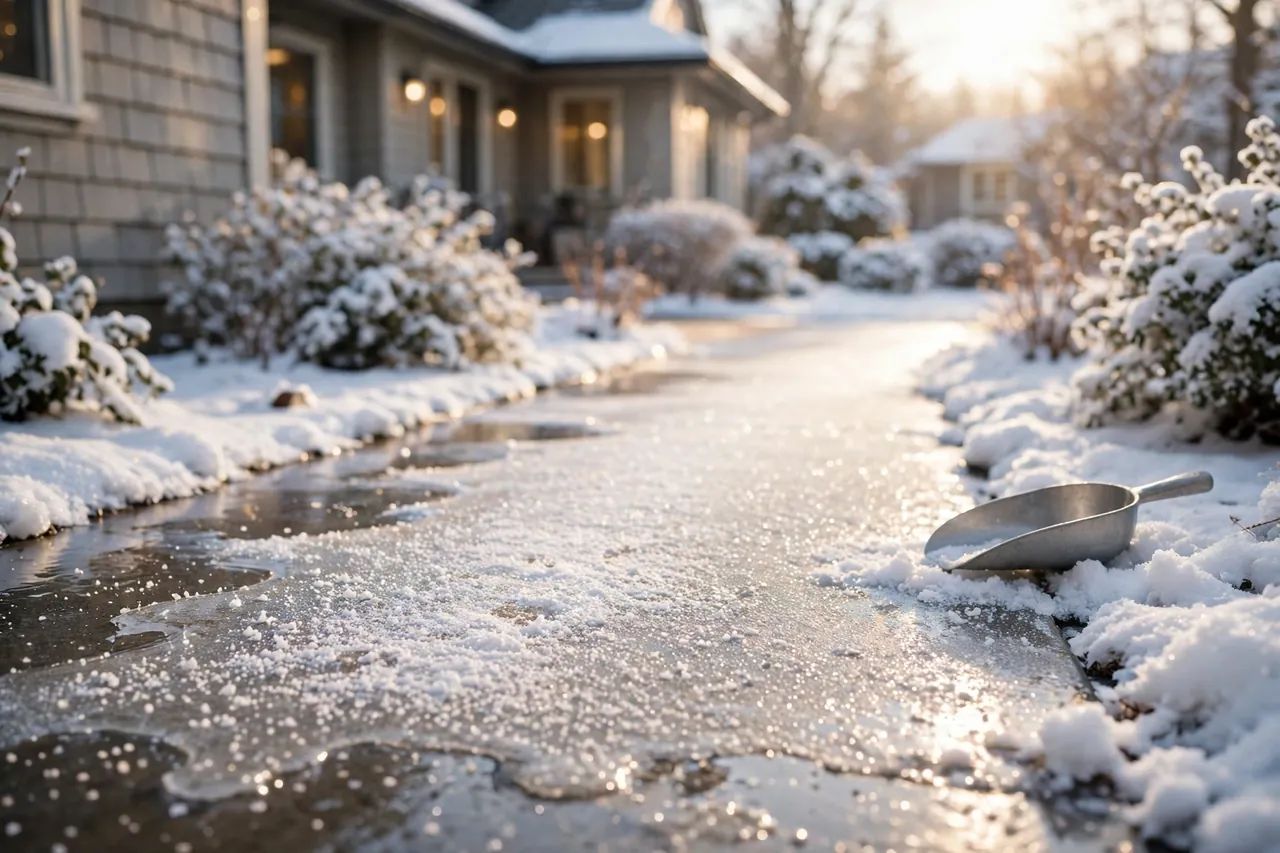
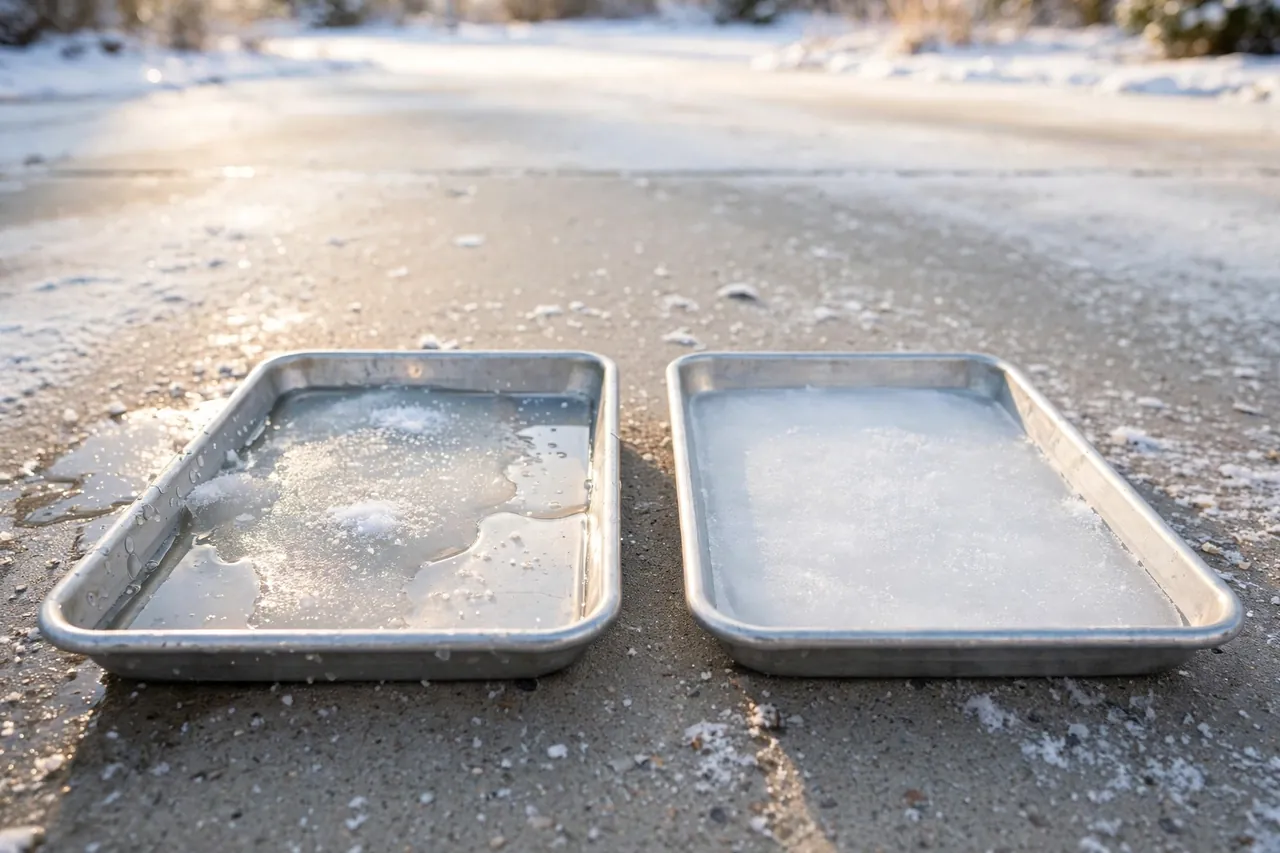
If you want proof instead of promises, run a side-by-side test in your own freezer or on your own porch. It takes one evening, it costs almost nothing, and it shows you the difference in plain sight.
- Fill two identical shallow trays with the same amount of water and freeze them solid.
- Set both trays outside on a cold surface, or in the freezer with the door open a crack, so they stay below freezing.
- Sprinkle the same amount of Epsom salt on one tray and the same amount of rock salt on the other. Use one tablespoon on each.
- Check every ten minutes. Note which tray shows liquid water first, how much of the surface clears, and how long each one takes to soften.
- Write down the outdoor temperature when you start. Then run the test again on a colder night and watch the gap grow.
On a mild night near 30 degrees, both trays will show some melting, and the rock salt tray will usually clear first. On a colder night in the low 20s, the Epsom salt tray will barely change while the rock salt tray keeps working. That is the eutectic limit showing up in your own kitchen, and it tells you more than any online debate can. Wear gloves, keep the trays out of reach of children and pets, and wash your hands when you finish.
What to Use Instead of Epsom Salt
Most of the time, the honest answer is to use a product made for the job. Match the product to your weather, not to what happens to be in the cupboard.
- For mild freezes above 20 degrees on a budget, rock salt is the cheapest real option. It works down to about 12 degrees, and a 50-pound bag costs only a few dollars more than a small bag of Epsom salt. Keep it off lawn edges and unsealed concrete.
- For deep cold below 15 degrees, calcium chloride is the right call. It works down to minus 25 degrees, it melts fast because it gives off heat as it dissolves, and it is the gentlest chloride on plants when you use it as directed. It costs more per bag, but you spread less of it.
- For concrete, pets, and plant beds, magnesium chloride is a good middle ground. It works down to about 5 degrees, it is easier on surfaces than rock salt, and it is widely sold as a pet-friendlier de-icer.
- For traction when it is too cold for any salt, sand or cat litter is the answer. Neither one melts ice, but a thin layer gives shoes and tires grip, and that grip is what keeps people upright on the coldest nights.
If you want the full walkthrough, from clearing the snow first to spreading the right product in the right amount, read our guide on how to melt ice on a driveway. It covers the whole job step by step, so this article can stay focused on the Epsom salt question.
Is Epsom Salt Worth the Money?
Run the numbers and the answer is clear. A small bag of Epsom salt costs about $0.85 per pound, while a 50-pound bag of rock salt costs about $0.17 per pound. That makes Epsom salt roughly five times as expensive per pound, before you count the fact that you need more of it to melt the same patch of ice. A driveway would take many small bags, and the bill would climb past the price of a single bag of real de-icer in one storm.
Calcium chloride looks expensive at about $1.10 per pound, but the comparison is not pound for pound. It works in weather where Epsom salt does nothing at all, it melts faster, and you spread a thinner layer. On a small set of front steps in a mild freeze, the bag of Epsom salt you already own costs you nothing extra, and that is the one case where it makes sense. For anything bigger, colder, or repeated all winter, buy the right product once instead of burning through bath salt all season.
The Bottom Line
Does Epsom salt melt ice? Yes, in mild cold, slowly, and on small areas. No, not as a driveway de-icer, not in a real cold snap, and not at a price that makes sense. Its chemistry caps it near 25 degrees Fahrenheit, it dissolves slowly in the cold, and it costs about five times as much per pound as rock salt. Keep the bag for baths and the garden, and keep a bag of calcium chloride or rock salt by the door for winter.
Check the temperature before your next storm. If the forecast stays in the upper 20s or warmer and only the front steps are icy, the Epsom salt brine in this guide will do. If the forecast drops into the teens, skip it and spread a real de-icer instead. That one check is the difference between a clear walkway and a sheet of ice in the morning.
One safety note before you go: Epsom salt is a chemical, not food. Keep it away from children and pets, do not eat it, and wash your hands after handling it. If someone swallows a large amount, call Poison Control at 1-800-222-1222 or your local emergency number. And never use any de-icer on concrete less than a year old.
Related Guides
For the full driveway job, step by step, see our guide on how to melt ice on a driveway. It covers clearing the snow first, choosing the right product for your temperature, and spreading the right amount.
Frequently Asked Questions
Can Epsom salt melt ice like regular salt?
Yes, but not as well. Epsom salt is magnesium sulfate, and it lowers the freezing point of water like rock salt does. The difference is the limit: Epsom salt stops working near 25 degrees Fahrenheit, while rock salt keeps working down to about 12 degrees. It also works more slowly and needs more product per patch of ice.
Is Epsom salt safe for plants and soil when used on ice?
Yes, in small amounts. Magnesium and sulfur are plant nutrients, and a little runoff can help soil low in magnesium. But a heavy dose can throw soil nutrients out of balance, because too much magnesium blocks roots from taking up calcium. Rock salt is far harsher, so Epsom salt is the safer choice near beds — but use it lightly.
Does Epsom salt work in very cold temperatures?
No. Its chemistry sets a hard floor near 25 degrees Fahrenheit, and in practice it fades fast below the upper 20s, because the crystals dissolve slowly in the cold. Once the temperature drops into the teens, Epsom salt does nothing. Rock salt works down to about 12 degrees, and calcium chloride keeps working down to minus 25 degrees.
Is Epsom salt cheaper than rock salt?
No, it costs much more. Epsom salt runs about $0.85 per pound, while a 50-pound bag of rock salt runs about $0.17 per pound, per US listings checked 5 November 2026. That makes Epsom salt five times as expensive per pound, and you need more of it, so it is a poor buy for anything larger than a few steps.
Can Epsom salt damage concrete or metal surfaces?
It can, but far less than rock salt. Epsom salt is less corrosive than sodium chloride, which is well documented for damaging unsealed concrete and corroding metal. Still, any salt left on a surface all winter can wear it down, so rinse treated areas with plain water in spring. Never use any de-icer on concrete less than a year old.
Still have a bag of Epsom salt and a light freeze on the way? Mix the brine from the steps above, treat just the steps and the walkway, and scrape while it is soft. For the driveway and for any night that drops into the teens, pick up a bag of calcium chloride now, before the storm, and you will not have to think about it again all winter.


