
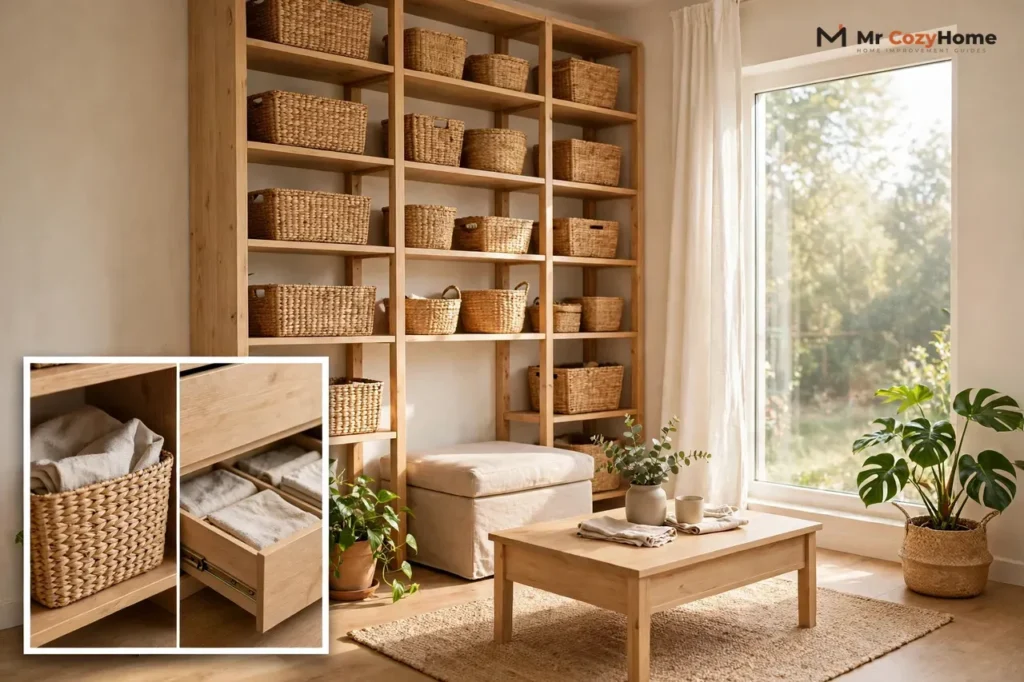
The best storage ideas for small rooms use space you already own: your walls, your doors, the inside of your cabinets, and the space under your bed. You do not need a bigger room or a full remodel to feel the difference.
Pick one strong idea per room, keep daily items easy to reach, and hide the rest behind a door, a drawer, or a lid. That mix gives you more room to live in, without turning your home into a warehouse.
Pick the Right Storage Idea for Your Room
Start with the spot that bothers you most. A crowded counter needs a different fix than a closet that bursts open, and a tiny bathroom needs a different fix than a busy entryway.
Use this quick guide to match the idea to the problem. It saves you from buying a pretty organizer that solves the wrong problem.
Storage idea at a glance
| Idea | Best for | Keep it out of |
|---|---|---|
| Wall shelves and tall units | Books, decor, and daily items | Heavy loads on weak walls |
| Storage furniture | Bedding, blankets, and toys | Rooms with no walking space left |
| Under-bed bins | Seasonal clothes and spare bedding | Daily items you grab each morning |
| Door and cabinet organizers | Shoes, spices, and toiletries | Doors that must close flat and fast |
| Slim rolling carts | Narrow gaps and small bathrooms | Walkways you use every day |
Measure the width, height, and depth of your spot before you buy anything. A cart that looks slim online can still block a door, and a shelf that looks small can still crowd a short wall.
Go Vertical First: Wall Storage That Frees the Floor
When floor space runs out, look up. Walls hold a lot, and they leave your floor open for walking, playing, and living.
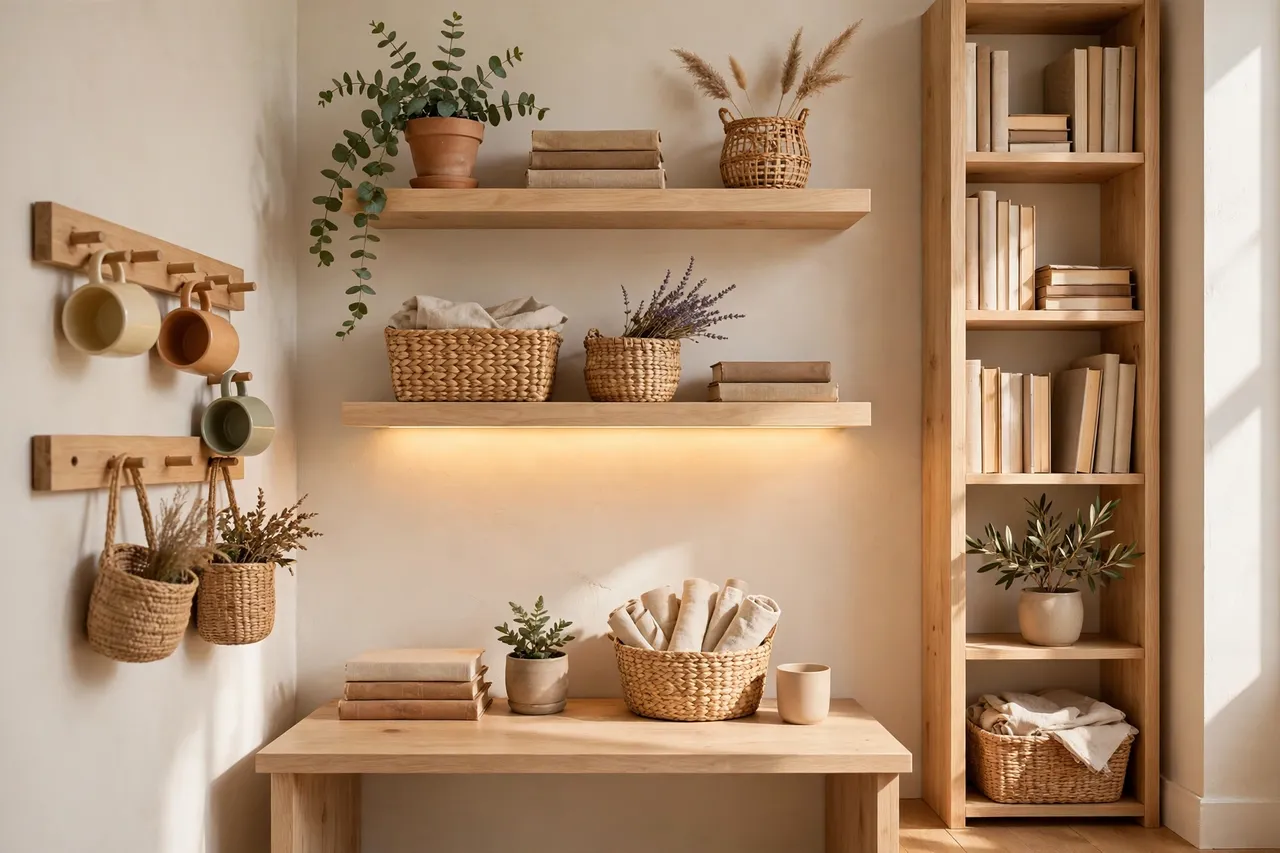
Add Floating Shelves Where You Already Stand
Floating shelves work best above a desk, a sofa, a toilet, or a kitchen counter. They hold books, plants, spices, and small baskets without taking a single inch of floor space.
Keep daily items at eye level and move rarely used items higher. Leave a little empty space on each shelf, too. A packed shelf looks heavy, while a shelf with breathing room looks calm.
Choose Tall and Narrow Over Wide and Low
A tall bookcase or a narrow cabinet stores more than a wide, low unit in the same small room. It draws the eye upward, and it leaves more floor visible.
Place heavy items low and light items high. That keeps a tall unit stable, and it keeps the items you reach for most within easy reach.
Hang a Pegboard or a Rail for Daily Tools
A pegboard turns a blank wall into a flexible storage wall. Hooks, small bins, and baskets hang from it, and you can move them as your needs change.
Pegboards suit kitchens, craft corners, and work areas well. A simple rail with hooks works the same way for mugs, utensils, towels, or bags near the door.
Furniture That Stores Things Too
In a small room, every large piece of furniture should earn its place twice. If it only holds one job, ask what else it could hold.
Let the Bed Do Double Duty
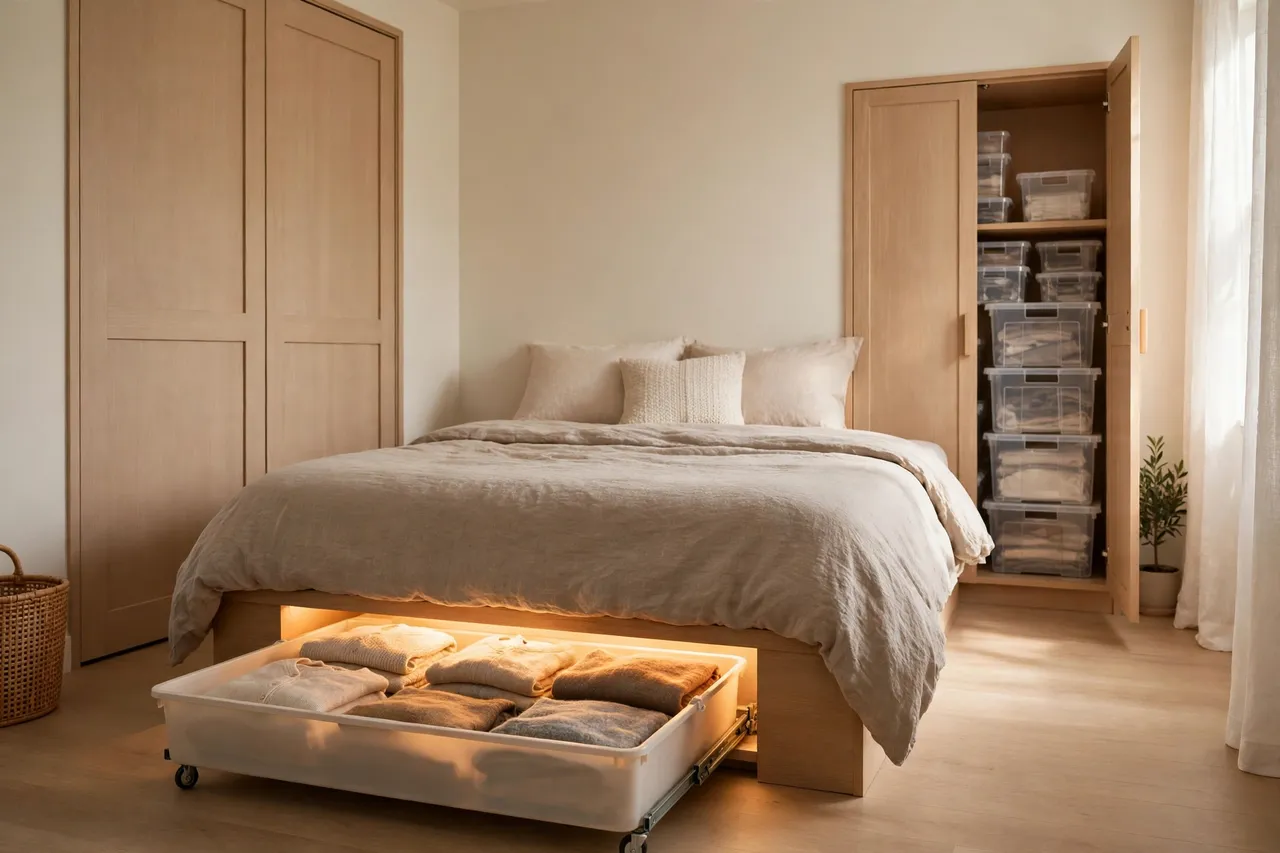
A bed with built-in drawers turns dead space into real storage. A lift-up frame works even better for bulky items, because it opens the whole space under the mattress.
Use drawer beds for clothes and bedding you reach for each week. Save lift-up storage for bulky, seasonal items you need only a few times a year.
Pick Ottomans, Benches, and Tables With Storage Inside
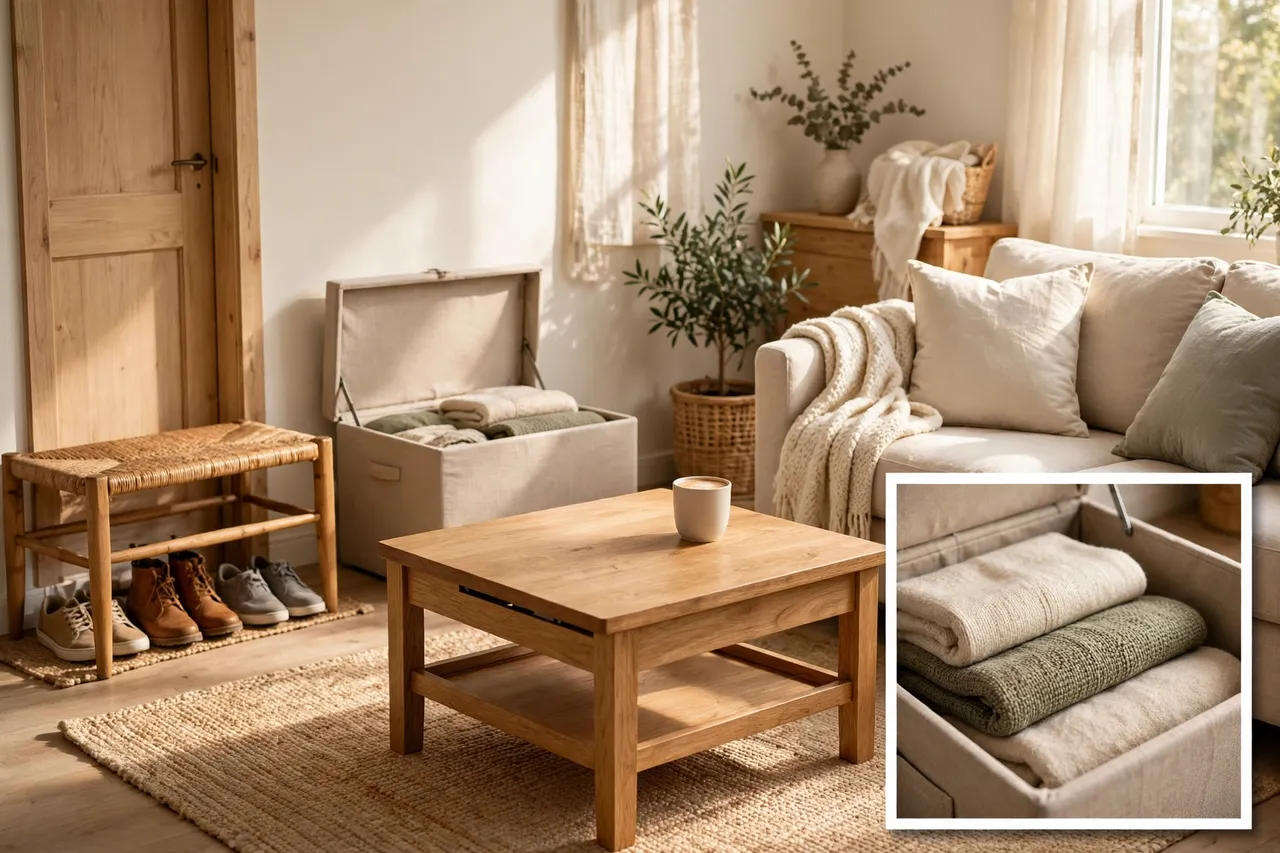
A storage ottoman holds blankets, games, or toys, and it still works as a footrest or extra seat. A bench by the door holds shoes and bags, and it gives you a place to sit while you put shoes on.
A lift-top coffee table hides remotes, chargers, and laptops, then lifts up when you need a work surface. A nightstand with drawers beats a plain table, because it hides clutter instead of showing it.
Keep One Surface Clear on Purpose
Storage furniture works best when you do not fill every surface. Leave the top of one table or bench clear, so you always have a place to set down a cup, a book, or your keys.
That one clear spot makes the whole room feel calmer, even when the drawers and bins underneath hold a lot.
Hidden Storage That Keeps a Small Room Calm
Open shelves show everything, and that can look busy fast. Hidden storage calms a small room, because it puts visual noise behind a door or a lid.
Give Under-Bed Space a Real Job
Use low, rolling bins with lids under the bed for seasonal clothes, spare bedding, and travel bags. Wheels and handles matter here, because you need to slide a bin out without a struggle.
Measure your bed clearance first. Most bins need about six to seven inches, and bed risers can add a few more inches when your bed sits too low.
Use the Inside of Cabinets and Closets
Cabinet doors hide strong storage spots. Add hooks, small racks, or a spice rack inside a kitchen cabinet door, and you free a whole shelf inside the cabinet.
Use clear bins inside deep cabinets, so you can see what sits at the back without pulling everything out. Group similar items together, and label a bin only when the contents are hard to tell apart.
Mix Closed Storage With a Little Open Display
Aim for more closed storage than open shelving in a small room. Closed doors and lids hide mixed items, while one or two open shelves show only the items you love to look at.
That balance keeps the room tidy without making it feel like a closed box. It also makes cleaning faster, because you dust fewer displayed items.
Doors, Corners, and Gaps You Already Own
Some of the best storage spots hide in plain sight. Doors, corners, and narrow gaps cost no floor space, yet they hold a surprising amount.
Put the Back of Every Door to Work
An over-the-door rack or a clear pocket organizer adds storage without drilling a single hole. Use it for shoes, accessories, toiletries, cleaning supplies, or pantry snacks.
Check that the door still closes fully, and do not overload the hinges with heavy items. Light, daily items suit door storage best, while heavy items belong on a shelf or in a cabinet.
Fill Narrow Gaps With Slim Rolling Carts
A slim rolling cart turns a wasted gap into useful storage. Slide one between the sink and the toilet, beside the fridge, or next to a desk.
Pull the cart out when you need something, then push it back when you finish. That movement makes narrow storage easy to use, instead of hard to reach.
Give Corners a Purpose
Corners often sit empty because standard furniture does not fit them well. A corner shelf, a triangular organizer, or a small rotating unit turns that awkward spot into a home for items you use less often.
Use corners for items that need a home but do not need prime space. Books, plants, and backup supplies suit corners well.
Small Bedroom Storage Ideas
A small bedroom needs storage that sleeps quietly. The best bedroom ideas hide bulk, keep daily clothes easy to grab, and leave clear floor space around the bed.
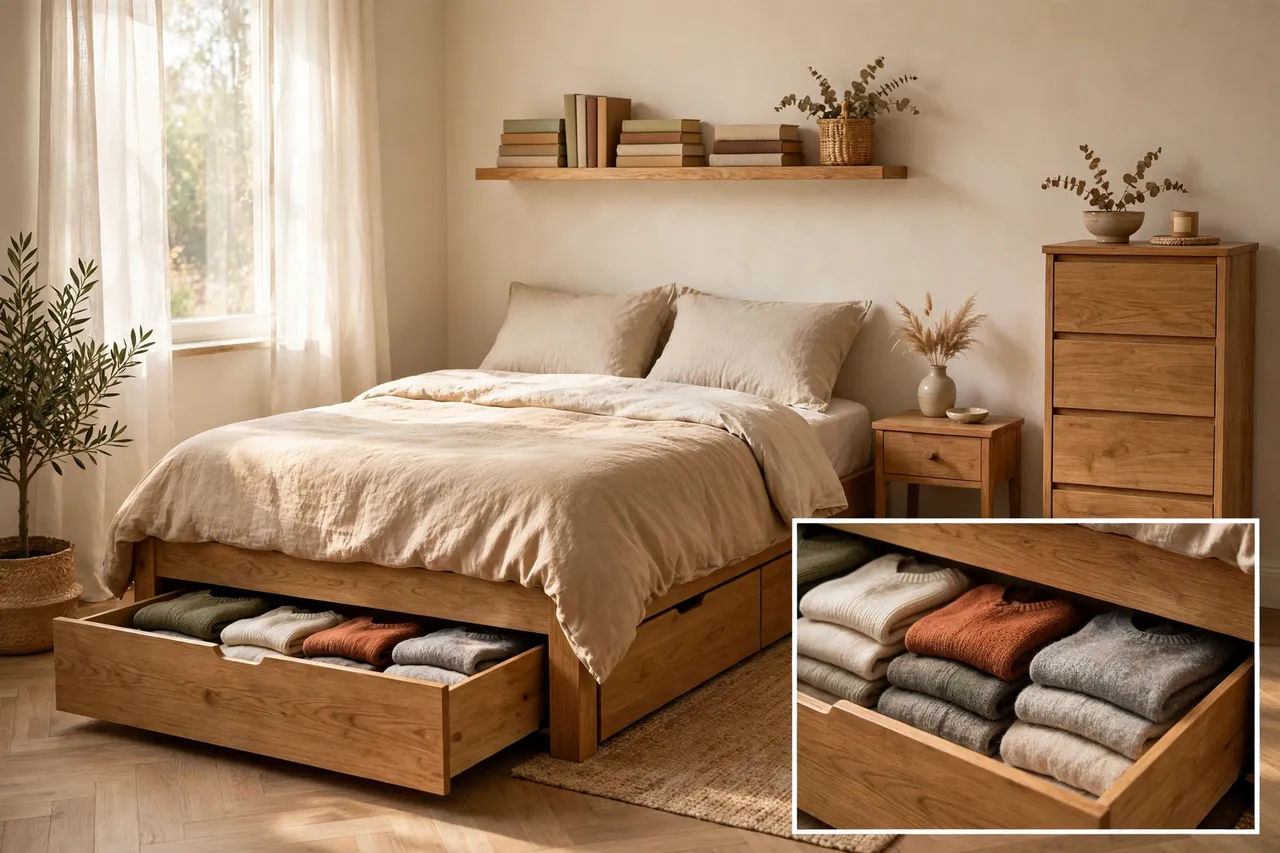
- Use a storage bed or rolling under-bed bins for seasonal clothes and spare bedding.
- Add a tall, narrow dresser or wardrobe instead of a wide chest that eats the wall.
- Hang a shelf above the bed or the desk for books and small baskets.
- Swap a bulky nightstand for a wall-mounted shelf or a small drawer unit.
- Hang an over-the-door organizer for scarves, belts, bags, and accessories.
- Store daily clothes at eye level, and move off-season items higher or under the bed.
A headboard with small shelves or niches can also hold a book, a phone, and a glass of water. It replaces a nightstand in a room where every inch counts.
Small Bathroom Storage Ideas
Small bathrooms reward vertical thinking more than any other room. The walls, the door, and the space above the toilet hold far more than the counter ever will.
- Add shelves or a cabinet above the toilet for towels, toilet paper, and toiletries.
- Use a slim rolling cart between the sink and the toilet for backup supplies.
- Hang adhesive hooks inside a cabinet door for a hair dryer or styling tools.
- Choose a mirrored medicine cabinet to store daily items behind the mirror.
- Use small baskets on a towel rack for rolled towels and small bottles.
- Keep only daily items on the counter, and move backups into a cabinet or cart.
Group bathroom items by how often you use them. Daily items stay within reach, occasional items move into a drawer, and backups stay together in one spot.
Small Kitchen Storage Ideas
A small kitchen feels bigger when the counters stay clear. Move tools to the walls, use the full height of your cabinets, and give every category its own zone.
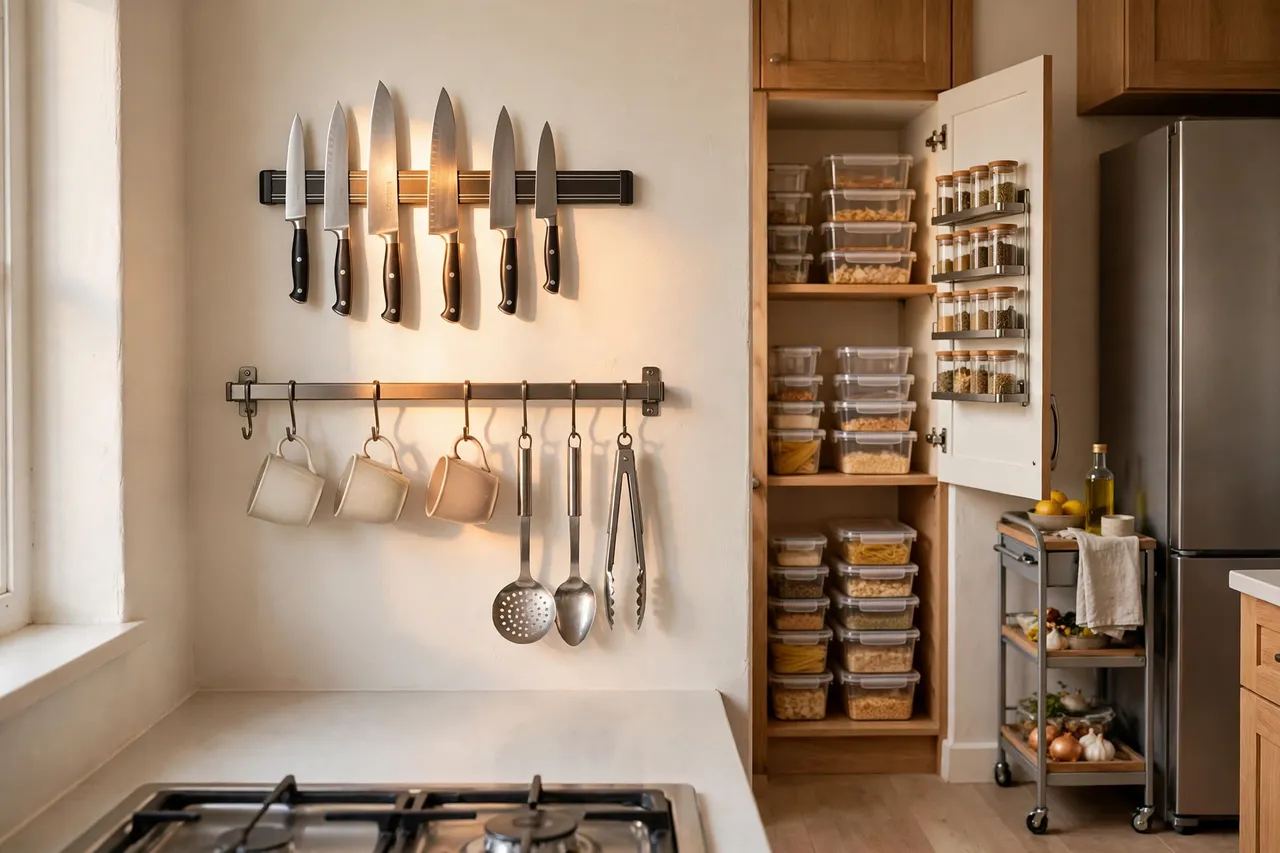
- Hang a magnetic knife strip on the wall to free a countertop knife block.
- Add a spice rack inside a pantry or cabinet door for small jars.
- Use shelf risers and stackable clear containers to use the full height of pantry shelves.
- Add hooks or a rail for mugs, utensils, and measuring tools near the cooking area.
- Use a slim cart beside the fridge for oils, cans, and cleaning supplies.
- Store pots and lids with dividers, so you can pull one pan without moving the whole stack.
Keep cooking tools near the spot where you cook, and keep everyday dishes within easy reach. That one habit cuts extra steps from every meal, and it keeps the kitchen working even when it stays small.
Small Living Area Storage Ideas
A small living area needs storage that looks like furniture, not like a storage unit. Closed storage hides the mess, while open shelves show only a few favorite items.
- Use a storage ottoman or a lift-top coffee table for blankets, games, and remotes.
- Add floating shelves above the sofa for books and decor you love.
- Choose a TV unit or console with closed cabinets for cables, games, and media.
- Use a basket near the sofa for chargers, toys, and small daily items.
- Place a slim console behind the sofa for books, lamps, and extra storage.
- Keep a charging spot in one drawer or cabinet, so cables stop spreading across the room.
Pick furniture with visible legs when you can. It shows more floor, and the room feels lighter than it does with heavy furniture that sits flat on the ground.
Small Entryway Storage Ideas
An entryway does not need a full mudroom to work well. It needs one clear spot for each thing you carry in and out of the house.
- Hang a row of hooks for coats, bags, and keys near the door.
- Add a narrow bench or shoe cabinet to hold shoes and give you a seat.
- Use a small wall shelf or tray for mail, sunglasses, and wallets.
- Place one basket by the door for items that need to leave with you.
- Keep pet leashes on a hook by the door, so they never drift into the living room.
An entry table that welcomes guests without the clutter shows how a slim table can hold daily items and still look calm. The same idea works all year: a slim table, a few hooks, and one basket beat a wide console that collects everything.
Seasonal Storage: Hide It Well, Find It Fast
Seasonal items crowd small rooms when they mix with daily items. Give them their own zone, high up or under the bed, and label the bin clearly.
Ornaments, lights, and holiday decor need sturdy, protective storage. Our guide to a Christmas ornament storage box shows how to keep fragile pieces safe until next year, and our guide on how to store Christmas lights without tangles saves you from a knotted mess next season.
Store seasonal bins where you can reach them with a step stool, not a full climb. That small choice decides whether you actually use the bin, or avoid it all year.
Renter-Friendly Storage and Safety That Matters
Renters can add a lot of storage without drilling, but adhesive products have real limits. Respect those limits, and your storage will stay up and your walls will stay clean.
3M states on its Command picture hanging strips page that four pairs of extra-large strips hold frames up to 20 pounds, and that the strips stick to smooth surfaces such as painted walls, metal, tile, and glass. Always follow the weight limit printed on your exact package, because limits vary by size and product.
Use adhesive hooks for light items such as keys, caps, and small bags. Use leaning shelves, standing units, or floor-to-ceiling tension poles for heavier loads. Never hang valuable, glass-fronted, or heavy items over a bed with adhesive strips alone.
Anchor tall bookcases, dressers, and shelving units to the wall when children live in or visit your home. The U.S. Consumer Product Safety Commission (CPSC) Anchor It! guidance urges families to anchor TVs and furniture such as bookcases and dressers securely to the wall, and to follow the manufacturer’s instructions for the anchoring kit.
Put heavy items on the lowest shelves, keep tempting items off the top of tall furniture, and place a shelf above the washer and dryer only with proper support. Our guide to a shelf above the washer and dryer covers how to choose, install, and use that kind of shelf safely.
Mistakes That Make Small Rooms Feel Smaller
Most storage mistakes come from buying first and measuring second. A second common mistake is filling every shelf, basket, and bin to the top, which makes items hard to find and harder to put back.
- Do not buy an organizer before you measure the spot it must fit.
- Do not store daily items in the hardest spot to reach.
- Do not mix seasonal items with daily items in the same bin.
- Do not overload a door, an adhesive hook, or a shelf past its limit.
- Do not add open shelving for items that look better behind a closed door.
Leave a little empty space in each bin and on each shelf. That empty space is not wasted storage. It is the space that lets you use the storage without a struggle.
Related Guides
Bedroom Shelving Ideas That Add Storage Without Crowding Your Room
Frequently Asked Questions
What is the best storage solution for a small house?
Use a mix, not a single product. Vertical shelves, under-bed storage, door organizers, multi-use furniture, narrow rolling carts, and well-planned cabinets together add the most space without taking over the room. Pick the mix that fits your worst clutter spot first.
How can I create more storage without renovating?
Start with unused walls, doors, corners, under-bed areas, cabinet interiors, and narrow gaps. These spots can add real storage without construction work. Add one shelf, one door organizer, or one slim cart at a time, and measure each spot before you buy.
What is the best storage solution for small rooms?
The best solutions stay simple: shelves, baskets, and furniture that doubles as storage. They cut clutter while keeping items easy to reach. Choose closed storage for mixed items, and save open shelves for a few items you enjoy seeing every day.
How do you maximize storage in a small home?
Focus on vertical storage, multi-use furniture, and hidden spots such as under beds and behind doors. Small changes add up fast when each one solves a real problem. Keep daily items easy to reach, and move seasonal items to higher or less-used spots.
How do I stop storage areas from becoming cluttered again?
Give frequently used items permanent homes, avoid overfilling containers, and remove items that no longer belong in the space. A storage system works best when putting an item back feels quick and obvious. Check busy spots once a week, and fix the spot that keeps failing.
Start with one room and one idea from this guide. Add a shelf, a door organizer, or a storage ottoman this week, and see how much calmer that room feels. Then carry the same simple system into the next room, one strong idea at a time.


