

A messy bedroom does not need a whole weekend, a perfect system, or a lecture. You can rescue it in about an hour by working in one clear order: take out trash, gather laundry, clear a path, make the bed, wipe the surfaces you see most, and finish with the floor.
That order matters. It clears space first, so you can actually move. It also gives you a quick win early, so you keep going. This guide starts with why bedrooms get messy, then walks you through the rescue, and ends with three small systems that keep the room from sliding back.
Why Your Bedroom Got Messy (and Why It Is Not a Character Flaw)
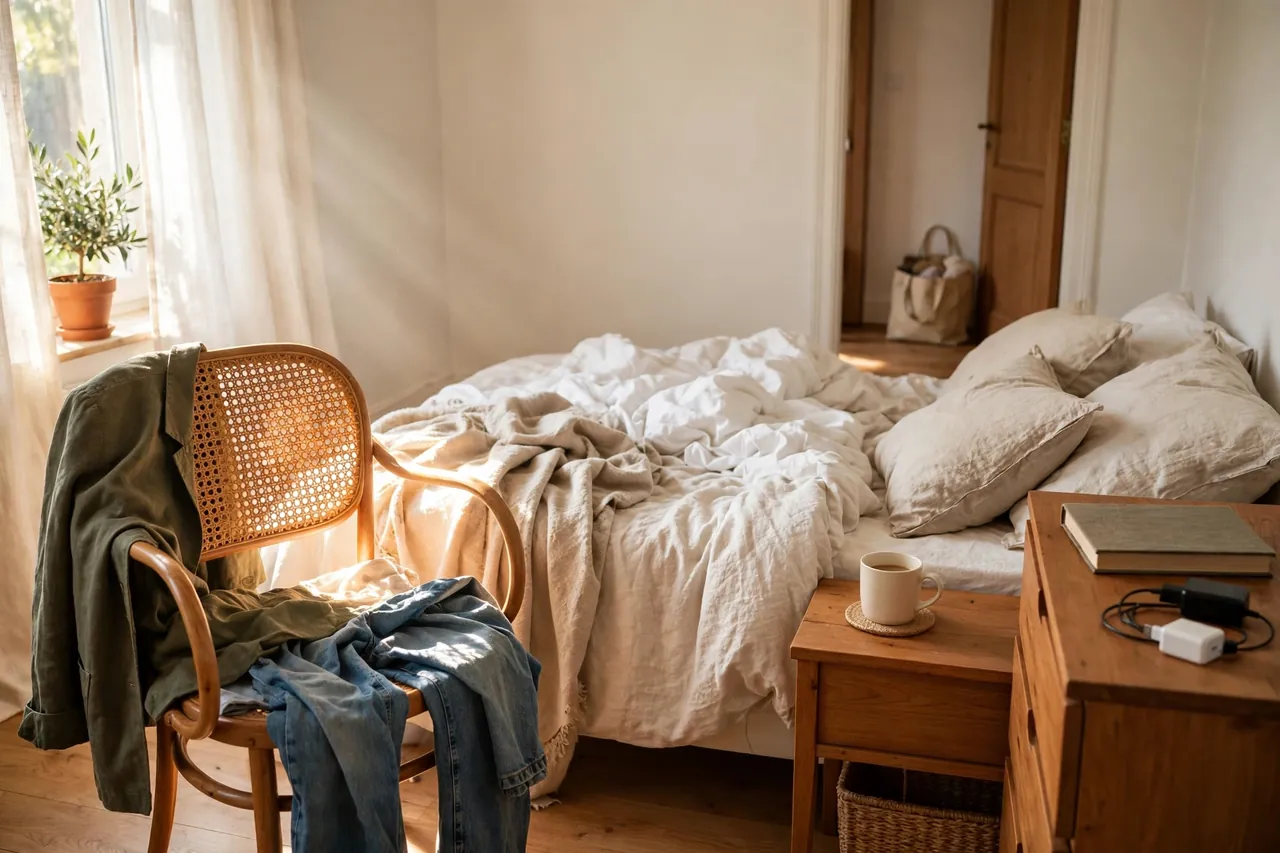
Most messy bedrooms build up slowly. One shirt lands on a chair. A cup stays on the nightstand. A bag waits by the door for “later.” None of those moments feels like a big deal on its own. Together, they cover the floor.
Bedrooms also collect more than other rooms do. They hold clothes, laundry, bags, books, chargers, mail, and everything you carry in at the end of the day. Because the room is private, it becomes the easiest place to set something down and deal with it later. That is a habit problem, not a character flaw.
Three causes show up again and again. First, clothes have no easy next step, so they pile up between “clean” and “dirty.” Second, flat surfaces invite piles, because a dresser top or a chair looks like free storage. Third, putting things away takes too many small decisions, so tired brains skip it.
Notice which cause fits your room. If clothes cause most of the mess, start with the clothes section below. If surfaces cause it, your fix is a clear landing spot for daily items. If decisions slow you down, your fix is fewer choices, not more willpower.
Before You Start: Set Up for a Win
Give yourself a fair start. Open a window if you can, turn on the lights, and put on music or a podcast you like. You are not punishing yourself. You are making one room feel good again.
Gather only what you need before you begin: a trash bag, a laundry basket or hamper, a second basket or box for things that belong in other rooms, a cloth, and a surface cleaner that suits your furniture. Keep a vacuum or broom close by for the end. If you leave the room to hunt for supplies, you will lose momentum.
Pick a stopping point in advance. For a very messy room, plan about an hour for the visible rescue, not a deep clean of every drawer and closet. You can always do a second round later. A finished, livable room beats a half-done perfect room every time.
Do not try to clean and organize at the same time. Cleaning means moving things. Organizing means making decisions about each item. When you mix the two jobs, your brain stalls, and the room stays messy. During the rescue, move things first. Decide later.
Stay Safe While You Clean a Long-Neglected Room
Before you stir up dust, open a window for fresh air if you can, and take breaks if dust makes you cough or sneeze. If you have asthma, allergies, or a breathing condition, wear a dust mask and work in short bursts. Stop and get fresh air if you feel dizzy, short of breath, or unwell.
Before you move any heavy furniture, check what you can lift safely on your own. Do not drag a heavy dresser or bed frame across the floor, and do not lift anything that strains your back. Ask another person for help, or simply clean around the piece and leave it where it stands.
Read the label on every cleaning product before you use it, and use it only on surfaces the label allows. Never mix cleaning products, and never mix bleach with ammonia or any other cleaner. Poison Control warns that mixing household cleaning products can create irritating fumes that cause serious breathing problems, and its spring-cleaning safety guidance states this rule plainly.
The Fast Rescue Plan: From Messy to Calm in About an Hour
This plan works for a room that looks overwhelming at first glance. Follow the steps in order, and do not jump ahead to dusting or vacuuming while piles still block the floor. The goal is a room you can walk through, sleep in, and feel calm in tonight.
Table: A one-hour rescue plan for a messy bedroom
| Time block | Do this | Done looks like |
|---|---|---|
| Minutes 0 to 10 | Trash and dishes out | Nothing throwable left on the floor or surfaces |
| Minutes 10 to 25 | Clothes sorted and the bed made | The floor shows, and the bed looks inviting |
| Minutes 25 to 40 | Surfaces cleared, one zone at a time | Nightstand and dresser tops are clear |
| Minutes 40 to 55 | Dust high to low, then wipe | Visible dust is gone from reachable surfaces |
| Minutes 55 to 60 | Vacuum or sweep the walking paths | You can walk the room without stepping over things |
- Take out trash and dishes first. Walk the room once with a trash bag. Pick up wrappers, tissues, old papers you know you do not need, and empty containers. Carry cups, plates, and mugs to the kitchen. This one pass makes the room feel lighter right away.
- Clear a safe walking path. Move anything on the floor near the door, beside the bed, and along your path to the closet. You do not need to sort it yet. You only need to walk without tripping.
- Sort clothes into three piles. Put dirty clothes in the hamper, clean clothes in one pile for putting away, and worn-once clothes that still smell fresh on a hook or a chair for now. Start the first load of laundry if you can, so it works while you clean.
- Make the bed. Straighten the sheets, pull up the comforter or duvet, and set the pillows in a simple row. The bed is the biggest surface in the room. When it looks neat, the whole room feels calmer, even before you finish the rest.
- Clear surfaces one at a time. Start with the nightstand, because you see it last thing at night and first thing in the morning. Put back only what you use daily, such as a lamp, a phone charger, and a book. Then do the dresser top the same way.
- Use a “belongs elsewhere” basket. Put items from other rooms in one basket instead of walking them out one by one. Carry the basket out once, at the end. This keeps you in the room and keeps the rescue moving.
- Use a “decide later” box for hard calls. If you cannot decide about an item in five seconds, put it in the box. You will deal with the box after the room looks livable. Do not let one hard decision stop the whole rescue.
- Dust from high to low. Wipe reachable shelves, light fixtures, and the headboard first, then lamps, nightstands, and baseboards. Dust falls down, so this order keeps you from dusting the same surface twice.
- Wipe the surfaces you touch most. Wipe the nightstand, dresser top, door handles, and light switches with a cleaner that suits each surface. For routine household surfaces, the Centers for Disease Control and Prevention notes that you should clean visibly dirty surfaces with soap and water before disinfection, and always follow the product label for the surface you are cleaning.
- Finish with the floor. Vacuum or sweep the paths you walk most: around the bed, to the door, and in front of the dresser. Move only furniture you can handle safely. If a piece feels too heavy, clean around it and move on.
When the hour ends, stop. Look at the room from the doorway. The bed is made, the floor shows, and the surfaces hold only what you use. That is a rescued room. It does not need to look like a photo. It needs to feel livable.

Handling the Clothes Chaos
Clothes cause most messy bedrooms. They pile up because every item needs a decision: dirty, clean, or worn once and still fine? When you feel tired, you skip the decision, and the chair becomes the closet.
Fix the decision first, not the pile. Set up three clear homes for clothes. Dirty clothes go straight into the hamper. Clean clothes go into drawers or onto hangers the same day you wash them. Worn-once clothes that still smell fresh get one hook or one small basket, not the whole room.
Work the pile in this order. First, pick up everything on the floor and sort it into dirty, clean, and worn-once groups. Second, start a load of dirty laundry. Third, hang or fold the clean clothes and put them away. Fourth, hang the worn-once clothes on their hook. Do not fold clothes you plan to wear tomorrow. Hang them, and save your energy.
If clean laundry sits in a basket for days, your storage is probably too full or too hard to use. Look inside your drawers and closet with fresh eyes. If a drawer needs shoving to close, take out the clothes you never wear and set them aside for donation. A drawer that closes easily gets used. A drawer that fights you gets skipped.
Check care labels before you wash anything unusual. The label tells you whether to machine wash, hand wash, or dry clean the item, and it warns you about bleach and heat. When in doubt, wash the item the gentle way, or set it aside until you can check the label in good light.
A Simple Laundry Flow That Prevents the Next Pile
Laundry only works as a flow. Clothes move from body, to hamper, to washer, to dryer or line, to drawer. The flow breaks when one step has no home. Most often, the broken step is “put away.”
Keep the hamper where clothes actually land, not where it looks tidy. If clothes land beside the bed, put the hamper beside the bed. If they land in the bathroom, put a small hamper there. A hamper in the right spot beats a pretty hamper in the wrong spot.
Set one laundry day habit you can keep. For many households, that means one load a day, or two loads on the weekend, with putting away as part of the same job. Fold straight from the dryer when clothes feel warm and soft. Warm clothes fold fast, and they wrinkle less.
Do not let damp towels or clothes sit in a closed pile. Hang damp items to dry or start the wash right away. Damp piles smell, and they turn a small laundry job into a bigger one.

Clear the Surfaces That Make the Room Feel Messy
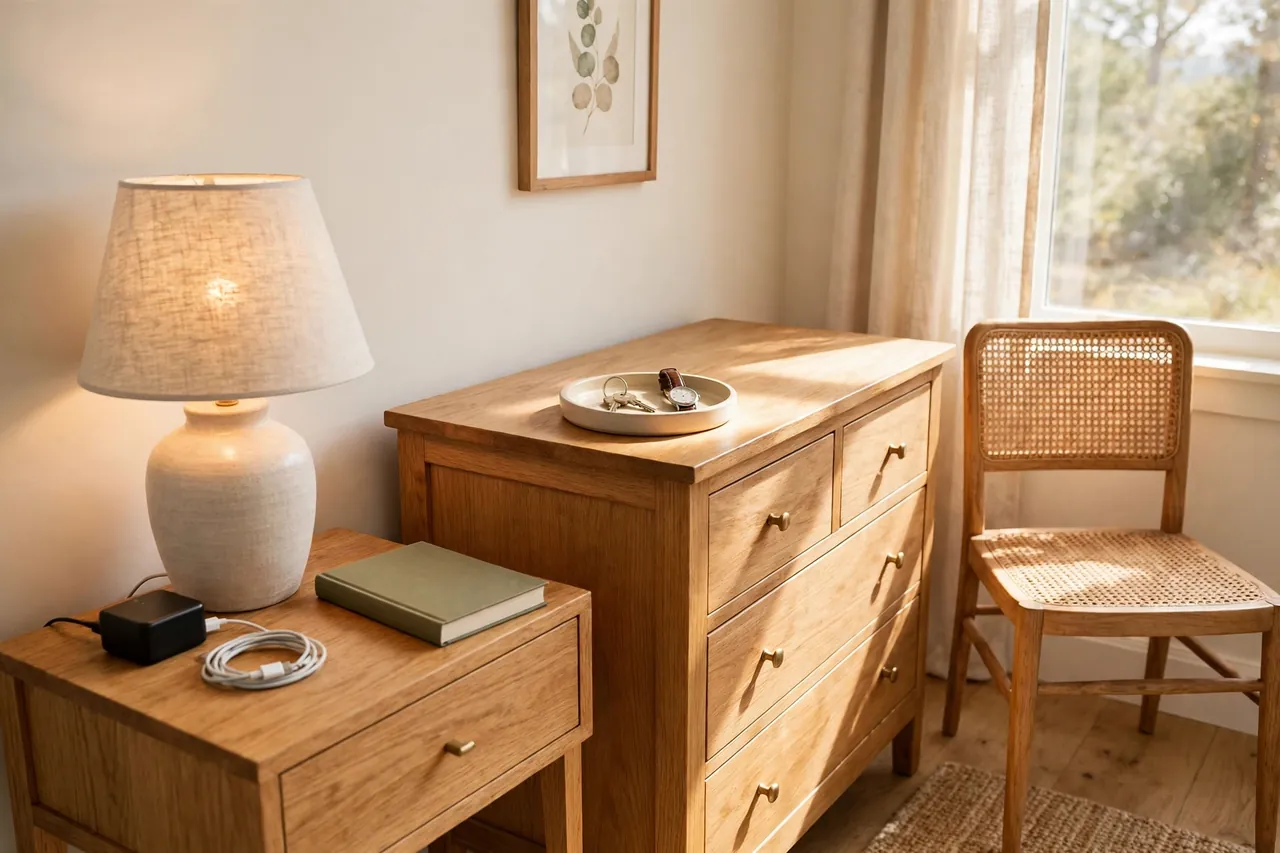
Flat surfaces act like magnets. A nightstand collects cups, chargers, books, and mail. A dresser top collects bags, keys, and everything you empty from your pockets. A chair collects tomorrow’s outfit, then three more days of outfits.
Clear each surface with one rule: only daily items stay out. A lamp, a charger, and a book belong on a nightstand. Ten books, three cups, and a pile of mail do not. Put the rest in its home, in the “belongs elsewhere” basket, or in the “decide later” box.
Give small items a small home. A tray or a small dish on the dresser holds keys, coins, and jewelry far better than a bare surface does. A tray also shows you when the pile grows, because the tray fills up. Empty the tray once a week, and the surface stays clear.
Watch the chair. If a chair holds clothes every day, it needs a new job. Hang tomorrow’s outfit on a hook behind the door, and use the chair only for sitting. A chair that holds clothes will always look messy, even when the rest of the room looks clean.
Do not buy storage boxes during the rescue. Boxes feel like progress, but they often hide the mess instead of fixing it. Clear first, live in the clear room for a week, and then buy storage only for a problem you can name, such as “shoes by the door” or “chargers on the nightstand.”
The Systems That Keep It From Sliding Back
A rescue feels great. A system keeps the feeling. You do not need a complex routine. You need three small habits that fit real life: a launch pad, a five-minute reset, and a laundry flow you already started above.
Set Up a Launch Pad by the Door
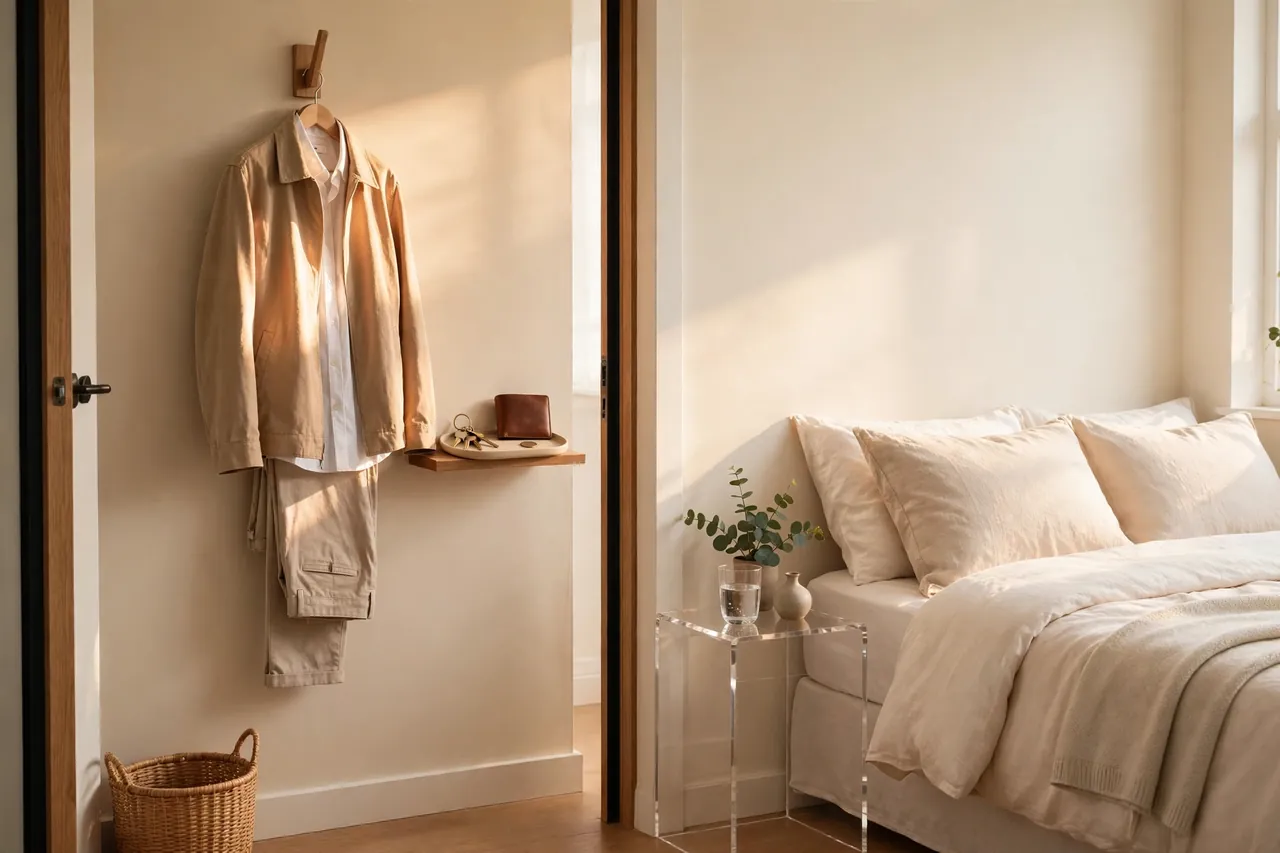
A launch pad is one small spot where tomorrow’s essentials wait. Pick a hook, a tray, or a small basket near the bedroom door. Each night, place your keys, wallet, bag, and tomorrow’s outfit there.
The launch pad works because it removes morning decisions. You stop hunting for keys and stop dropping bags on the floor. You also stop carrying bedroom items into other rooms and forgetting them there.
Keep the launch pad small on purpose. If it grows into a second dresser, it stops working. When it fills up, empty it back to the essentials. One hook, one tray, and one basket are plenty.
Run a Five-Minute Reset Every Night
The five-minute reset is the habit that protects your rescue. Set a timer for five minutes each night, before you wind down. In those five minutes, do only these jobs: make the bed for tomorrow, put dirty clothes in the hamper, clear the nightstand, and take any trash or dishes out of the room.
Do not clean the whole room during the reset. Do not open drawers, sort closets, or start a big job. The reset keeps the room at its rescued level. Big jobs belong in a longer session, not in five tired minutes.
If you miss a night, do not restart from zero. Run the reset the next night, and the room will bounce back fast. A missed night is normal life, not failure. Two or three missed nights in a row are your signal to run a short rescue again, not to feel guilty.
Keep One In, One Out for Clothes and Surfaces
Rooms slide back when new things arrive and nothing leaves. Use a simple rule: when a new item of clothing comes in, one old item goes out to donation or recycling. The same rule works for books, bags, and decor on surfaces.
This rule keeps drawers closable and surfaces clear without a big decluttering day. It also makes shopping more thoughtful, because each new item costs you an old favorite. That small pause prevents many piles before they start.
When the Room Still Feels Hard: Troubleshoot the Real Blocker
Sometimes a room stays messy even after a good rescue. That usually means one blocker needs a different fix. Use this list to find yours, and try the gentlest fix first.
- If the floor fills up again in two days, your hamper or laundry flow is the blocker. Move the hamper to the spot where clothes land, and wash one load before the hamper overflows.
- If surfaces fill up again in two days, daily items have no home. Add one tray for small items and one hook for tomorrow’s outfit, and clear the tray once a week.
- If you cannot put clothes away, your storage is too full. Take out clothes you have not worn in a year, and keep only what fits easily in drawers and on hangers.
- If you feel overwhelmed at the doorway, shrink the job. Clean one zone, such as the bed and the floor beside it, and stop. A small finished zone beats a large unfinished room.
- If dust or smells bother you after cleaning, wash the bedding, open windows for fresh air, and vacuum slowly around the bed. If breathing trouble, a strong smell, mold you cannot identify, or a health concern worries you, ask a professional or a health care provider for advice instead of pushing through.
- If someone else shares the room, agree on two shared rules only, such as “dirty clothes in the hamper” and “dishes out at night.” Two rules people keep beat ten rules nobody follows.
A messy bedroom often feels worse than it looks to anyone else. You live in the room, so you see every pile. Visitors see a lived-in home. Be kind to yourself while you fix it, and judge the room by how it feels to sleep in, not by how it photographs.
Related Guides
How to Clean Your Room · How to Organize a Bedroom So It Stays That Way
Frequently Asked Questions
Where should I start if my room is very messy?
Start with ordinary trash, then gather dishes and laundry, and clear a safe walking path. Sort what remains into keep-here, put-away-elsewhere, donate, and decide-later groups. Work in one small zone if the whole room feels too large, and stop when that zone looks livable.
Can I clean my room in 15 minutes?
You can make a visible reset in 15 minutes by collecting trash, gathering laundry, making the bed, putting away obvious items, wiping one priority surface, and cleaning the open floor area. A full clean takes longer, and laundry, product wait times, and material-specific care may need extra time.
How long does it take to clean a messy bedroom?
A visible rescue takes about an hour for an average bedroom, while a deep clean of a very messy room can take two to four hours depending on clutter and dirt. Room size, the amount of laundry, and whether you clean alone all change the time, so treat any time estimate as a guide, not a promise.
How often should I clean my bedroom?
Use visible dirt and your household needs as your guide. A short daily or as-needed reset plus a weekly session works for many households. Dust reachable surfaces, vacuum or sweep, change bedding, and empty trash weekly, and clean sooner when something looks or smells dirty.
Should I disinfect my bedroom every day?
Usually not. For routine household surfaces, cleaning with soap or detergent is generally enough, while disinfection matters more when someone is sick or at higher risk. When you do disinfect, clean first, use a product registered for that surface, and follow its full label.
What is the best order for cleaning a room?
Start with trash, dishes, and laundry, then put misplaced items away. Clean from high to low, so dust falls onto surfaces you have not cleaned yet, and finish with the floor. This order clears your work area first and keeps you from redoing work you already finished.
A Short Note Before You Rest Tonight
Your bedroom does not need to earn your rest by looking perfect. It only needs to feel safe, clear, and calm enough to sleep in. Rescue it in one hour, run the five-minute reset tonight, and let the systems do the quiet work from here.
Start tonight with the smallest step: pick up the trash, make the bed, and clear the floor beside it. Tomorrow morning, you will wake up in a room that feels like yours again. Homes vary, and so do health needs, budgets, and room conditions, so use product labels and care labels as your guide, and get qualified help for heavy lifting, breathing concerns, or any problem beyond a normal cleaning job.


