

To clean your room, clear the clutter first, then clean from top to bottom and finish with the floors last. Start with trash and dirty laundry, make the bed, dust high surfaces before low ones, wipe what you can reach, and vacuum or mop at the very end. That simple order keeps you from cleaning the same spot twice, and it works whether you have twenty minutes or a full hour.
This guide covers one bedroom only, from messy to clean. You will learn where to start when the mess feels big, the exact order that works, how to speed-clean your room, what a deeper clean adds, and the small daily habit that keeps the room from sliding back into a mess.
Where to Start When Your Room Feels Overwhelming
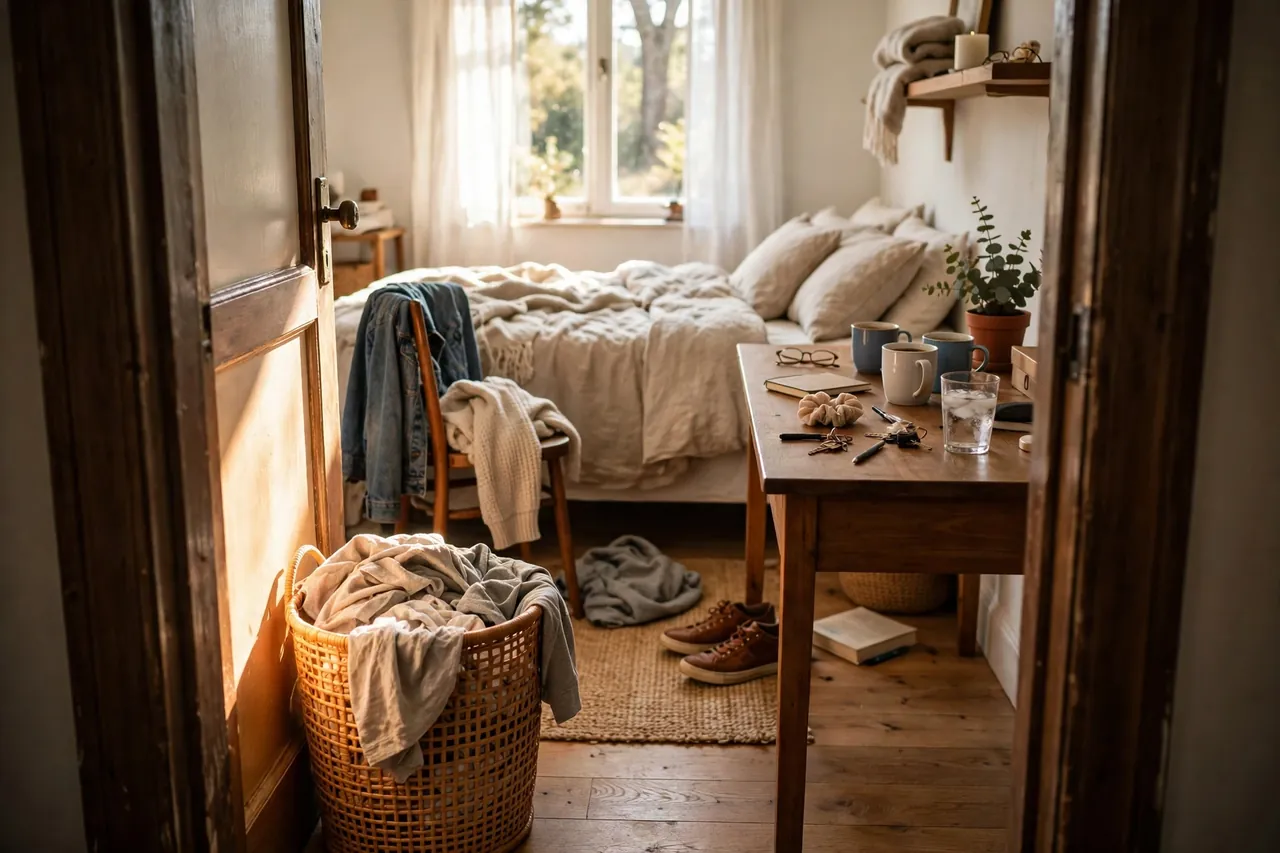
Stand in the doorway and look at the room for a few seconds before you touch anything. Notice the biggest problems first: the floor you cannot see, the chair buried under clothes, the desk covered in cups and papers. This quick scan gives you a plan, and a plan beats wandering from pile to pile.
Next, decide what “done” means for today. For a normal clean, done means the floor is clear, the bed is made, every surface holds only what belongs there, and the trash is out. Write that finish line down if it helps. A clear finish line stops the job from growing into a closet overhaul you never planned.
Then pick the easiest win you can see. Throw away one piece of trash you can spot from the door, or drop one armful of dirty clothes in the hamper. One small win breaks the freeze that a messy room causes. Once you start moving, the next step feels much easier than the first one did.
Work in one zone at a time if the whole room still feels like too much. Finish the bed area, then the desk, then the floor by the door. Small finished zones add up fast, and each one shows you real progress. Do not start with the hardest pile, such as a stuffed closet or a mountain of papers. Save that pile for last, when you already feel like you are winning.
Gather Your Supplies First
Grab everything before you start so you never stall halfway through to hunt for a cloth. Keep it simple. You do not need a shelf full of products to clean one bedroom well.
- A trash bag and a small bin bag for the room bin
- A laundry basket or hamper
- A box or basket for things that belong in other rooms
- Two microfiber cloths, one dry and one damp
- An all-purpose cleaner that suits your surfaces, and a glass cleaner for mirrors
- A duster with a long handle for high spots
- A vacuum, broom, or mop to match your floor
Put your phone timer where you can see it if a timer helps you focus. Music helps many people keep moving, so pick a playlist before you begin. Open a window too, if you can. Fresh air makes the room feel better right away, and it clears out the dust you stir up while you work.
The Room-Cleaning System That Actually Works
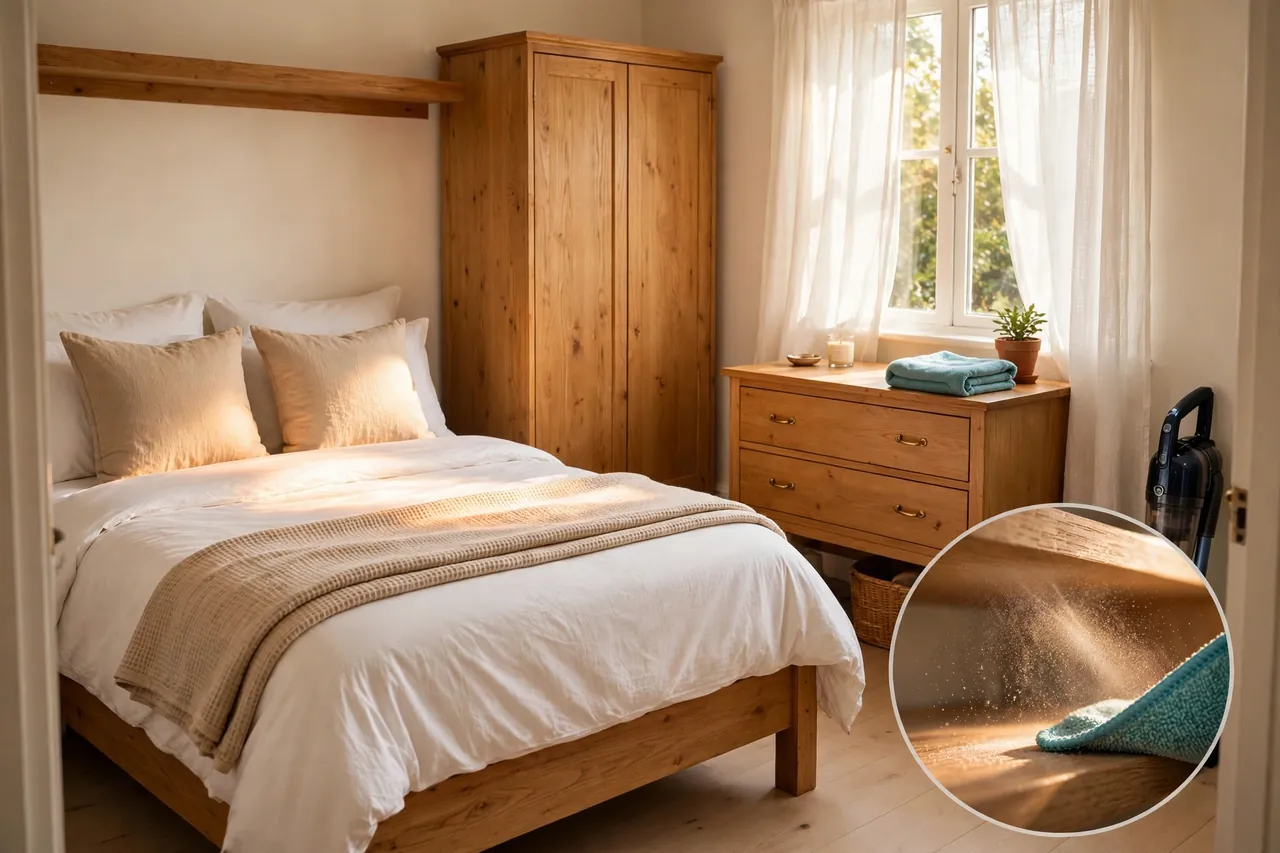
Room cleaning follows one rule above all others: dry work before wet work, high work before low work, and floors last. Dust falls down, so anything you dust off a shelf lands on the floor. If you vacuum first and dust second, you will vacuum twice. Follow this order, and every step builds on the one before it.
- Collect all trash. Walk the room once with your trash bag and pick up every wrapper, tissue, empty bottle, and scrap of paper. Empty the room bin and put in a fresh bag. Trash first gives you instant visible progress.
- Gather all dirty laundry. Pull clothes off the floor, the chair, and the bed, and drop them in the hamper. Do not sort or fold yet. Sorting now slows you down, and clean clothes can wait for their own moment.
- Move out what does not belong. Carry dishes, cups, bags, and anything that lives in another room into your box. Take the box out of the room in one trip when you finish this step. Your bedroom should now hold only bedroom things.
- Make the bed. Straighten the sheets, fluff the pillows, and pull the blanket up neatly. The bed is the largest surface in the room, so a made bed makes the whole room look cleaner at once. If you plan to change the sheets, strip the bed now and start the wash, so clean sheets are ready when you finish.
- Dust from top to bottom. Start high with ceiling corners, light fixtures, and the tops of shelves and wardrobes. Work down to shelves, picture frames, lamps, and furniture. Finish with baseboards and windowsills. Use a dry cloth or duster first, and let the dust fall. You will pick it up at the floor stage.
Before you reach for any spray cleaner, read its label. Use one product at a time for one job, and never mix cleaning products together. The U.S. Centers for Disease Control and Prevention (CDC) states plainly that you should never mix bleach with ammonia or any other cleaner, and that you should open windows and doors for fresh air when you use such products indoors. You can read the CDC guidance in its guide to safely cleaning with bleach. If a surface already holds one product, rinse it as the label directs before you switch to another one.
- Wipe the surfaces. Wipe desks, nightstands, dressers, and shelves with a damp cloth and a cleaner that suits each surface. Spray the cleaner onto the cloth, not straight onto wood furniture, so you avoid streaks and damage. Wipe light switches and door handles too, since hands touch them every day.
- Clean mirrors and glass. Spray glass cleaner onto a cloth and wipe mirrors in circles, then buff them dry with a second clean cloth. This two-cloth pass leaves fewer streaks than one wet wipe alone.
- Clean the floors last. Vacuum carpets and rugs slowly, and run the crevice tool along baseboards and corners where dust bunnies hide. On hard floors, sweep first and then mop, and start at the far corner so you finish at the door. Never walk back across a floor you just mopped.
- Put things back on purpose. Return only what belongs on each surface, and give every item a home. Books stack on the shelf, pens go in a cup, chargers coil beside the desk. A surface that holds three or fewer items stays clean far longer than a crowded one.
That is the whole system: trash, laundry, out-of-place items, bed, dust, wipe, glass, floors, and put-back. You can use it for a quick tidy or a full clean. The steps stay the same, and only the depth changes.
Room Cleaning at a Glance
Use this table as a quick reference while you work. The times are planning guides for a typical bedroom, not promises, because a very messy room takes longer than a lightly messy one.
| Step | What you do | Planning guide |
|---|---|---|
| 1. Clear | Trash out, laundry in the hamper | 5–10 minutes |
| 2. Sort | Out-of-place items leave the room | 5–10 minutes |
| 3. Bed | Make it, or strip it and start the wash | 3–5 minutes |
| 4. Dust | High to low, dry first | 10 minutes |
| 5. Wipe | Surfaces, switches, handles | 10 minutes |
| 6. Floors | Vacuum or sweep, then mop hard floors | 10–15 minutes |
Clutter First or Cleaning First?
Clear the clutter first, every time. Wiping a desk buried under papers just moves dust around, and vacuuming a floor covered in clothes cleans nothing under them. Clutter hides the surfaces you need to clean, so it always comes first.
Here is the key difference: clutter-clearing means moving things to their homes, not organizing them perfectly. Put trash in the bag, laundry in the hamper, and other-room items in the box. Do not pause to fold every shirt, sort every drawer, or redesign the closet. That deeper organizing is a separate project, and it can wait for its own day.
Cleaning first only makes sense in one narrow case: a spot clean. If you spill a drink, clean that spill right away before it stains. For a full room clean, though, the order never changes. Clear first, clean second, and you will finish faster with a better result.
One trap catches almost everyone. You pick up an old photo album, a letter, or a gadget, and suddenly twenty minutes vanish. Beat that trap with a “decide later” box. Drop tempting items in the box, finish the clean, and look through the box only when the room is done. You keep the memories, and you keep your momentum too.
How to Clean Your Room Fast

Sometimes you need a speed clean, not a perfect clean. Maybe a friend stops by in half an hour, or you just want the room to feel livable again tonight. A speed clean skips the deep work and hits the spots your eyes notice first.
Set a timer for twenty minutes and follow this shortened version of the system. The timer matters because it forces fast decisions. You sort roughly, you wipe only what shows, and you stop when the timer rings.
- Grab a trash bag and do one fast lap for trash.
- Scoop every piece of dirty laundry into the hamper.
- Sweep out-of-place items into one basket to sort later.
- Make the bed and fluff the pillows.
- Wipe the nightstand, desk, and any surface you can see from the door.
- Vacuum or sweep the open floor, including the path to the door.
- Open the window for a few minutes and take the trash out.
Notice what the speed clean skips: baseboards, under the bed, inside drawers, and the closet. That is fine. A speed clean aims for a room that looks and feels clean, not a room that passes a white-glove test. The American Cleaning Institute, a cleaning-industry association, gives the same core advice in its fast-cleaning guide: gather your supplies first, pick up clutter, and work from the ceiling down to the floor in each room. You can read it in the American Cleaning Institute fast and efficient home cleaning guide.
If you have only ten minutes, do just three things: trash, laundry, and the bed. Those three moves change the room more than any other three, because they clear the floor and anchor the biggest surface. Add a quick floor sweep if minutes remain.
The Deep Clean Version
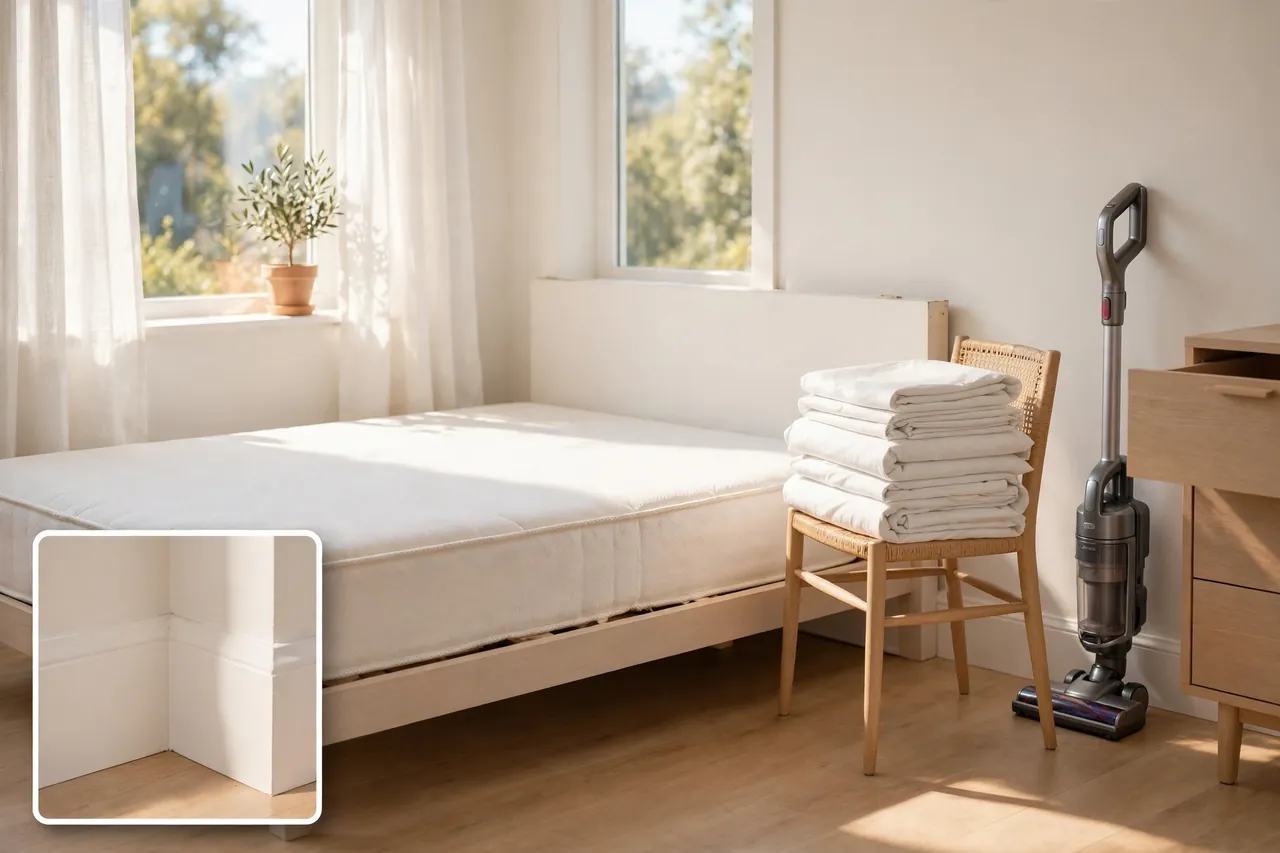
A deep clean uses the same system, but it goes further in each step. Plan about an hour, and pick a day when you can finish without rushing. Deep cleaning once a month keeps a weekly clean quick, because dirt never gets months to build up.
Start with the same clear-out, then add these deeper tasks to the matching steps. Dust the ceiling fan blades, vents, and light fixtures, not just the shelves. Pull furniture a few inches from the wall and vacuum behind it. Wipe baseboards with a damp cloth, and clean the windowsills and the tops of door frames.
Give the bed a deeper pass too. Wash the sheets, pillowcases, and any washable mattress protector, and vacuum the mattress surface while the bed is bare. Check under the bed as well. That hidden space collects dust, lost socks, and forgotten items, and a quick sweep there makes the whole room smell fresher.
Take a quick pass through the closet, but keep it a pass, not a project. Pull out anything that fell off a hanger or landed on the closet floor, hang what belongs on hangers, and fold what belongs on shelves. Leave a full closet reorganization for a day of its own. Different surfaces need different care, so match your cleaner to each surface and read its label first. For an example of a surface-specific approach on this site, see our guide on how to clean a brick fireplace without damaging the brick, which shows why one cleaner never suits every material.
Finish a deep clean the same way you finish any clean: floors last, everything back in its home, trash out, and the window open for fresh air. Stand in the doorway and enjoy the result for a moment. You earned that pause.
Keeping It Clean With a Small Daily Habit
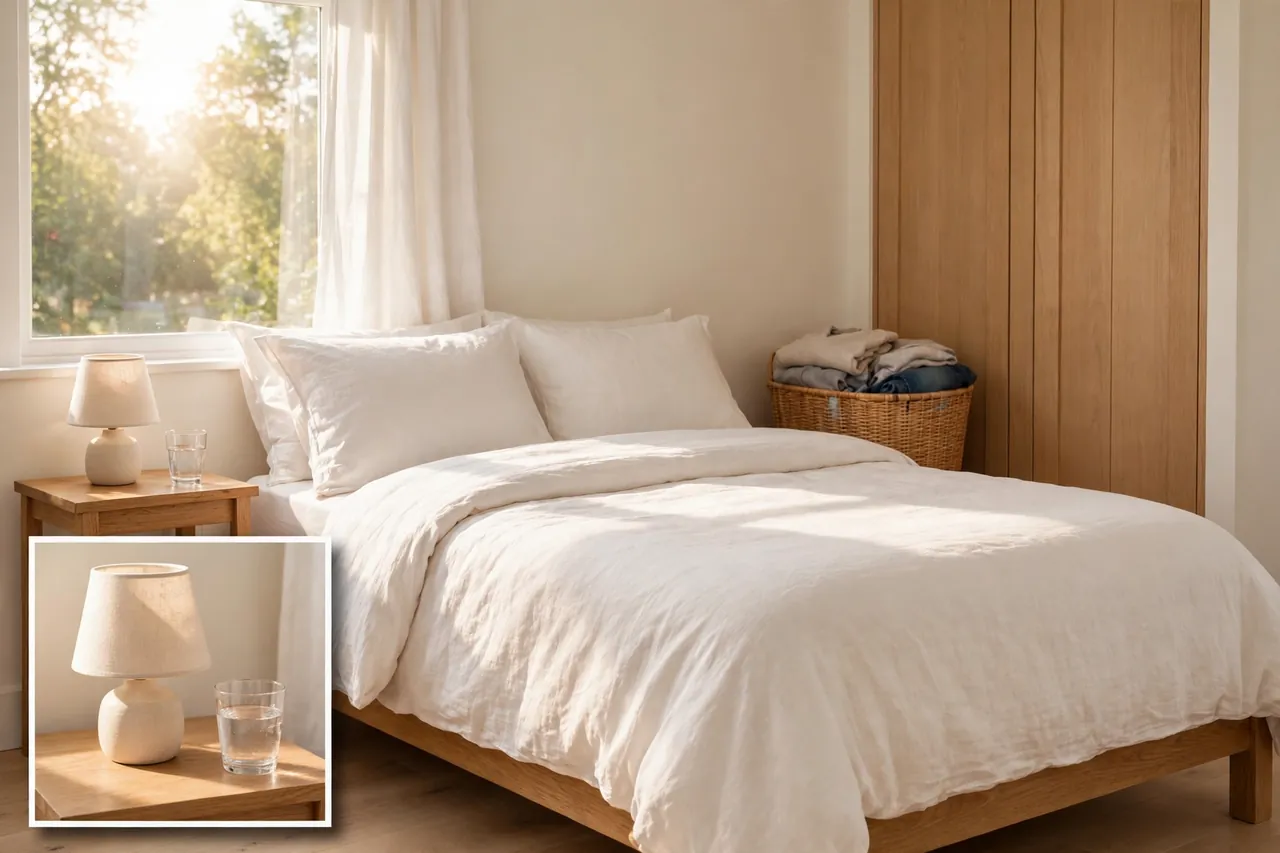
A clean room stays clean through tiny habits, not through heroic weekend sessions. The habit that matters most takes about five minutes a day. Do it at the same time each day, such as right after you wake up or just before bed, so it turns automatic.
Your daily five minutes look like this. Make the bed, put today’s clothes in the hamper or back in the closet, clear the nightstand, and toss any trash. That is it. Four moves, five minutes, and the room never slides far from clean. When you pair this habit with a weekly clean, the weekly clean shrinks too, because you never face a month of buildup.
Add two more habits when the daily five feel easy. First, follow a one-in, one-out rule: when something new enters the room, something old leaves it. New shirt in, old shirt out to donate or trash. Second, give every item a home and return it there right after you use it. The chair holds clothes only when the hamper feels harder to reach than the chair, so keep the hamper where you actually undress.
Set a weekly rhythm that fits your life. A light tidy every two or three days, a full clean once a week, and a deep clean once a month covers most bedrooms well. Miss a day? Do not restart from zero or punish yourself with a giant session. Just run tomorrow’s five minutes and carry on. A room that bounces back fast beats a room that stays perfect for a week and then collapses.
When You Get Stuck
- You keep finding new piles. Stop expanding the job. Finish the zone you started, and park the new pile in your “decide later” box.
- You feel tired halfway through. Take a five-minute break with water, then return to one small zone. Tired brains quit big jobs, but they finish small ones.
- The room still looks messy after cleaning. Check the bed and the floor first. An unmade bed or a cluttered floor undoes clean surfaces, so fix those two before you re-clean anything else.
- Dust returns the next day. Dust high surfaces again with a dry cloth, and check whether the window or vent blows dust straight in. You may need to dust more often, not harder.
- Smells linger after cleaning. Open the window, take out the trash, and wash any bedding or laundry that sat in a pile. Smells hide in fabric far more often than on hard surfaces.
Related Guides
If your clean turns up storage questions, our guide to the Christmas ornament storage box shows how sturdy, labeled boxes protect stored items until next year. For small-space living, see Christmas decor for apartment, a renter-friendly guide to cozy rooms without clutter. And if a surface in your room needs its own method, our brick fireplace cleaning guide explains how to clean without damaging the material.
Frequently Asked Questions
Where should I start cleaning if my room is really messy?
Start with basic decluttering, not actual cleaning. Remove trash, dirty dishes, and items that do not belong in the room, then tackle one small area at a time, such as making the bed. A few quick wins build momentum and make the rest of the job feel possible.
How often should I clean my room?
Tidy a little every day, clean surfaces and floors once a week, and deep-clean once a month. Daily tasks mean making the bed and clearing surfaces. Weekly tasks add dusting, wiping, vacuuming, and fresh sheets. Monthly tasks add under the bed, baseboards, and vents.
How long does it take to clean a room?
A speed clean takes about 20 minutes, a full clean of one bedroom takes about 45 to 60 minutes, and a deep clean takes about an hour or more. The real time depends on how messy the room is and how much clutter you clear first. Set a timer so the job stays bounded.
Should I dust or vacuum first?
Dust first, then vacuum last. Dust falls from shelves and furniture onto the floor, so vacuuming first means you vacuum the same dust twice. Work from top to bottom and finish with the floors, and you only handle each patch of dust once.
What is the fastest way to make a room look clean?
Make the bed, clear the floor, and take out the trash. The bed is the largest surface in the room, so a made bed changes the whole look at once. A clear floor and an empty bin finish the effect, even before you dust or wipe anything.
This guide gives general home-cleaning advice, not professional or medical advice. Read every product label before you use it, keep cleaning products away from children and pets, and stop and get fresh air if fumes bother you. If a stain, smell, or surface problem worries you, ask a qualified professional before you try a stronger product.
A Clean Room, Starting Tonight
You do not need a perfect system or a shelf of new products. You need one order, clutter first and floors last, and one small habit to hold the result. Run the five-minute daily reset tonight, and schedule your next full clean for this week. Your room will thank you every time you walk in, and so will your future self.


