
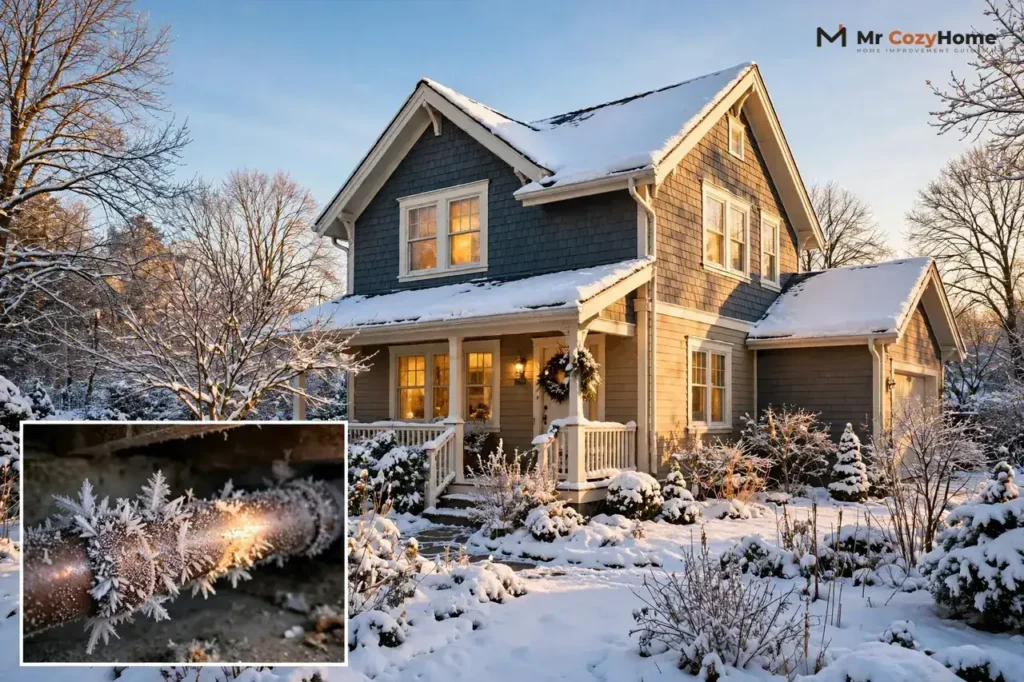
If your pipes are frozen, open the faucet the frozen pipe feeds, find your main water shut-off valve, and warm the frozen section gently with a hair dryer, a heating pad, or towels soaked in hot water. Never use an open flame or a torch. Keep heating until full water pressure comes back, then check every other faucet in the house. If you cannot find the frozen spot, cannot reach it, or see a crack or a leak, shut off the water and call a licensed plumber.
That is the whole job in one paragraph. For the full step-by-step thaw, see how to unfreeze frozen pipes. The rest of this guide walks you through it step by step, so you can act fast without making the damage worse. A frozen pipe is an emergency, but it is one you can often handle yourself if you stay calm and work in the right order.
Do This First: 5 Steps in the First 10 Minutes
Do these steps before you touch a hair dryer or a towel. They take about ten minutes, and they protect your home if the pipe has already cracked behind a wall or under a floor.
- Open the faucet the frozen pipe feeds. Turn on both the hot and the cold side if you are not sure which line is frozen. An open faucet lets pressure out and gives melting water somewhere to go. The American Red Cross gives this as the first step in its frozen-pipe guidance: keep the faucet open, because running water through the pipe helps melt the ice.
- Find your main water shut-off valve now, before you start thawing. It is often near the water meter, in the basement, in a utility closet, or where the main line enters the house. Turn it once to make sure it moves. If the pipe has split, you will need to close this valve the second water starts to leak.
- Turn up the heat in the house and open the cabinet doors under sinks on outside walls. Warm room air needs to reach the pipes. This also helps if the frozen section sits inside a wall and you cannot reach it directly.
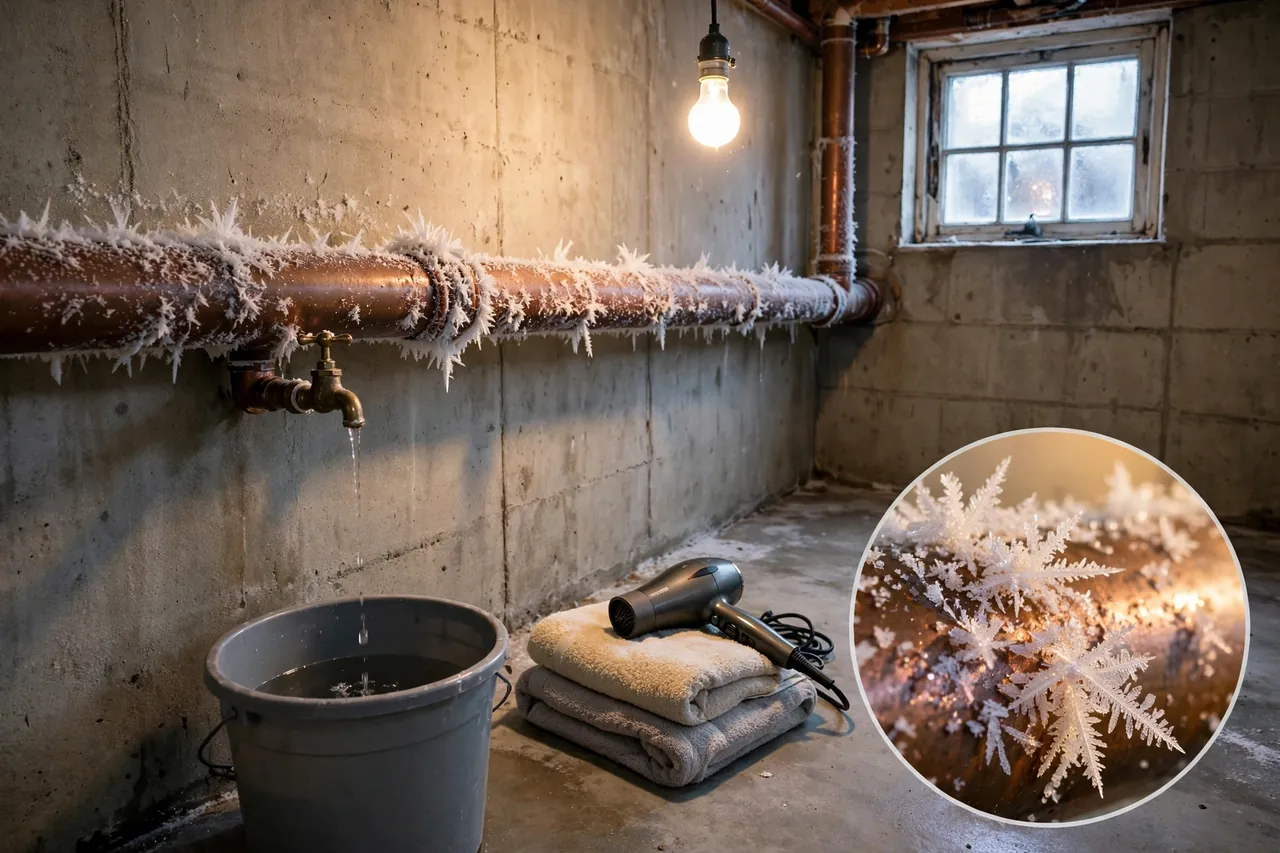
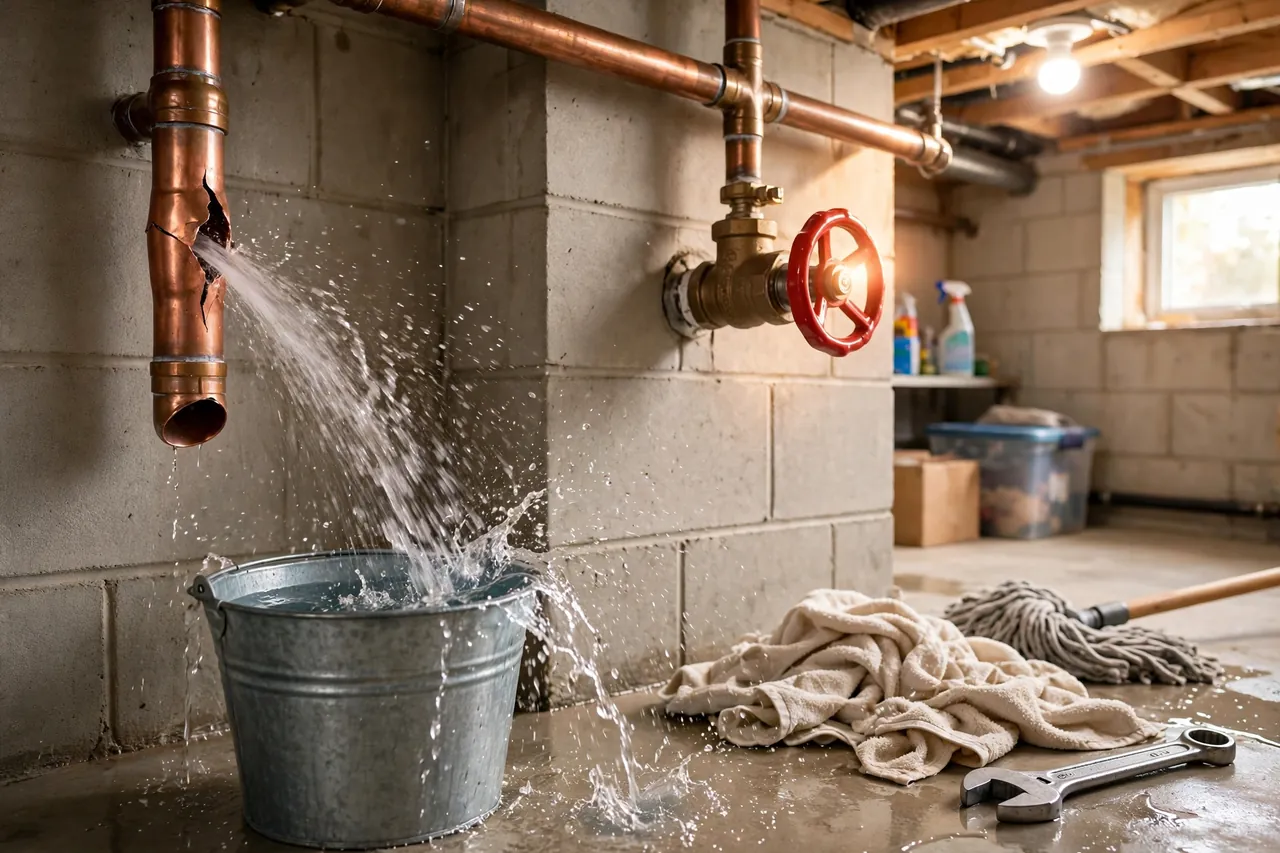
- Put towels and a bucket near the frozen area. Water can rush out fast once the ice melts, even from a small crack. A mop nearby helps too.
- Check the other faucets in the house. Turn each one on for a few seconds. If one pipe has frozen, others may have frozen too, and you want to know that now, not after you finish the first one.
If you find water already leaking, spraying, or pooling anywhere, skip the rest of this list. Shut off the main water valve right away and call a plumber. A burst pipe is a different job, and you will find the exact steps for it further down this page.
How to Tell If Your Pipes Are Frozen
Before you thaw anything, make sure the pipe is really frozen. A trickle or no water at all from a faucet during cold weather is the classic sign. The American Red Cross says to suspect a frozen pipe when you turn on a faucet and only a trickle comes out.
Look for these other signs too:
- One faucet gives little or no water, while other faucets in the house work fine.
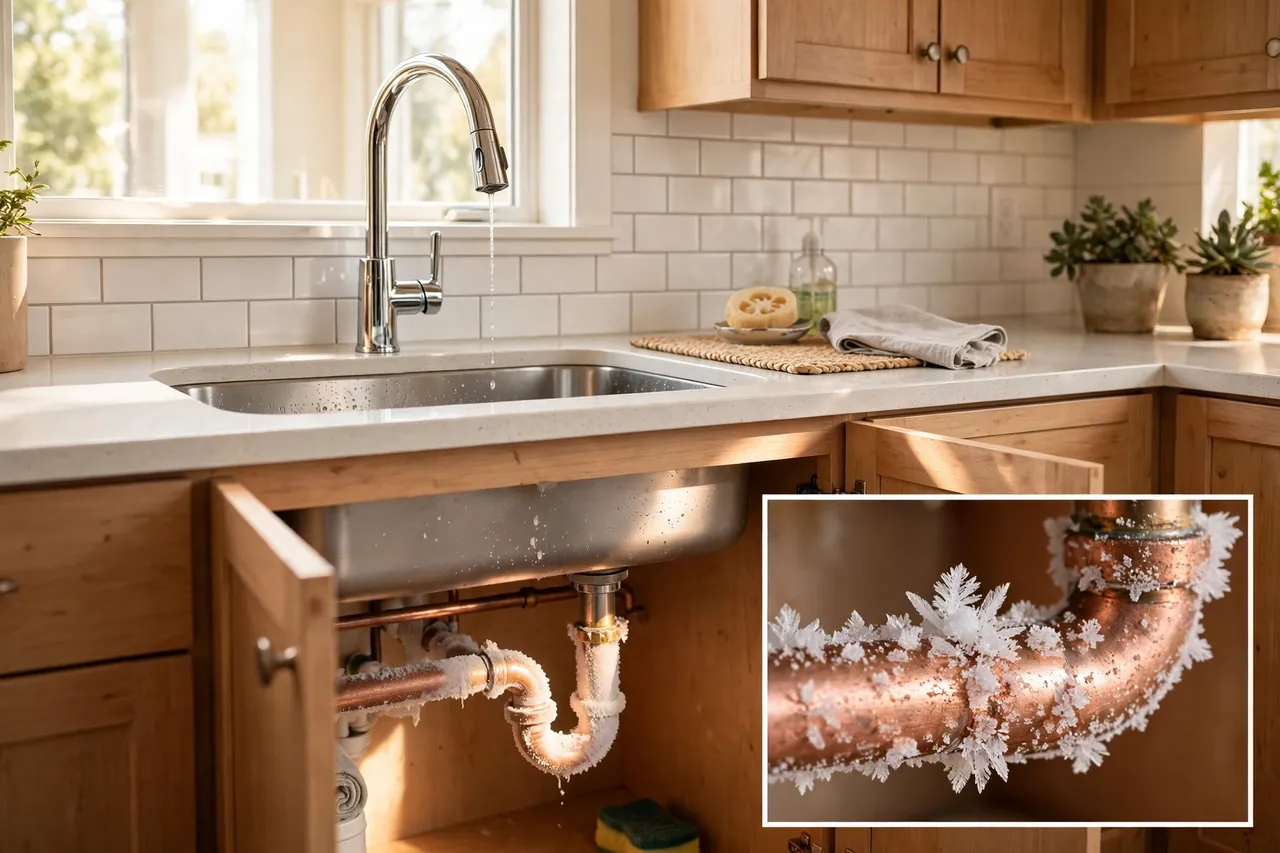
- You can see frost on an exposed pipe, or the pipe looks swollen or bent out of shape.
- The faucet or drain gives off a bad smell, because water has backed up behind the ice.
- You hear banging, clanking, or gurgling sounds in the pipes when you turn the water on.
- A wall, ceiling, or floor near a pipe feels damp or shows a wet stain.
Pipes freeze most often in the coldest spots in a house. The American Red Cross lists outdoor lines, pipes in unheated rooms like basements, crawl spaces, attics, and garages, pipes inside kitchen cabinets on outside walls, and pipes that run against exterior walls with little or no insulation. Pipes can freeze in as little as six to eight hours in a hard cold snap, so a pipe that worked fine last night can be solid ice by morning.
A swollen or bulging pipe needs extra care. A bulge means the ice has already stretched the pipe wall, and the pipe may split as soon as it thaws. If you see a bulge, a crack, or a joint that has pulled apart, do not thaw that pipe yourself. Shut off the water to that line if you can, or shut off the main valve, and call a licensed plumber.
Before You Thaw: Read This Warning First
Never use an open flame or a torch to thaw a pipe. That means no blowtorch, no propane heater, no kerosene heater, and no charcoal stove. The American Red Cross warns against all of them, and every plumber and utility guide says the same thing. An open flame can start a fire inside a wall, melt soldered joints, boil the water inside the pipe, and crack the pipe wide open. It is the one mistake that can turn a frozen pipe into a house fire.
Two more safety rules go with it. Keep electric tools away from standing water, because water and electricity together can shock you. The University of Illinois Extension warns to always be careful of the risk of electric shock in and around standing water. And never leave a space heater or a heat lamp running without watching it. Keep it away from anything that can burn, and keep it off a wet floor.
If you rent, call your landlord or property manager as well. They need to know right away, and they may have a plumber they want you to use. Tenants should not open walls or cut into pipes themselves.
How to Thaw a Frozen Pipe Safely
Work on a pipe you can see and reach, and only if it shows no crack, bulge, or leak. Thaw it with slow, gentle heat. Fast, fierce heat is what breaks pipes. Start at the faucet end of the frozen section and work back toward the coldest part, so melting water can escape through the open faucet instead of getting trapped behind the ice.
- Keep the faucet open. You already opened it in the first ten minutes. Leave it open the whole time you thaw.
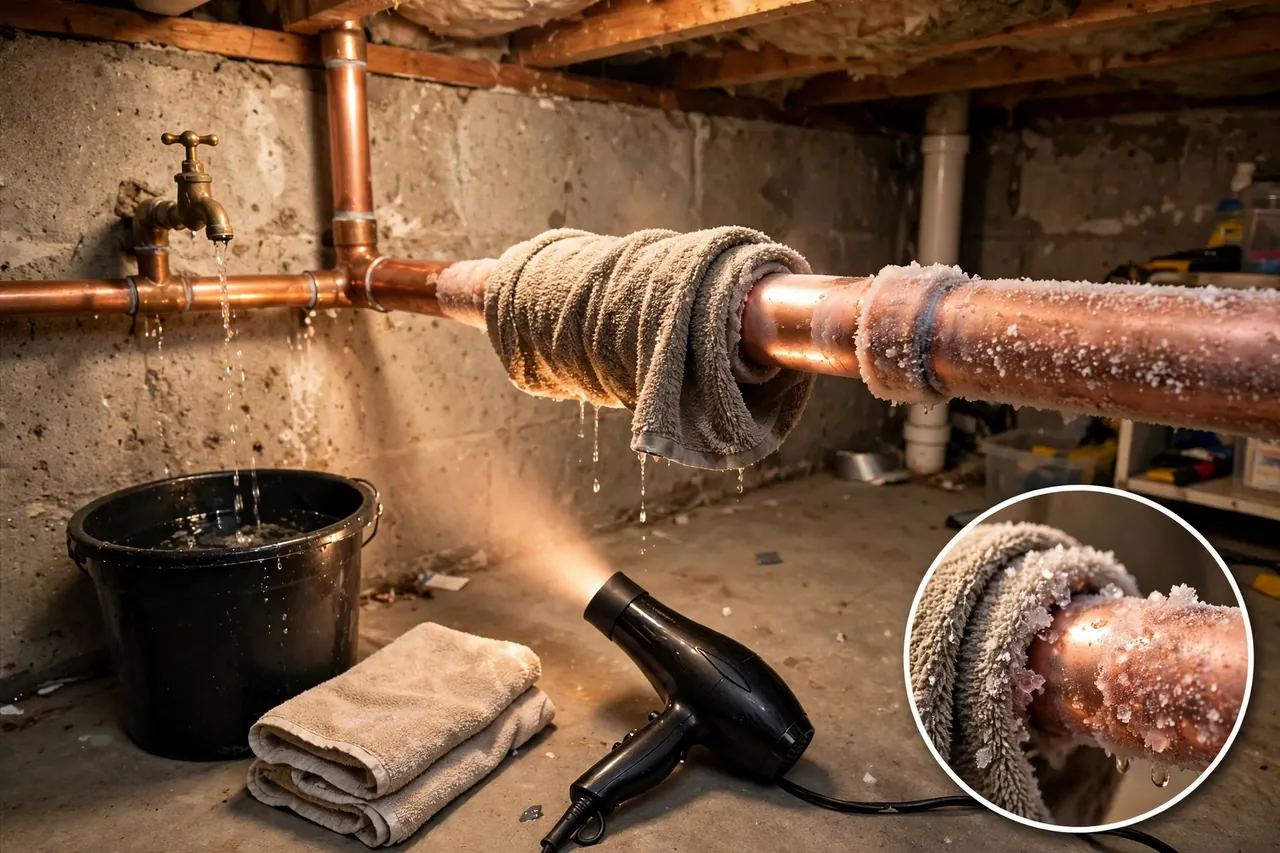
- Pick one gentle heat source. A hair dryer set to high heat works well. Hold it a few inches from the pipe and move it slowly back and forth along the frozen section. A heating pad wrapped around the pipe also works, and so do towels soaked in hot water, wrung out, wrapped around the pipe, and swapped for fresh hot ones as they cool.
- Warm the room too. A portable space heater in the room, kept well away from anything that can burn, raises the air temperature around the pipe and speeds the thaw. Open cabinet doors so warm air reaches pipes under sinks.
- Start near the faucet and move toward the frozen blockage. Do not heat the middle of the ice first. If you melt the far end first, water gets trapped between the heat and the ice, pressure builds, and the pipe can burst.
- Keep heating until full water pressure returns. Do not stop at the first trickle. A thin stream means ice is still inside the pipe, and it can freeze again fast. Keep the heat on for a few more minutes after the flow looks normal.
- Let the faucet run for a few minutes, then check the pipe closely for drips, cracks, or wet spots. Look at the floor and the wall below it too. A small crack may only show as a slow drip.
- Check every other faucet again. If one pipe froze, others may have frozen too. The American Red Cross advises checking all other faucets after you thaw one pipe, because a second frozen pipe is common in the same cold snap.
How long does this take? For a pipe you can see and reach, plan on 30 to 60 minutes of steady heat, and sometimes longer if the pipe is long, the ice is thick, or the room is very cold. Pipes hidden inside walls take longer, because the heat has to warm the wall first. If you have heated a pipe for more than an hour with no water at all, stop and call a plumber. The frozen section is probably somewhere you cannot reach, and a plumber has tools that find it without tearing your walls apart.
What about pipes you cannot see? Turn up the heat, open the cabinet doors, and let the faucets drip. If the water does not return in a few hours, call a plumber. Do not open drywall on a guess. Cutting into the wrong wall wastes money and still leaves the frozen pipe where it was.
What NOT to Do With a Frozen Pipe
Most frozen-pipe damage comes from rushing. Here are the mistakes to avoid, and why each one hurts.
- Do not use a torch, a propane heater, a kerosene heater, or a charcoal stove. Open flames cause fires and damage pipes. This is the most dangerous mistake on the list.
- Do not pour boiling water straight onto a pipe. Boiling water can crack a cold pipe, and it can warp plastic pipes. Hot towels are safe because they heat the pipe slowly. Boiling water is not.
- Do not hit, bend, or hammer the pipe to break the ice. Force cracks pipes and breaks joints. Ice needs heat, not impact.
- Do not use a heat gun on high heat. A heat gun gets far hotter than a hair dryer and can melt plastic pipe and weaken joints before you notice.
- Do not close the faucet while you thaw. A closed faucet traps pressure inside the pipe, and trapped pressure is what bursts pipes.
- Do not pour antifreeze into your water lines. Antifreeze is harmful to people, pets, and plants, and it does not belong in drinking water pipes. The American Red Cross warns against it.
- Do not walk away from a running space heater or heat lamp. Stay in the room while it runs, and keep it clear of curtains, towels, boxes, and other things that can catch fire.
- Do not ignore a pipe that thaws on its own and starts leaking later. A crack can stay hidden until full pressure returns, so check the pipe and the wall around it for at least a day after it thaws.
What to Do If a Pipe Has Burst
A burst pipe can release a lot of water fast. The University of Illinois Extension notes that even a crack one-eighth of an inch wide can release up to 250 gallons of water a day. Act in this order.
- Shut off the main water valve right away. This is the single most important step. Every minute of delay means more water in your floors and walls.
- Turn off the electricity to any wet area if you can reach the breaker panel safely without walking through standing water. Never walk through standing water to reach a panel or an outlet. If the water is near outlets, wires, or your breaker panel, stay out and call an electrician along with your plumber.
- Open the faucets to drain the water left in the pipes, and flush the toilets once to clear the tanks.
- Move rugs, furniture, boxes, and electronics out of the water. Mop up what you can, and set out buckets and towels to catch drips from the ceiling.
- Call a licensed plumber now, even if it is the middle of the night. A burst pipe is an emergency call, not a next-day job.
- Take photos of the damage before you clean up, and call your home insurance company. Photos help your claim, and your insurer may want a plumber’s report as well.
If water is pouring through a ceiling, put a bucket under the drip and poke a small hole in the sagging spot with a screwdriver so the water drains into the bucket instead of spreading across the whole ceiling. It sounds odd, but it limits the damage to one small patch instead of a whole room.
When to Call a Plumber
Some frozen pipes are fine to thaw yourself. Others are not. Use this table to decide in seconds.
Table: Thaw it yourself or call a plumber
| Situation | What to do |
|---|---|
| Pipe is visible, reachable, and has no crack or bulge | Thaw it yourself with gentle heat |
| Pipe is inside a wall, ceiling, or floor | Turn up the heat, then call a plumber if water does not return in a few hours |
| You cannot find the frozen section | Call a plumber |
| Pipe is bulging, cracked, or leaking | Shut off the water and call a plumber right away |
| Thawing for over an hour brings no water | Stop and call a plumber |
| Pipe has burst or water is spreading | Shut off the main valve and call an emergency plumber |
| Water is near outlets or the breaker panel | Stay out of the water and call a plumber and an electrician |
| You rent the home | Call your landlord or property manager and a plumber |
Call a licensed plumber if you cannot locate the frozen area, if the frozen area is not reachable, or if you cannot thaw the pipe. That is the American Red Cross guidance in plain words, and it is good advice. A plumber can thaw a hidden pipe with an electric thawing machine or a steam unit, and can fix a split section in one visit. Your job is to stop the water and limit the damage until help arrives.
How to Keep Pipes From Freezing Again
Once the water is flowing again, take an hour to protect the same pipes before the next cold night. Prevention is cheaper and calmer than a second emergency.
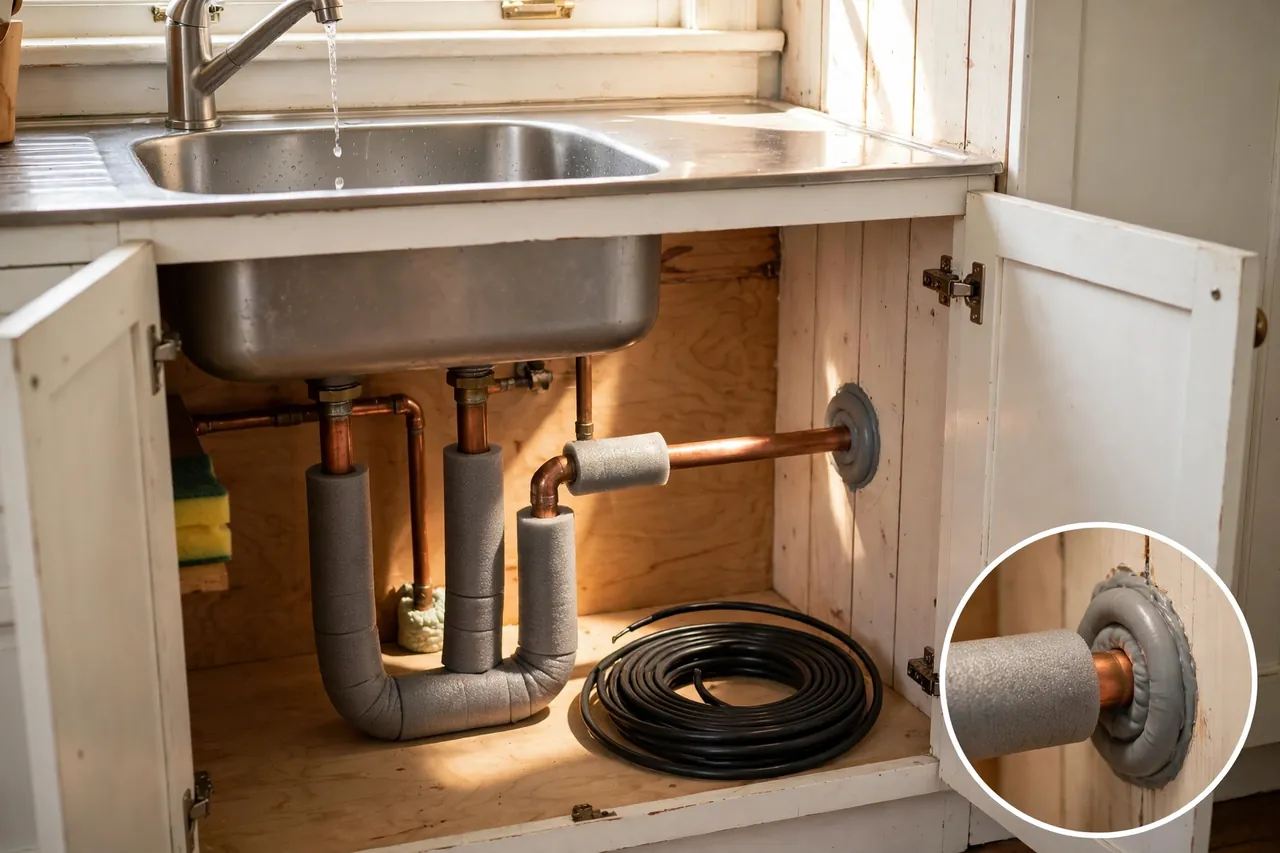
- Insulate the pipes that froze. Foam pipe sleeves slide over exposed pipes in basements, crawl spaces, attics, and garages, and they cost little. For the bigger job of warming the walls and rooms around your pipes, read our guide to how to improve home insulation, which covers the spots that matter most in winter.
- Keep the heat on and steady, day and night. The American Red Cross advises leaving the heat on and set to no lower than 55 degrees Fahrenheit when you go away in cold weather. Do not turn the heat off overnight to save money. A frozen pipe costs far more than a night of heat.
- Let a faucet drip on the coldest nights. Open the cold tap served by an exposed pipe just enough for a slow, steady drip. Moving water freezes far more slowly than still water.
- Open cabinet doors under sinks on outside walls during a cold snap, so warm room air reaches the pipes.
- Seal drafts around the pipes. Cold air sneaks in through cracks around pipes, vents, and foundation gaps. Seal the gaps with caulk or foam so cold air cannot blow straight onto the pipe.
- Disconnect garden hoses and drain outdoor faucets before winter. Close the inside valve that feeds each outdoor faucet, then open the outside faucet so the water left inside can drain out.
- Keep garage doors closed when water lines run through the garage. An open garage door on a freezing night can chill pipes fast.
If the same pipe freezes twice in one winter, the problem is not bad luck. It is a cold spot that needs insulation, a draft that needs sealing, or a pipe that needs to move to a warmer route. That is a job for a plumber or an insulation contractor, and it is worth fixing before the next freeze.
A Short Note Before You Go
This guide covers the steps most homeowners can take safely, and it follows guidance from the American Red Cross and university extension services. Every home is different, though. Old pipes, plastic pipes, and pipes in odd places all behave a little differently, and hidden damage is not always easy to spot. If anything feels wrong, if you are unsure, or if water is spreading where it should not be, shut off the water and call a licensed plumber. A quick call costs far less than a flooded room. Stay warm, stay dry, and check on your pipes again before the next cold night.
Related Guides
If this pipe froze once, it can freeze again, and insulation is the fix that lasts. Read our guide to how to improve home insulation to warm up the walls, attic, and crawl space around your pipes before the next cold snap.
Frequently Asked Questions
How do I thaw a frozen pipe?
Keep the faucet open, then warm the frozen section gently with a hair dryer, a heating pad, or towels soaked in hot water. Start near the faucet and work back toward the blockage, and keep heating until full water pressure returns. Never use a blowtorch, a propane heater, or any open flame, and call a licensed plumber if you cannot find or reach the frozen section.
Will a frozen pipe burst?
Not always, but it can. Water expands as it freezes, and that pressure can split copper, plastic, or steel pipe, often at a weak spot near the ice rather than at the ice itself. The leak may only appear when the ice melts and full pressure returns. That is why you should find your shut-off valve before you thaw, and watch the pipe closely after the water flows again.
How long does it take a frozen pipe to thaw?
For a pipe you can see and reach, gentle heat usually restores water in 30 to 60 minutes, though a long frozen section or a very cold room can stretch that to a few hours. Pipes inside walls take longer, because the wall must warm first. If you have heated a pipe for over an hour with no water at all, stop and call a plumber.
Will frozen pipes thaw on their own?
Yes, they will thaw when the weather warms up, but waiting is risky. It can take hours, days, or even longer, and pressure keeps building while you wait. The pipe is most likely to burst as the ice melts and full pressure returns. Thawing it yourself with gentle heat, or calling a plumber, is safer than waiting for warm weather.
How do I know if my pipes are frozen?
Turn on a faucet during cold weather. If only a trickle comes out, or nothing at all, while other faucets work fine, a pipe has likely frozen. Frost on an exposed pipe, a swollen pipe, a bad smell from a drain, or banging and gurgling sounds point the same way. Check the pipes in the coldest spots first, such as basements, crawl spaces, and outside walls.
Now you know what to do. Open the faucet, find your shut-off valve, and thaw the pipe gently, and if anything looks cracked or you cannot reach the frozen spot, shut off the water and call a licensed plumber today.


