
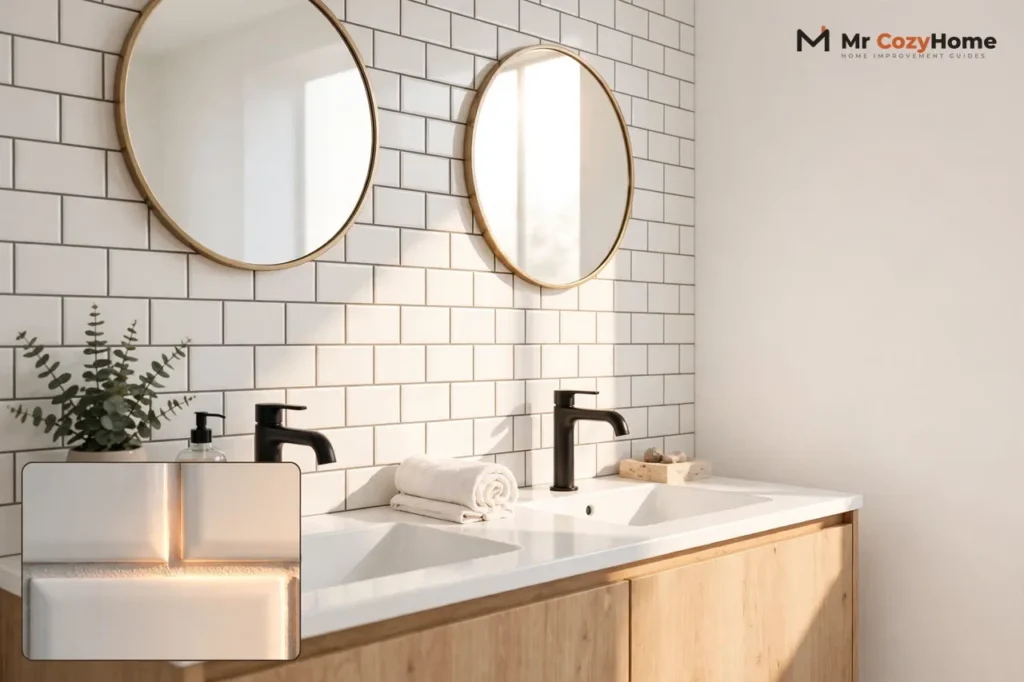
Laticrete grout colors come in 40 standard shades, and every shade carries the same name and number across the company’s main grout lines, so 44 Bright White means the same color whether you buy it as cement grout or epoxy grout. LATICRETE states this 40-color range on its official SPECTRALOCK FAQ page, and the same card covers PERMACOLOR, PERMACOLOR Select, and the color-matched LATASIL sealant. That single shared card is the whole trick to choosing well.
But the card can still fool you. One shade on the chart looks perfect in the store and wrong on your floor, and the comparison table in the middle of this guide shows exactly why that happens. Read it before you order, and you will pick once and love the result.
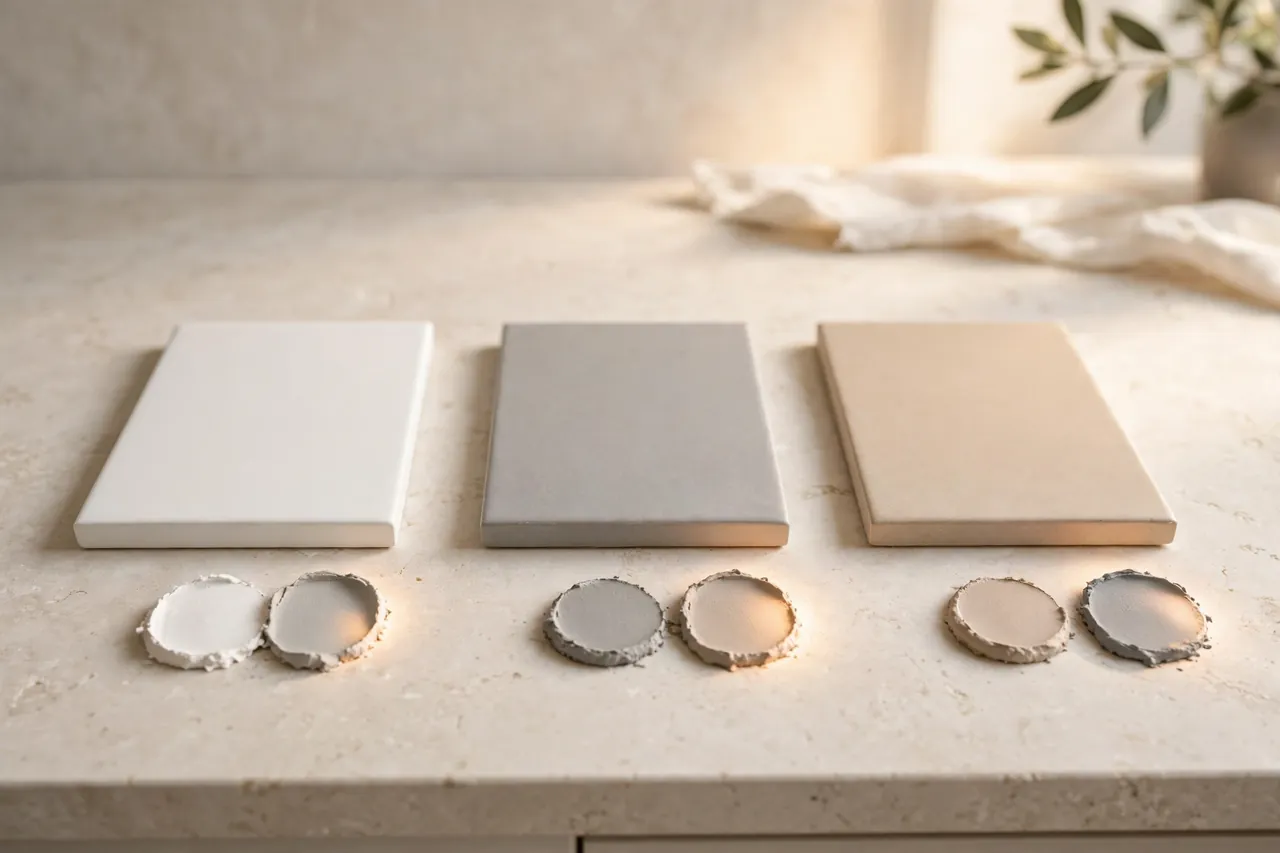
💡 Practical Home Tip: Buy the smallest unit of your top two colors and grout a scrap board of your real tile first. Let it cure a full 72 hours, then judge it in the room where it will live, in daylight and at night. Wet grout dries one to two shades lighter, so a cured sample is the only honest preview you get.
How Many Laticrete Grout Colors Are There?
Laticrete offers 40 standard grout colors on its US color card, and each color keeps the same name and number across PERMACOLOR, PERMACOLOR Select, SPECTRALOCK, and the LATASIL silicone sealant. That shared numbering is what makes the system easy to shop: order 24 Natural Grey for the floor grout and the matching caulk, and the two lines agree.
The 40 colors are the core palette, not the ceiling. SPECTRALOCK DAZZLE is an additive that blends metallic, pearlescent, and glow-in-the-dark effects into those 40 base colors, and LATICRETE says the combinations expand the palette to over 170 options. The five DAZZLE choices are Gold, Silver, Copper, Mother-of-Pearl, and Glow-In-The-Dark, plus other bright colors. Glow-In-The-Dark DAZZLE works with 20 of the lighter grout colors, so check the official color card (DS 254.3) before you plan a glowing pool edge or bar backsplash.
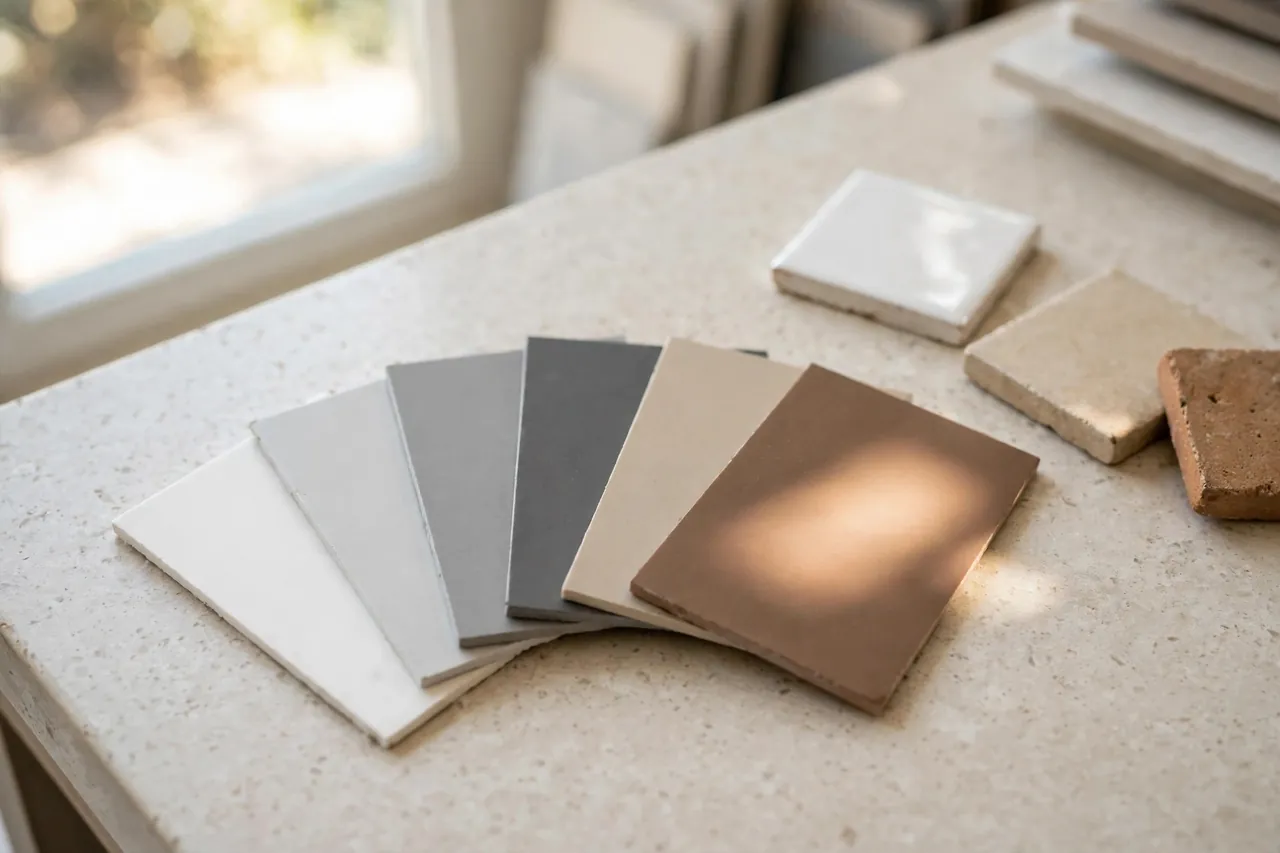
One more number matters. PERMACOLOR Select color kits come in more than 150 stocked options, including all 40 LATICRETE standard colors, plus top competitor colors and custom matches through the AnyColor program. So if the standard card misses your tile by half a shade, a dealer can usually get closer. That is the part most shoppers never hear about, and it sits in the next section.
Laticrete Grout Systems Compared
Laticrete sells five grout systems on the same 40-color card, and the color you pick behaves differently in each one because cement grout cures matte while epoxy grout cures slightly glossier and reads a touch richer and darker. Pick the system first, then the shade, or the same color number can surprise you.
Use this table to match the system to your room before you fall in love with a shade. The right system makes the color last; the wrong one makes even the perfect shade look tired in a year.
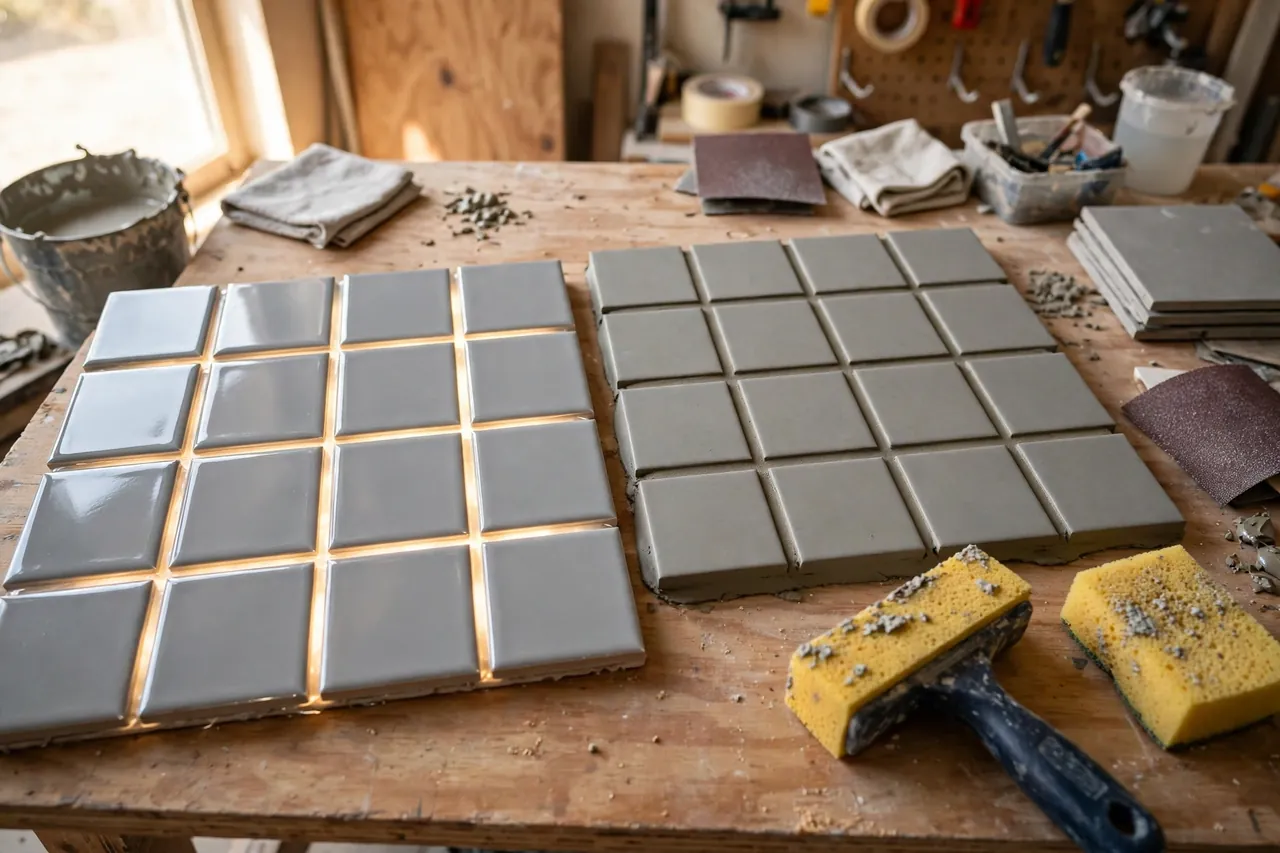
Table: Laticrete grout systems at a glance (checked Nov 10, 2026)
| System | Type | Colors | Best for |
|---|---|---|---|
| SPECTRALOCK PRO Premium Grout | Epoxy | 40 + DAZZLE | Showers, kitchens, pools; never needs sealing |
| SPECTRALOCK PRO Grout | Epoxy | 40 + DAZZLE | Wet areas and re-grouting; never needs sealing |
| SPECTRALOCK 1 | Pre-mixed | 40 + DAZZLE | Quick jobs; locks in color, blocks stains |
| PERMACOLOR Grout | Cement | 40 | Floors and walls; high-performance cement grout |
| PERMACOLOR Select | Cement + color kit | 40 + 150 kit options | Any color on demand; delicate stone and glass |
SPECTRALOCK PRO Premium is the stain-fighting pick. LATICRETE says its absorption rate is under 0.05 percent, which is why it never needs sealing, and its non-sag formula holds on vertical walls. It works in joints from 1/16 inch to 1/2 inch, so it suits the narrow joints on rectified tile and stone.
PERMACOLOR Grout is the cement workhorse for floors and walls, and the reformulated version includes STONETECH Sealer Technology, so sealing is not necessary, plus Microban antimicrobial protection that helps guard against stain- and odor-causing bacteria. PERMACOLOR Select works differently: the dealer stocks one neutral base and you tint it with a color-kit pod at mixing time, one pod for a 10-pound base and two pods for a 20-pound base. That is why any color on the card is effectively in stock anywhere the base is sold.
Here is the catch the table hides. Order 24 Natural Grey in PERMACOLOR and in SPECTRALOCK and you will see fraternal twins, not identical ones, because the epoxy version reads richer and darker. If one room mixes both products, pick the color from cured samples of each, not from one shared paper chip. The color families below show where each shade sits, so the twins stop surprising you.
The Color Families on the Laticrete Chart
The Laticrete chart groups its 40 colors into four families: whites and off-whites, grays, warm beiges and browns, and bold accents. Learn the family first and the shade second, because the undertone inside a family decides whether the grout flatters your tile or fights it.
Whites and Off-Whites
44 Bright White is the true, blue-leaning white, and it is correct for crisp subway tile, polished porcelain, and anywhere the tile itself is stark white. 60 Dusty Grey reads as a softened white with a gray whisper and hides everyday soil far better on floors. In the warm direction, 23 Antique White, 85 Almond, and 03 Silk carry cream and yellow undertones that flatter travertine, tumbled marble, and warm-glazed tile. Put Bright White against a cream handmade subway tile and the grout will make the tile look dingy, and that is an undertone mismatch, not a quality problem. White cement grout in a shower always demands more cleaning, so if the look must be white, choose the same color in SPECTRALOCK, because the epoxy version resists the graying that eventually claims every white cement joint.
Grays: Silver Shadow to Raven
Gray is where the Laticrete card earns its keep, because the grays sit in usable, distinct steps instead of five near-duplicates. From light to dark, the spine runs 88 Silver Shadow, 78 Sterling Silver, 24 Natural Grey, 89 Smoke Grey, 91 Slate Grey, and then the deep end with 45 Raven, a soft near-black, and 22 Midnight Black. 24 Natural Grey is the true neutral mid-gray and the safest default when you cannot decide. Raven delivers the dark-grout contrast look without the harshness of a jet black, and it hides years of floor traffic better than anything lighter. Watch the undertones: Silver Shadow and Natural Grey lean cool, while Smoke Grey and Slate Grey lean warm, so Smoke Grey can read faintly brown against cool gray porcelain and exactly right against warm wood-look tile.
Warm Beiges, Browns, and Accents
The warm half of the palette runs from barely-there neutrals to true chocolate. In the light range, 61 Parchment, 17 Marble Beige, and 18 Sauterne are quiet sand tones built for travertine, limestone, and beige porcelain. The mid-browns include 27 Hemp, 40 Latte, and 52 Toasted Almond, which pair naturally with wood-look planks when you want joints to disappear. At the dark end, 35 Mocha, 59 Espresso, and 57 Hot Cocoa give rich frame lines around cream or terracotta tile. The bold accents are few but real: 46 Quarry Red, 58 Terra Cotta, 67 Autumn Green, and 53 Twilight Blue. Use an accent only where you want the grout to be a design feature, because a loud joint never quiets down. The classic warm-grout mistake is matching the tile’s lightest fleck instead of its overall field tone, which makes joints glow lighter than the floor, so squint at the tile from ten feet and match the midtone that survives the squint.
How to Choose a Laticrete Grout Color in 6 Steps
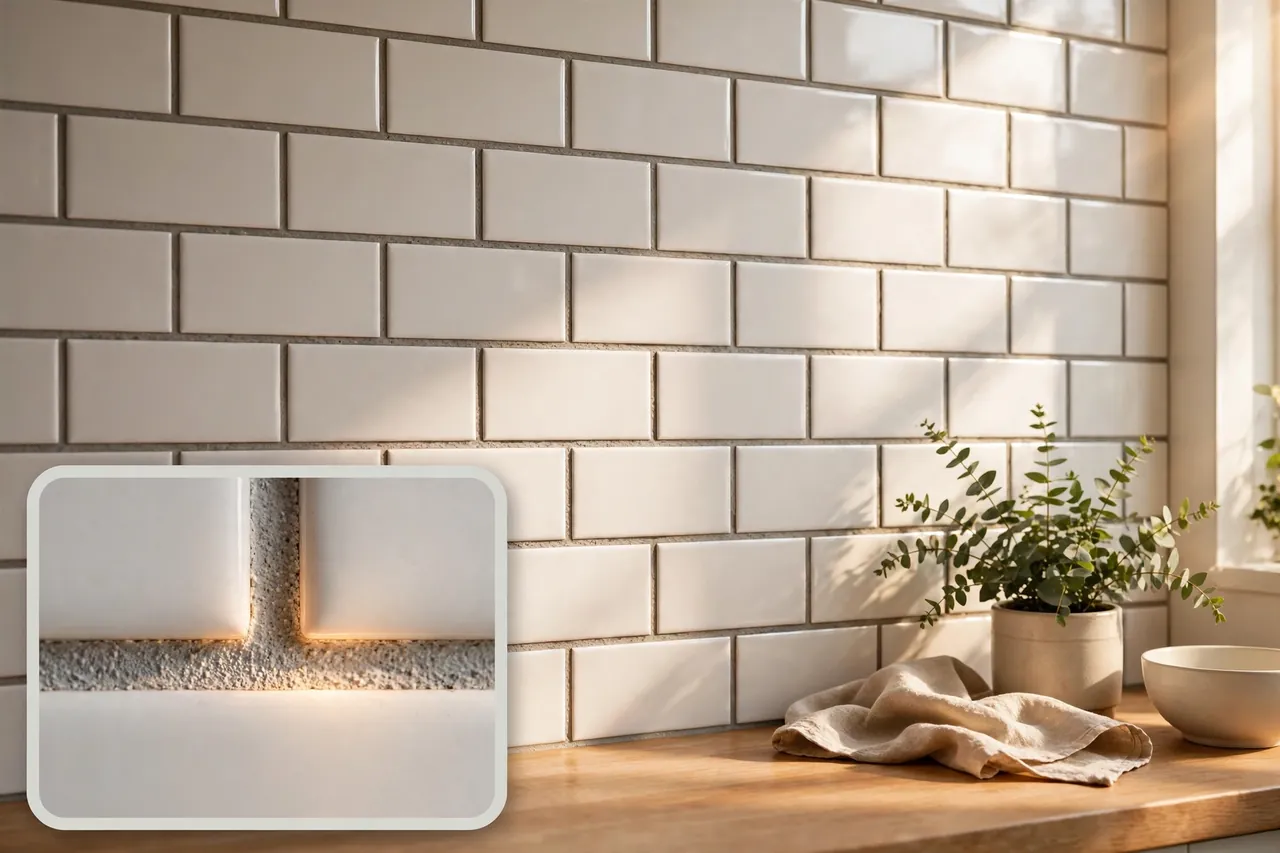
Choosing a Laticrete grout color takes six steps, and skipping any one of them is how most people end up re-grouting or living with a shade they dislike. The steps take one evening of sampling plus a short visit to a dealer, and they cost less than a single bag of the wrong grout.
- Decide blend or contrast first. Ask whether the tile should be the star or the pattern should be. Matching grout makes joints disappear and the surface read as one plane, while contrasting grout frames every tile and turns the layout into the design.
- Match the undertone, not just the shade. Hold the grout chip against the tile’s field tone and check whether both lean warm or both lean cool. A cool gray grout on warm beige tile will always look slightly off, even when the lightness matches.
- Pick the system before the shade. Choose SPECTRALOCK for showers, kitchens, and pools, and PERMACOLOR for dry floors and walls, because the same color number cures differently in cement and epoxy.
- Order the matching LATASIL caulk in the same color number. Every change of plane, like tub-to-tile and inside corners, gets silicone instead of grout, and the color-matched sealant keeps those lines quiet. Our guide to the best exterior caulk explains how to judge a sealant by price, paintability, and durability before you buy.
- Test two finalists on real tile. Mix a golf-ball batch of each, grout a scrap board of your actual tile, and let it cure a full 72 hours. Wet grout dries one to two shades lighter, and epoxy shifts less than cement.
- Judge the cured sample in the real room. Check it under that room’s actual bulbs, in daylight and at night, because tile glaze and lighting push grout perception around more than the chart ever shows.
Guess which step most people skip? Step five, the cured sample, and it is the only step that cannot be fixed after the grout is in. The next section covers the one decision inside step one that causes the most regret.
Match or Contrast? What Most People Get Wrong
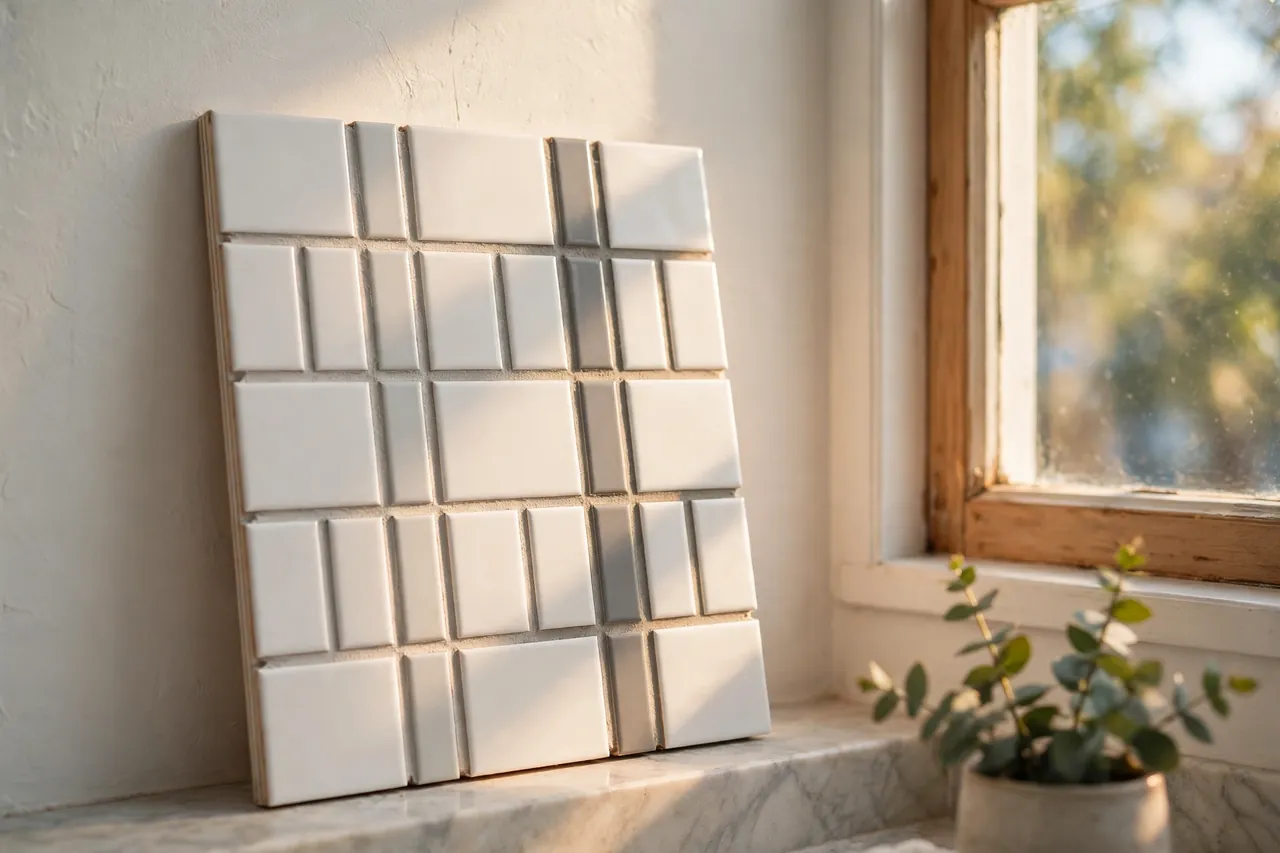
Most people get the match-or-contrast choice wrong because they pick the grout color from the chart instead of from the room. A matching grout makes the surface read as one continuous plane, a contrasting grout makes the pattern the feature, and a mid-tone grout sits between the two and is usually the most forgiving choice to live with.
The common belief is that dark grout is always the low-maintenance choice. The correction is that dark grout hides organic dirt well but shows limescale, soap residue, and mineral deposits more readily, so in a hard-water home a dark shower joint can look worse than a mid-tone one. A mid-tone gray is the most forgiving grout color because it hides soil better than white and mineral marks better than black. White tile with white grout gives a clean, seamless look that never goes out of style, and white tile with Raven grout gives the classic framed subway look, but the framed look outlines every tile, so it also outlines every uneven joint. If your installer is not precise, matching grout is the kinder choice. For a fireplace surround, where tile and grout face heat and soot, see our fireplace renovation ideas before you pick a shade that has to live beside fire.
Where to See Real Samples and Buy Laticrete Grout
You can see real Laticrete grout colors two ways: on the printed Grout and Sealant Colors Card (DS 254.3) at a tile dealer, and on cured samples you make yourself. Trust only the cured sample, because LATICRETE warns that printed samples are guides only and shade depends on job-site conditions, lighting, and tile.
Start with the printed Grout and Sealant Colors Card (DS 254.3) at a tile dealer to narrow the field to two or three shades, then ask for the PERMACOLOR Select kit list. Dealers stock the neutral Select base and the color kits, so any of the 40 standard colors is usually available without a special order. Ask for the same control or lot number on every bag, because LATICRETE advises using grout with the same control number for maximum color consistency, and mixing different lots can shift the shade. LATICRETE does not publish retail prices on its own site, so prices vary by dealer and region; get a written quote for the grout, the color kits, and the matching LATASIL before you commit. If the dealer cannot show you a cured sample, buy the smallest unit of your top two colors and make one yourself, because a paper chip has fooled better eyes than yours.
Keep Your Grout Color Looking New
Your grout color stays true when you pick the right system, clean it gently, and refresh it instead of replacing it. SPECTRALOCK grout never needs sealing, and reformulated PERMACOLOR now includes STONETECH Sealer Technology, so sealing is not necessary there either.
Older cement grout without that technology still benefits from a sealer, so check which formula you have before you skip it.
Clean with neutral-pH soap and clean water, and skip harsh acids and bleach-based cleaners that can fade or blotch colored grout. Work in ventilated air and wear gloves when you use any strong cleaner, and test it on a hidden joint first. When an old grout color has faded or stained past cleaning, LATICRETE’s Grout Colorant & Sealer refreshes and recolors it in all 40 standard LATICRETE colors, and it works on cement, epoxy, and pre-mixed grout, so you can change the color without retiling. Keep grout care on your regular routine with our deep cleaning house checklist, and clean brick fireplace joints with the same gentle approach in our guide on how to clean a brick fireplace without damaging the brick. The color you chose deserves that little bit of care, and the FAQ below answers the questions shoppers ask most.
Related Guides
best exterior caulk · fireplace renovation ideas · deep cleaning house checklist · Hiring a Tiler? What They Really Do, What It Costs, and How to Pick a Good One
Frequently Asked Questions
Should grout be lighter or darker than the tile?
Neither is universally right. Matching grout makes the surface read as one plane, while contrast emphasizes the pattern. A mid-tone grout, slightly darker than the tile, is the most forgiving choice on floors because it hides dust and footprints without turning the floor into a grid.
What is the best grout color for tile floors?
For most busy floors, a medium tone that matches the tile or sits one shade darker works best. It hides everyday dust and footprints better than bright white while still looking intentional, and a mid-tone gray also hides limescale better than a dark grout does.
What grout color is best for porcelain tile?
Match the grout to the dominant body color of the porcelain, not to a tiny fleck or highlight. Light marble-look porcelain pairs well with soft gray or warm taupe, wood-look porcelain pairs with mid brown-gray, and dark porcelain pairs with charcoal or a matching dark gray.
Does grout dry lighter or darker?
Grout dries lighter than it looks when wet, most noticeably on medium and dark tones. That is why you should judge only a fully cured sample, after about 72 hours, and never approve a color while the grout is still damp.
How many colors are available?
Laticrete grout comes in 40 standard colors on its US color card, and the same colors run across PERMACOLOR, PERMACOLOR Select, SPECTRALOCK, and LATASIL sealant. SPECTRALOCK DAZZLE additives can expand those 40 base colors to over 170 combinations in total.
Pick your system first, narrow the card to two shades, and test both cured on your real tile. That one evening of sampling is the difference between grout you notice every day and grout you never think about again, and the second one is the goal. Order the matching LATASIL in the same color number, keep the same lot number on every bag, and your floor will look the way you imagined it on the day you picked the tile.


