

A deep cleaning house checklist covers the jobs a regular clean skips: scrubbing grout, washing inside appliances, degreasing the range hood, dusting ceiling fans and vents, and cleaning under and behind furniture. A regular clean keeps visible surfaces tidy each week, while a deep clean resets the whole house, room by room, so buildup does not keep growing in the places you rarely touch.
This guide gives you that full deep clean checklist, room by room, plus the supplies you need, a weekend plan for splitting the work, and honest advice on how often to repeat it. Work through it in order, check off each room as you finish it, and you will end the weekend with a house that feels truly reset, not just tidied.
What Counts as a Deep Clean?
A deep clean is not a longer tidy. It is a different kind of clean. Regular cleaning handles the surfaces you see and use every day. Deep cleaning handles the surfaces that collect dust, grease, and grime slowly, week after week, until they change how a room looks and smells.
Think of it this way. Wiping the kitchen counter is regular cleaning. Emptying the fridge, washing its shelves, and wiping its door seals is deep cleaning. Vacuuming the middle of the carpet is regular cleaning. Moving the sofa, vacuuming under it, and wiping the baseboards behind it is deep cleaning. The same idea applies in every room: you clean what weekly cleaning leaves behind.
Four kinds of work make a clean a deep clean. First, scrubbing: grout lines, shower walls, sinks, and toilets get a real scrub, not a quick wipe. Second, washing: bedding, curtains, blinds, and washable covers go through a full wash. Third, sanitizing: high-touch spots such as handles, switches, and faucets get disinfected after you clean them. Fourth, descaling and degreasing: limescale comes off shower heads and faucets, and grease comes off the stovetop, backsplash, and range hood filter.
Use this comparison to judge whether a job belongs on your deep cleaning house list or your weekly list.
Regular Cleaning vs. Deep Cleaning at a Glance
| Area | Regular Clean | Deep Clean |
|---|---|---|
| Kitchen | Counters, sink, and stovetop wipe-down | Inside the oven, fridge, and microwave; hood filter; inside cabinets |
| Bathroom | Toilet, sink, mirror, and shower wipe-down | Grout scrub, descaling, exhaust fan, behind the toilet |
| Bedrooms and living areas | Dusting visible surfaces, changing sheets | Ceiling fans, blinds, mattress, under furniture, vents |
| Floors | Vacuum and mop open areas | Edges, corners, under furniture, baseboards |
| Windows | Spot-clean glass | Glass, frames, sills, tracks, and blinds |
Before You Start: Supplies and Safety
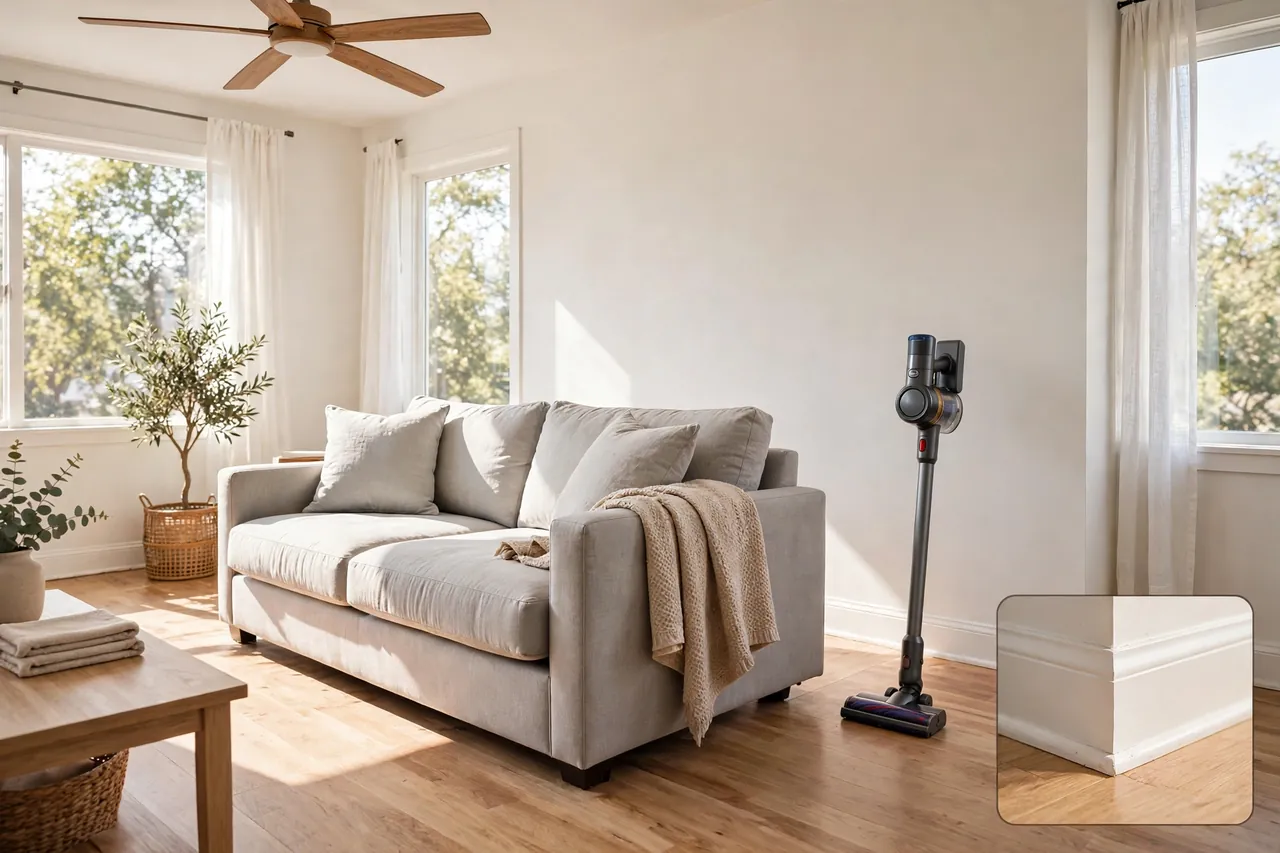
Gather everything before you clean the first room. A deep clean stalls when you keep hunting for supplies, so load a bucket or caddy you can carry from room to room. You will need microfiber cloths, an extendable duster, a vacuum with a crevice tool and an upholstery tool, a mop and bucket, a grout brush, an old toothbrush for tight corners, and trash bags.
For cleaners, keep it simple: an all-purpose cleaner, a bathroom cleaner or disinfectant, a glass cleaner, a kitchen degreaser, and a descaler or white vinegar for limescale. Add rubber gloves, a sturdy step stool, and a spray bottle. Check each product label before you use it, and use each product only on the surfaces its label allows.
Clear surfaces first so you can actually clean them. Move items off counters, nightstands, and shelves, and put stray things back where they belong. This is not a decluttering project, and you do not need to sort your belongings room by room. You only need clear surfaces and clear floors, so your cloth and vacuum can reach the dirt underneath.
Now the safety part, because deep cleaning puts you in contact with chemicals, heights, and electricity. Read it before you open a single bottle.
Never mix bleach with ammonia or any other cleaner. The Centers for Disease Control and Prevention (CDC) warns that mixing household bleach with other cleaners can release vapors that are very dangerous to breathe, and it advises good ventilation, gloves, and eye protection when splash is likely. Open a window, wear gloves, follow the label exactly, and use only the amount the label recommends. If you feel dizzy or your chest feels tight, leave the room, get fresh air, and do not push on. You can read the CDC guidance on cleaning and disinfecting with bleach before you start.
For ladders and high dusting, use a stable step stool, never a chair, and keep your hips inside the stool rails. Do not lean sideways to reach a fan blade or a high shelf. Move the stool instead. For electrical fixtures, wipe switch plates and light fixtures with a barely damp cloth, never a soaking one, and never spray cleaner directly into a switch, outlet, or light socket. If a fixture looks damaged or a switch feels warm, leave it alone and call a qualified electrician.
The Order That Saves You Time
Clean in an order that stops you from redoing your own work. Two rules do most of the job. First, work top to bottom in every room, so dust from fans, shelves, and fixtures falls onto floors you have not cleaned yet. Second, work dry before wet, so you dust and vacuum before you wipe and mop, and dust does not turn into streaks.
Start with the rooms that take longest and need products to sit: the kitchen and the bathrooms. Spray shower walls, toilet bowls, and oven cleaner first where labels allow, then dust and tidy while those products do their work. Move on to bedrooms and living areas, and finish with floors throughout the house, working from the far end of each room back toward the door.
Within each room, follow the same five steps. Dust high surfaces first, then clean walls and mid-level spots such as switch plates and blinds. Next, clean surfaces and furniture, moving items instead of cleaning around them. Then handle the details: baseboards, sills, and handles. Clean floors last.
Kitchen Deep Cleaning Checklist
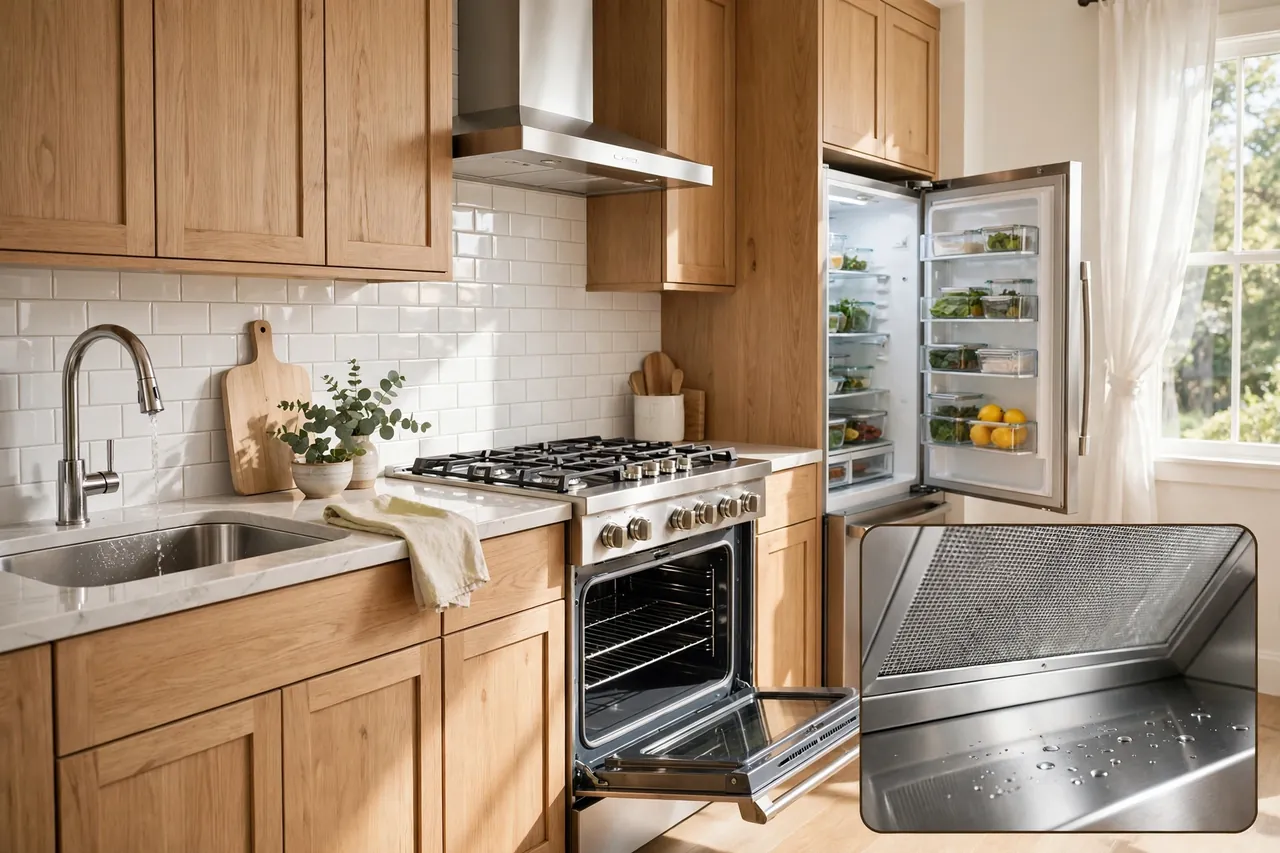
The kitchen takes the longest of any room in most homes, because grease bonds to every surface near the stove and food residue hides inside appliances. Plan a generous block of time here, and let the degreaser and oven cleaner sit for the time the label states while you work on another kitchen job.
- Empty cabinets and drawers, wipe the insides, then wipe doors and handles.
- Clean inside the oven and the oven door glass, following your oven cleaner label or your oven manual.
- Degrease the range hood and wash or replace its filter as the manual directs.
- Empty the fridge and freezer, wash shelves and drawers, and wipe the door seals.
- Clean inside the microwave, then wipe it outside, including the handle and buttons.
- Run a cleaning cycle on the dishwasher and clean its filter.
- Degrease the backsplash and stovetop, then wipe counters, the sink, and the faucet.
- Wipe small appliances, cabinet fronts, light switches, and the trash can inside and out.
- Sweep and mop the floor last, including under the fridge and stove if you can move them safely.
Do not pull a heavy fridge or stove out on your own if it feels stuck or if gas or water lines connect to it. Clean as far as you can reach safely, and call a qualified technician for anything connected or heavy. A scratched floor or a damaged line costs far more than the dust behind the appliance.
Bathroom Deep Cleaning Checklist
Bathrooms reward patience. Apply cleaners first, then dust and wipe the rest of the room while they sit. That waiting time does the hard work for you, and it keeps you from scrubbing a dry surface that would have softened with a few more minutes.
- Dust the exhaust fan cover, light fixtures, and the tops of mirrors and cabinets.
- Spray the shower, tub, and toilet, and let the products sit for the label time.
- Scrub grout lines, shower walls, and tub surrounds, then rinse well.
- Descale the shower head and faucets, and clean shower glass and door tracks.
- Clean the toilet inside and out, including the base and the floor behind it.
- Wipe the vanity, cabinet fronts, mirror, and light switches.
- Wash bath mats, towels, and the shower curtain if its label allows machine washing.
- Wipe baseboards and the door frame, then mop the floor last.
Before you use a strong bathroom cleaner, recheck the safety rules above: ventilate the room, wear gloves, and never mix products. Bathrooms are small, and fumes build up fast in a closed space. Keep the door open and the fan running while you work.
Bedroom Deep Cleaning Checklist
Bedrooms collect dust and fabric dirt more than grease, so most of this room is dry work. That makes bedrooms a good place to recover your energy after the kitchen and bathrooms, and a good room to hand to a helper if someone joins you.
- Dust ceiling fans, light fixtures, curtain rods, and the tops of door frames.
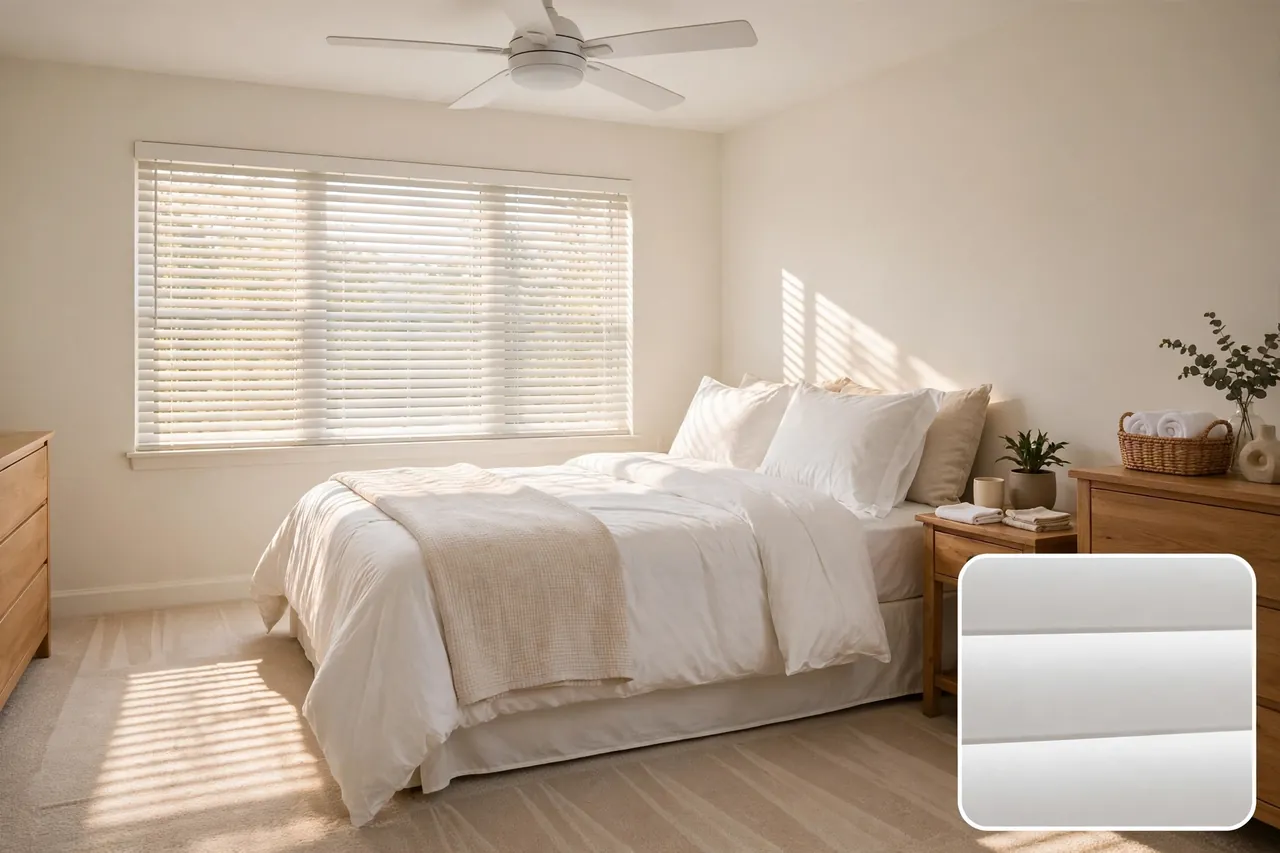
- Clean blinds slat by slat, and wash or vacuum curtains as their labels allow.
- Wash all bedding, including duvet covers, pillow protectors, and mattress covers.
- Vacuum the mattress, and rotate or flip it only if the maker recommends it.
- Dust the headboard, nightstands, dresser tops, and closet shelving.
- Vacuum under the bed and inside closets, and wipe closet floors.
- Wipe light switches, door handles, and remote controls.
- Clean windows, frames, and sills, then vacuum and mop or vacuum the floor.
Check mattress and pillow labels before you wash anything. Some pillows and mattress covers wash well, while others need a different method, and a ruined pillow costs more than a skipped wash. When a label is missing, use the vacuum and a fresh cover instead of guessing.
Living Areas, Hallways, and Entry Deep Cleaning Checklist
Living areas show the payoff of a deep clean fastest, because these are the rooms you and your guests see most. Dust settles on electronics, shelves, and soft furniture here, and it hides under cushions and behind furniture where weekly vacuuming never reaches.
- Dust ceiling fans, light fixtures, shelves, decor, and electronics with a dry cloth.
- Vacuum sofas and chairs, including under the cushions and along the frame.
- Wipe baseboards, vents, door frames, light switches, and door handles.
- Clean interior windows, frames, sills, and tracks.
- Vacuum edges and corners with the crevice tool, then vacuum under and behind furniture.
- Wipe stair handrails and vacuum stairs, tread by tread.
- Shake out or wash entry mats, and wipe the front door, its handle, and door glass.
- Mop hard floors last, working from the far wall back toward the door.
If your living area has a brick fireplace, give it the same deep-clean attention as the rest of the room, and follow a fireplace-specific method so you do not damage the brick. MrCozyHome’s guide to how to clean a brick fireplace without damaging the brick walks through that job step by step. Never clean a fireplace while a fire is burning or the brick is still hot, and keep ash out of your vacuum unless the vacuum is made for ash.
Laundry Room and Whole-House Finishing Tasks
Finish with the rooms and jobs that belong to the whole house rather than one room. The laundry room needs its own deep clean, and a final pass through the house catches the shared spots that room checklists miss.
- Wipe the washer door seal and detergent drawer, and run a hot cleaning cycle if your washer manual offers one.
- Clear lint from the dryer filter, and clean the vent as far as you can safely reach.
- Wipe laundry room shelves, the sink, and the floor, and empty the lint bin area.
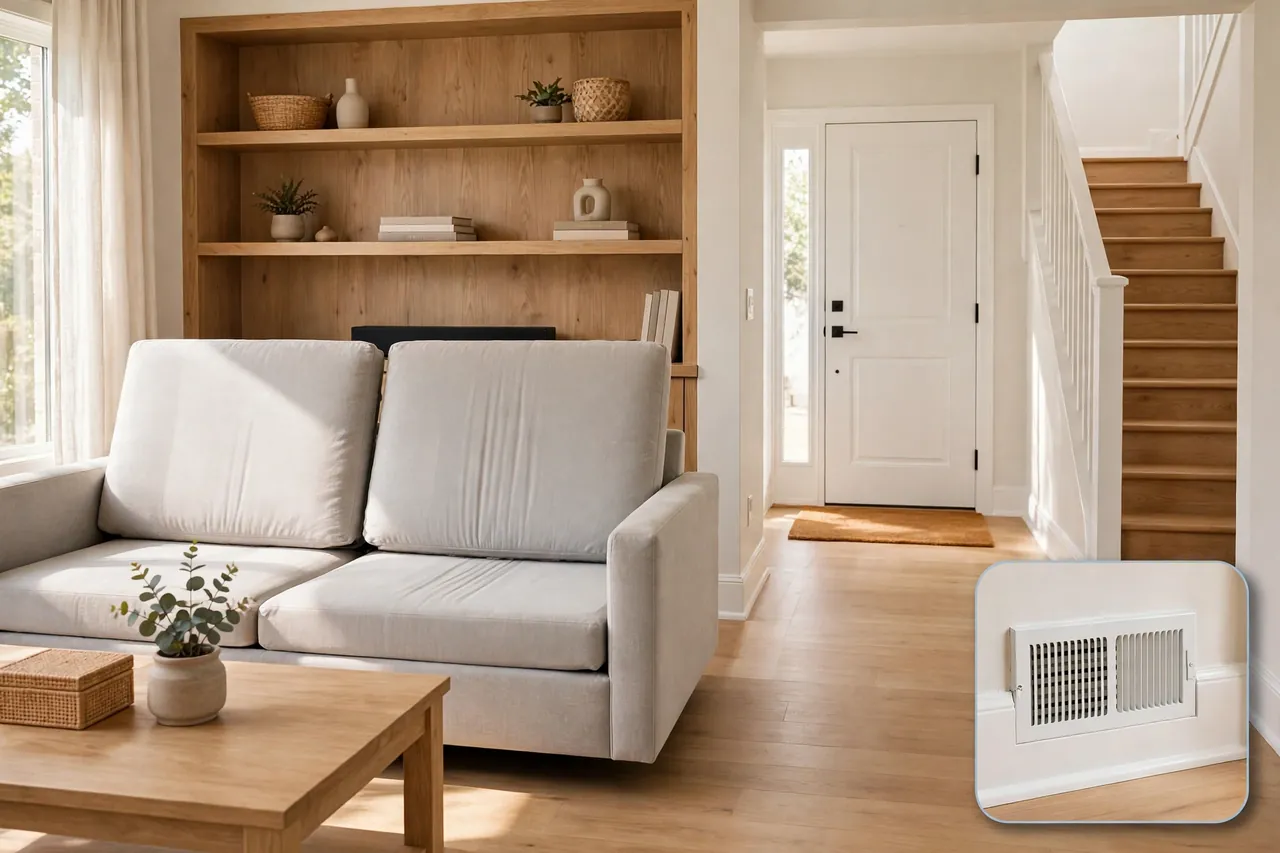
- Change the HVAC filter if it is due, and dust or wipe vent covers and return grilles.
- Spot-clean wall marks, wipe every light switch plate, and empty all trash and recycling.
- Test smoke and carbon monoxide detectors, and replace batteries on the schedule their manuals give.
For dryer vents, clean only as far as you can reach without forcing tools into the duct. A blocked or damaged vent is a fire risk, so if airflow still feels weak after you clean the reachable parts, call a qualified vent cleaning service rather than pushing further.
How Often Should You Deep Clean Your House?
Most homes need a full deep clean every three to six months, with regular weekly cleaning in between. That three-to-six-month range is the consensus across cleaning guides, and it assumes you keep up with weekly vacuuming, wiping, and bathroom cleaning between deep cleans. Homes with pets, young children, or allergy concerns usually land on the shorter end of that range, because hair, dust, and allergens build up faster.
Some rooms need deep cleaning more often than others. Kitchens and bathrooms work hardest, so deep clean them every two to three months if your household cooks often or uses several bathrooms daily. Bedrooms and less-used rooms can usually wait for the full three-to-six-month cycle. A seasonal rhythm works well for many households: one deep clean in spring, one before the holidays, and one or two more through the year.
Use this quick frequency guide to set your own schedule.
How Often to Deep Clean Each Area
| Area | Deep Clean Frequency | Why |
|---|---|---|
| Kitchen | Every 2 to 3 months | Grease and food residue build up fast |
| Bathrooms | Every 2 to 3 months | Moisture, limescale, and grout grime |
| Bedrooms | Every 3 to 6 months | Mainly dust and fabric dirt |
| Living areas | Every 3 to 6 months | Dust, upholstery, and high-touch spots |
| Laundry room and vents | Every 3 to 6 months | Lint, seals, and filters need regular resets |
Do not wait for a perfect season. The best time for a deep clean is the weekend you actually have, and a slightly early deep clean beats a perfect plan that never happens.
Split It Over a Weekend
A whole-house deep clean is a big job, and most households should not try to finish it in one exhausting day. Cleaning guides commonly allow six to eight hours for a typical two-to-three-bedroom home, and larger or long-neglected homes take longer, so split the work across a weekend and protect your energy for the rooms that matter most.
Here is a weekend plan that follows the order in this deep clean checklist and keeps the hardest rooms first.
Saturday: Kitchen and Bathrooms
Start Saturday morning with the kitchen, since it takes the longest. Spray the oven and let products sit while you empty and wipe cabinets and the fridge. After lunch, move to the bathrooms, spraying showers and toilets first so products work while you dust fixtures and wipe vanities. Finish Saturday with kitchen and bathroom floors, and stop while you still have energy left.
Sunday: Bedrooms, Living Areas, and Finishing Tasks
Start Sunday with bedrooms, where dusting and washing bedding move quickly. Move on to living areas and the entry, then finish with the laundry room and the whole-house tasks: vents, switches, trash, and detectors. End by walking through each room with this checklist in hand and checking off anything you missed.
If you run out of time, finish the kitchen and bathrooms first and carry bedrooms over to the next weekend. A half-finished deep clean still leaves your home much cleaner than before, and a tired cleaner makes mistakes. Rest, then pick up where you left off.
When Something Goes Wrong
Deep cleaning uncovers problems, and a few quick checks solve most of them without a second trip to the store. Work through this list from the safest and cheapest fix first.
- Streaks on glass or mirrors: wipe again with a clean, dry microfiber cloth, and use less product next time, because extra spray causes most streaks.
- Grout still looks dark after scrubbing: let the cleaner sit longer on a small test spot, then scrub again, and check the grout sealer only after the grout is fully dry.
- A drain smells after cleaning: flush it with hot water, clean the drain cover, and call a plumber if the smell stays or water drains slowly.
- White marks on faucets will not wipe off: descale with a product made for limescale, follow its label, and test it on a hidden spot first.
- A vacuum loses suction: empty the bin or bag, clean the filter as the manual directs, and check the hose for a blockage before you assume the vacuum is broken.
- You spot mold over a large area or on a soft surface you cannot clean: stop, ventilate the room, and call a qualified professional rather than scrubbing it yourself.
Mistakes That Undo a Deep Clean
A few common mistakes can quietly undo hours of work. First, cleaning floors before dusting high surfaces drops dust onto clean floors and forces you to redo them. Second, using a dirty cloth spreads grime from one surface to the next, so swap cloths often and rinse them well. Third, spraying product on everything at once wastes product and lets cleaners dry on surfaces before you wipe them.
Fourth, skipping the label causes most cleaning accidents and damage. A product made for one surface can stain or harm another, and a disinfectant only works if it stays wet for the contact time its label states. Finally, trying to finish everything in one day leads to rushed rooms and skipped jobs. A deep clean checklist works best when you follow it room by room, at a pace you can keep up, and finish each room properly before you start the next.
When you choose products, you do not need the strongest bottle on the shelf. The U.S. Environmental Protection Agency (EPA) runs a Safer Choice label for cleaning products whose ingredients meet its safety criteria, and its guide to the Safer Choice label explains what that label means. Choosing a labeled product is a simple way to cut harsh chemicals without giving up cleaning power.
Related Guides
How to Clean Your Room · Home Chores List: A Simple System Your Whole Household Can Actually Follow
Frequently Asked Questions
What is the difference between a deep clean and a regular clean?
A regular clean handles visible, everyday surfaces such as counters, sinks, and open floors. A deep clean reaches what weekly cleaning skips: inside appliances, grout, baseboards, vents, ceiling fans, and under furniture. Deep cleaning also adds scrubbing, descaling, and degreasing to the usual wipe-down.
How often should I deep clean my house?
Most homes need a full deep clean every three to six months, with weekly regular cleaning in between. Homes with pets, young children, or allergies usually need the shorter end of that range. Kitchens and bathrooms may need deep cleaning every two to three months because grease and moisture build up faster there.
Which room should I deep clean first?
Start with the kitchen or the bathrooms, because they take longest and cleaning products need time to sit and work. Finish with floors throughout the house, working from the far end of each room back toward the door. That order keeps you from tracking dirt through rooms you already finished.
Can I deep clean a whole house in one day?
A small home can be deep cleaned in one long day, but most houses need a weekend. Cleaning guides commonly allow six to eight hours for a typical two-to-three-bedroom home, and larger homes take longer. Split the work across two days, and finish the kitchen and bathrooms first if time runs short.
How do I prepare my house for a deep clean?
Clear counters, floors, and surfaces so you can reach the dirt underneath, empty the sink and dishwasher, and gather all supplies in one caddy first. Decide which extras you want done, such as inside the oven or fridge. Good preparation saves more time than any single cleaning trick.
A deep clean feels big at the start, but it breaks down into small, checkable jobs. Pick your weekend, start with the kitchen, and work this list room by room. By Sunday evening, you will walk through a home that looks, smells, and feels reset, and you will know exactly when to do it again.
Disclaimer: Homes, surfaces, and products vary, so always follow product labels and appliance manuals for your own home. For electrical, gas, plumbing, or structural concerns, and for large mold problems, get help from a qualified professional instead of handling the job yourself.


