Limewash vs whitewash for a brick fireplace comes down to one difference: what the coating is made of. Limewash is a mineral finish made from crushed limestone that soaks into the brick and hardens. Whitewash is usually latex paint thinned with water that sits on top. This guide compares look, cost, durability, and effort so you can choose with confidence.
What Is Limewash?
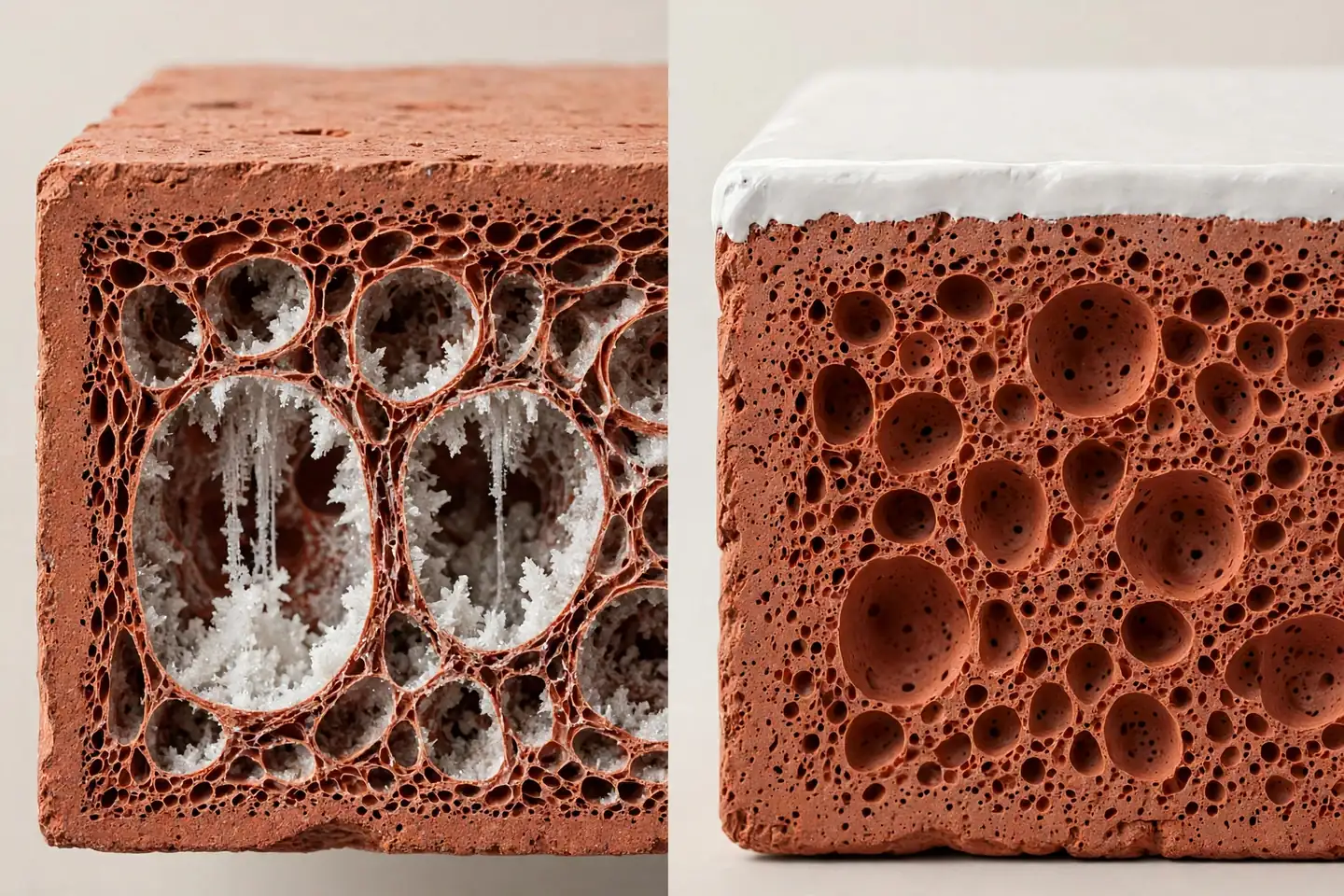
Limewash is one of the oldest wall finishes in the world. It is made from limestone that is burned, soaked in water, and aged into a soft putty. That putty is then thinned with water and brushed onto brick. Popular modern versions, like Romabio Classico Limewash, are pre-mixed in a bucket. Romabio’s version is made in Italy from Dolomite lime, so you skip the dusty mixing work.
How limewash bonds to brick
Limewash is not a normal paint, and it does not form a film. Instead, it soaks into the tiny pores of the brick. As it cures over the next week or so, it hardens into a thin layer of limestone that is bonded to the masonry itself. That is why it does not peel, chip, or flake like paint does.
However, this bonding has one strict rule. Limewash only sticks to porous, unpainted brick. If your fireplace was painted before, limewash will not adhere. In that case, whitewash or regular paint is your only option, unless the old paint is fully removed first.
The look you get
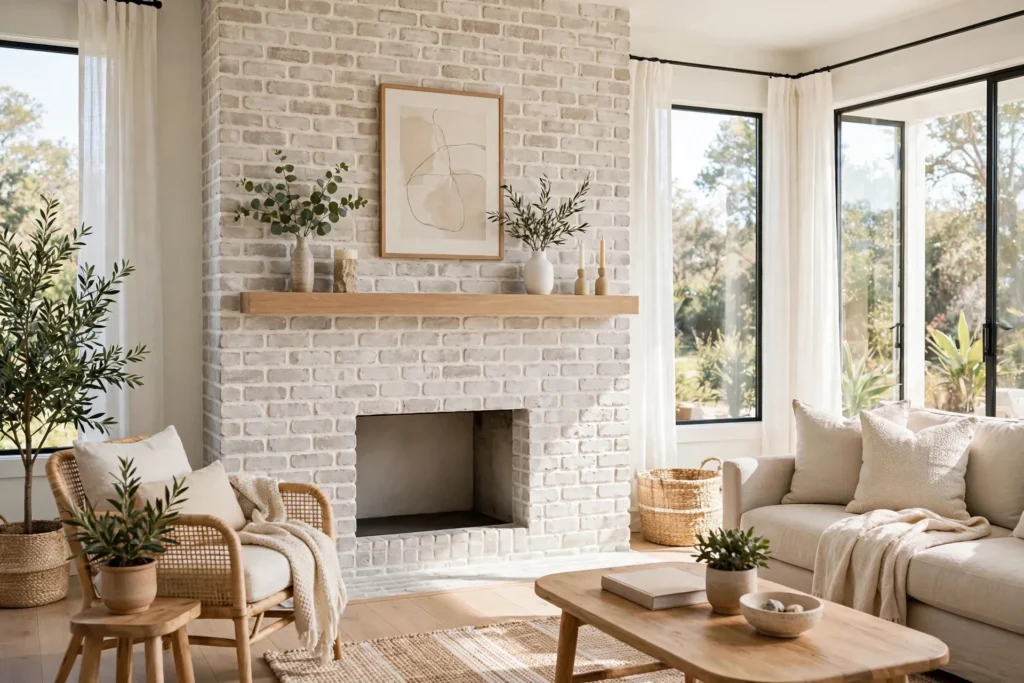
Limewash dries to a matte, chalky finish with soft movement and natural variation. It gives brick that aged, old-world European look that designers love. No two bricks look exactly the same, and the finish develops a gentle patina over time.
One thing surprises many first-time users: limewash looks translucent when wet, then turns opaque and much lighter as it dries. Always judge the color after it has dried, not while you are brushing it on.
Breathability and easy changes
Because limewash is a mineral coating, water vapor can pass through it. Moisture is not trapped inside your brick. Its high pH also makes it naturally resistant to mold and fungi.
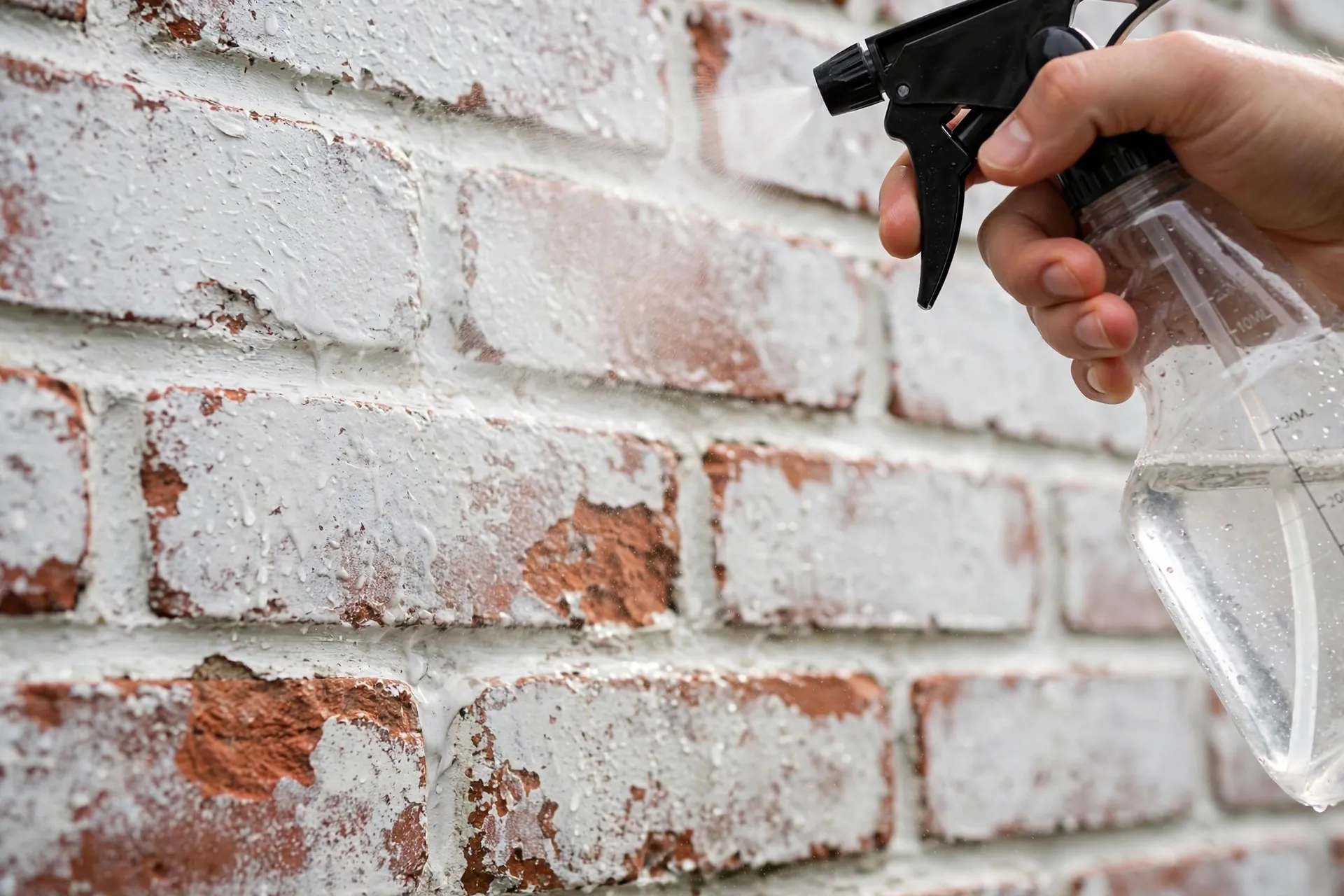
Limewash is also forgiving for beginners. With Romabio Classico, you can distress the finish with a spray bottle and a rag about 10 to 60 minutes after applying it, wiping some away so the brick shows through. If you change your mind completely, you can wash it off within the first 5 days. After it has cured, it can still be removed with diluted household vinegar or a pressure washer.
What Is Whitewash?
The word whitewash means two different things today, and this causes a lot of confusion. Most DIY tutorials use whitewash to mean diluted latex paint. The traditional version is a simple lime mix. Here is the difference.
The modern version: diluted latex paint
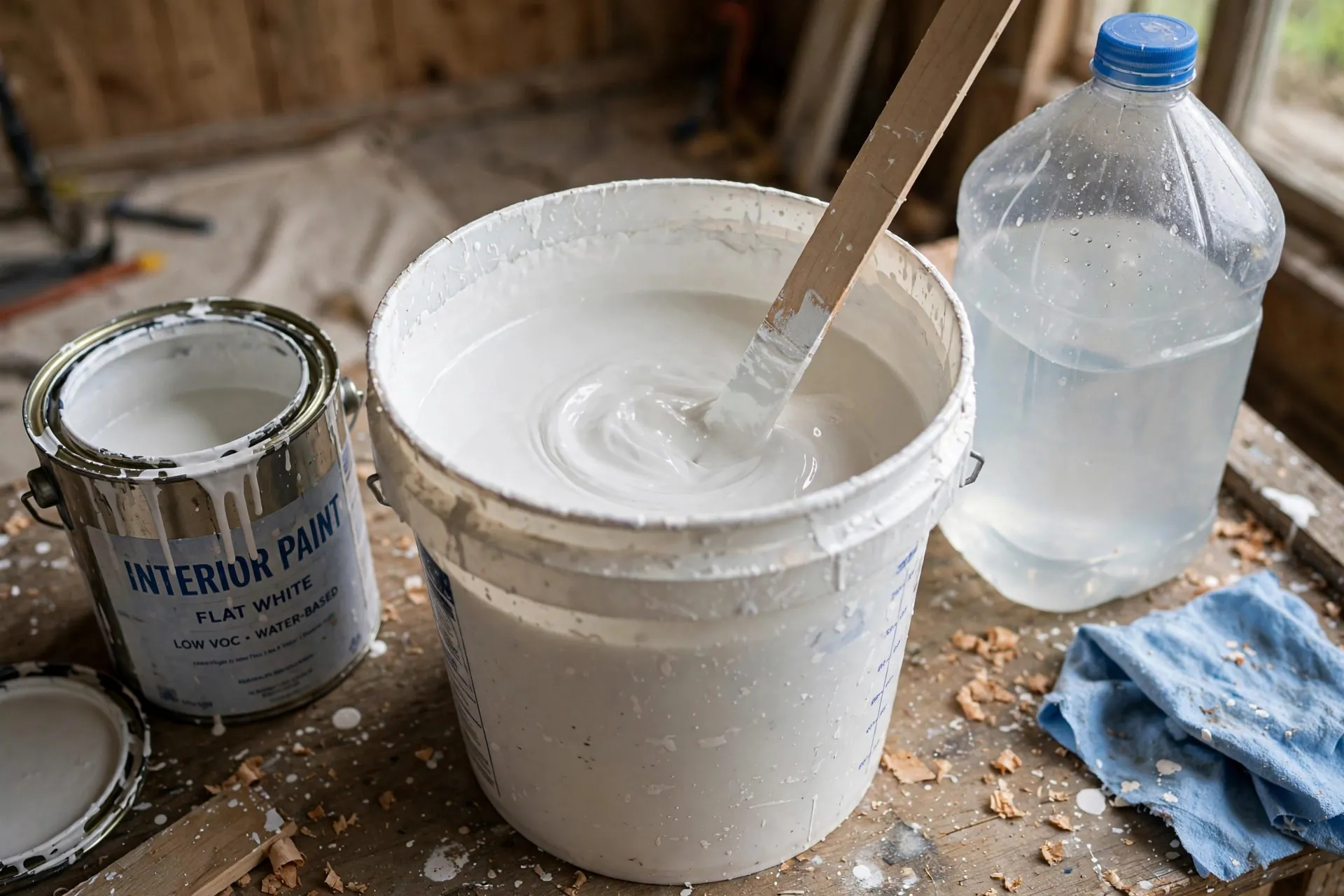
Modern whitewash is just flat white latex paint mixed with water. The standard starting mix is 50/50 paint and water. For a lighter, more distressed look where more brick shows through, use 2 parts water to 1 part paint. Going beyond 50/50 paint is not recommended, because the wash gets too thick and stops looking like a wash.
You brush the mix on, then wipe some back with a rag to control how much brick shows. The result is a soft, translucent white layer that mutes the brick’s color. The big advantage is cost and color choice: any latex paint color can become a wash.
The traditional version: lime and salt
Traditional whitewash has no paint at all. The classic recipe mixes about 50 pounds of hydrated mason’s lime and 10 pounds of table salt with water, to the thickness of pancake batter. As it dries, the lime crystals lock onto the surface and form a thin, rock-like layer. It is cheap and very durable, but mixing dry lime is dusty, messy work, so most homeowners choose a bucket product or the latex method instead.
The trade-offs of latex whitewash
Latex whitewash is the easiest and cheapest option, and it works over previously painted brick, where limewash cannot go. But it has real downsides. It forms a thin plastic film on the surface. That film can trap moisture in the brick, which matters more outdoors than on an indoor fireplace. The film can also peel over time. And once it has cured, it is hard to remove. Changing your mind means stripping or sanding back to bare brick.
Limewash vs Whitewash Brick Fireplace: Side-by-Side
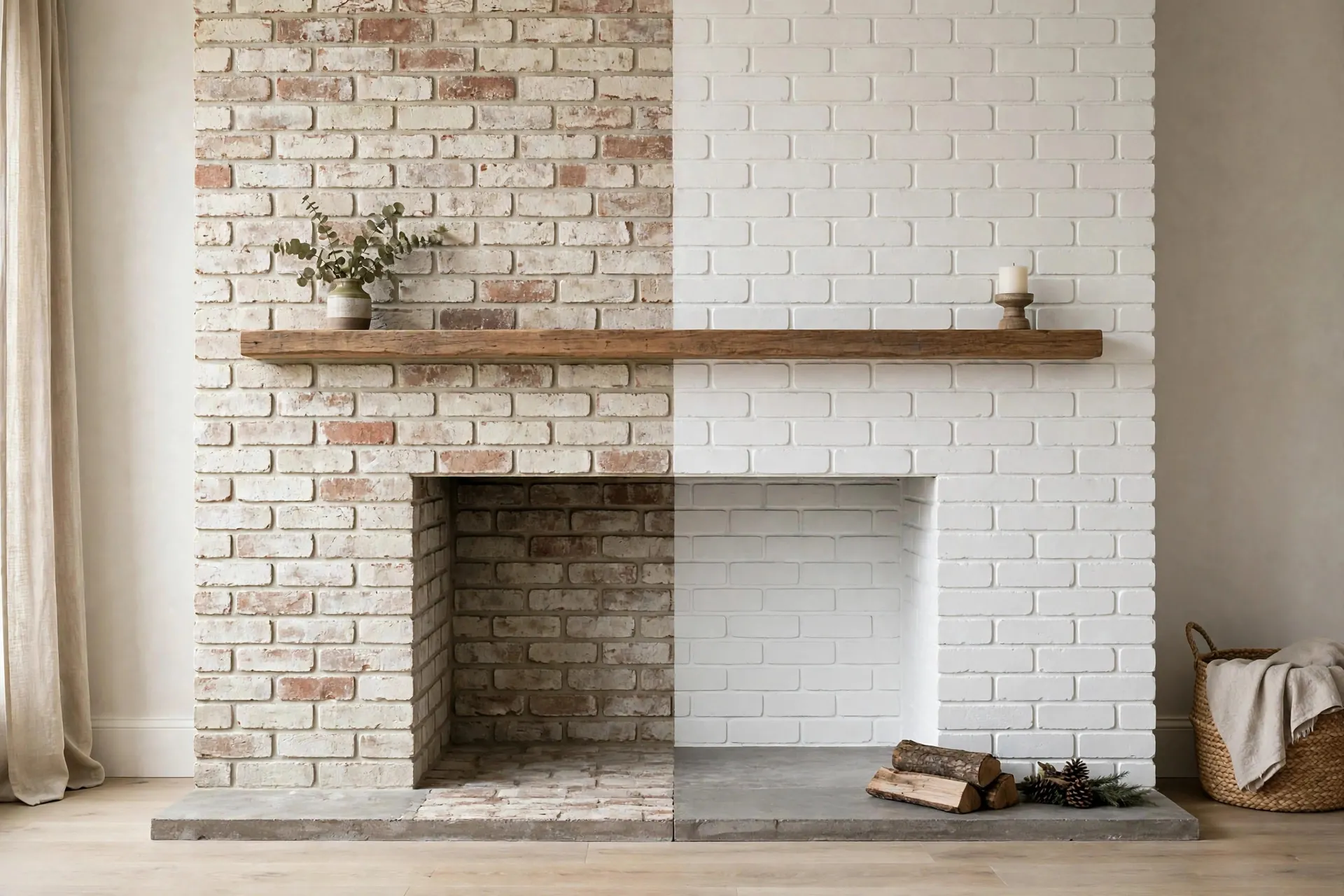
Here is the head-to-head view. The table below covers the differences that actually matter in a limewash vs whitewash brick fireplace project, when you are standing in front of your fireplace with a brush in your hand.
Table 1: Limewash vs whitewash at a glance
| Factor | Limewash | Whitewash (latex) |
|---|---|---|
| Made from | Crushed limestone (slaked lime), water, mineral pigments | Flat latex paint diluted with water |
| How it bonds | Soaks into the brick and hardens into the masonry | Forms a thin paint film on the surface |
| Look | Matte, mottled, chalky, old-world European | Softer, more uniform; brick shows through |
| Works on painted brick? | No, unpainted porous brick only | Yes |
| Breathability | Excellent, moisture passes through | Poor, film can trap moisture |
| Reversibility | Wash off within 5 days; vinegar removal later | Very hard to remove once cured |
| Coats needed | 1 coat (Romabio) to 2 coats (Portola) | 1 coat is typical |
| Durability indoors | Does not peel or flake; Romabio rates indoor use as lasting indefinitely | Film can peel over time |
What Each One Costs
Both finishes are budget-friendly compared with a full fireplace remodel. For a typical fireplace surround, you only need one small container of either product. Prices below were checked on 2026-10-07.
Table 2: Product prices for a brick fireplace project
| Product | Size | Price (checked on 2026-10-07) |
|---|---|---|
| Romabio Classico Limewash | 1 L (about 1 qt) | $44.99 at paint retailers |
| Romabio Classico Limewash | 2.5 L (about 0.67 gal) | $60.98 at Lowe’s |
| Portola Paints Lime Wash | 1 qt | $30.00 on Portola’s official store |
| Portola Paints Lime Wash | 1 gal | $84.00 on Portola’s official store |
| Flat white latex paint (for whitewash) | 1 gal | $24.98 to $28.98 at Home Depot |
Coverage matters more than sticker price. One 2.5 L bucket of Romabio covers about 200 to 250 square feet in one coat, which is far more than one fireplace surround needs. Portola’s quart covers about 40 to 50 square feet over two coats. And because latex whitewash is diluted about 50/50, one gallon of paint makes roughly two gallons of wash, enough for several fireplaces.
Romabio does not sell at one fixed direct price, so its limewash prices vary by retailer. Check the current colors and prices on Romabio’s official Classico Limewash page and on the Portola Paints official Lime Wash page before you buy.
Limewash vs Whitewash Brick Fireplace: Which One Should You Choose?
Neither finish is “better” for everyone. The right choice depends on your brick, your budget, and how much you value an undo button. Use these two checklists.
Choose limewash if…
- Your brick is unpainted and in decent shape.
- You want the authentic, aged European look with natural variation.
- You want the option to change your mind. The 5-day wash-off window is a real safety net.
- You care about breathability and a finish that will not peel later.
- Your budget allows roughly $45 to $61 for the product.
Choose whitewash if…
- Your fireplace brick has already been painted. Limewash cannot stick to it.
- You want the lowest possible cost, around $25 to $29 for a gallon of flat latex paint.
- You want a specific color beyond limewash’s natural pigment range.
- You want the simplest possible project: mix, brush on, wipe back.
- You are confident you will not want to reverse it later.
If your brick is unpainted and this is your first time, limewash is the safer pick in a limewash vs whitewash brick fireplace decision. Its wash-off window forgives mistakes, and its finish is the one most people picture when they save photos of white brick fireplaces.
How to Prep a Brick Fireplace for Either Finish
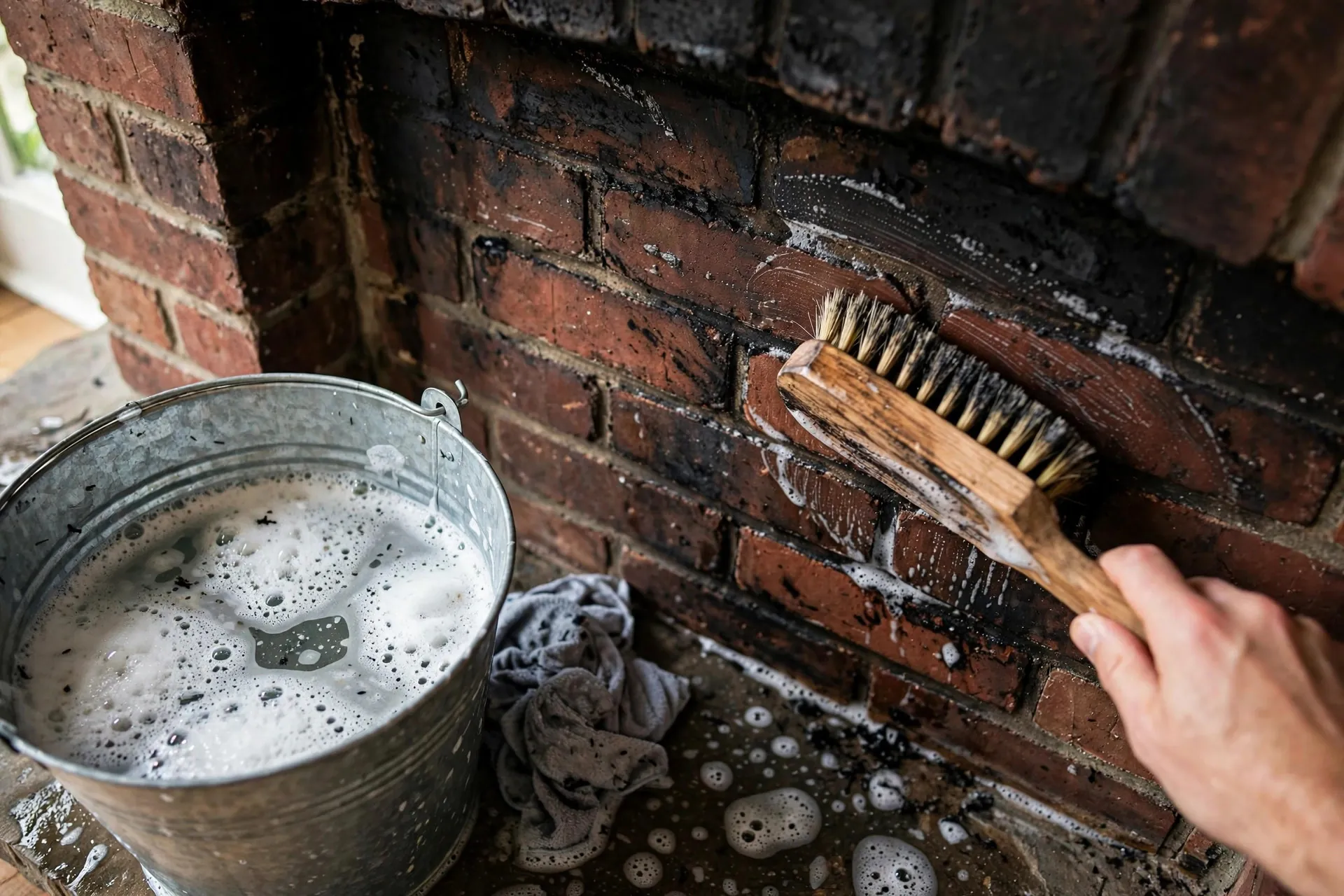
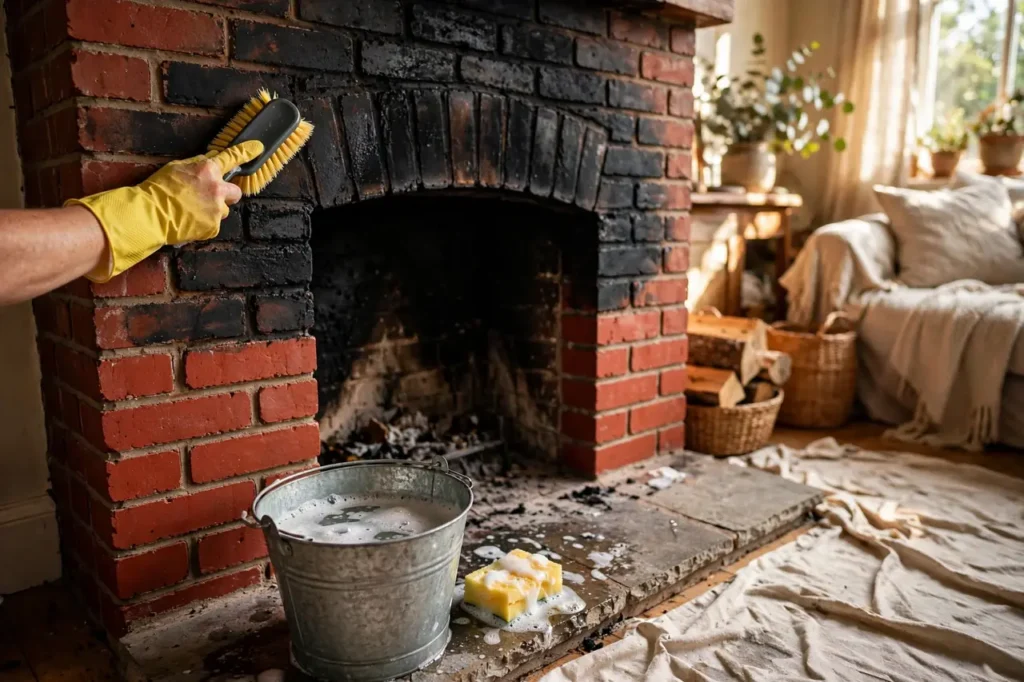
Good prep is 80 percent of a good result in any limewash vs whitewash brick fireplace project. Soot and grease are the main enemies here, because any coating will bubble or peel over them. Follow these steps in order.
- Empty the firebox and vacuum everything. Use a brush attachment to pull ash and dust out of the mortar joints.
- Scrub the brick with a stiff-bristle or wire brush to loosen soot, dirt, and white mineral deposits.
- Wash with TSP (trisodium phosphate). A common mix is about 1/2 cup of TSP in a gallon of hot water. Wear gloves and eye protection, because TSP is caustic. Scrub, then rinse well.
- Let the brick dry fully before you coat it.
- Repair damage first. Fill small cracks with paintable masonry patching compound, and fix loose mortar or broken bricks.
- Tape off the mantel, walls, and doors, and lay drop cloths over the hearth and floor.
- Test a hidden spot first. Both finishes look lighter when dry, so a test patch saves regret.
Then apply your finish-specific step. For limewash, dampen the brick with a spray bottle right before you start, and do not use a primer. Romabio Classico is diluted with 50 to 100 percent water, goes on in one coat, and needs no primer on clean, unpainted brick. For latex whitewash, a stain-blocking masonry primer is a smart first step, because old soot stains can bleed through a thin wash.
A safety note: surround only, never the firebox
Both limewash and whitewash are finishes for the fireplace surround, the brick face you see around the opening. Neither belongs inside the firebox, where flames and very high heat hit the brick directly. Romabio sells its limewash fireplace kit for surrounds, and regular latex paint is not heat-rated at all.
If the inside of your firebox needs attention, use a paint rated for high heat, such as Rutland’s 1200°F Hi-Temp Paint (about $29.99 for a 16 oz brush-on can, checked on 2026-10-07). Even then, Lowe’s own fireplace guide advises that firebox bricks are better left unfinished. Finally, if your fireplace face has heavy black soot build-up, have the chimney checked first. Thick soot on the face brick can be a sign of a draft problem, and no finish will fix that.
If the soot and smoke stains go deeper than a prep scrub can handle, work through our full guide on how to clean a brick fireplace first. It cleans the surround, hearth, and firebox step by step, compares five cleaners honestly, and shows the creosote signs that mean calling a certified chimney sweep before you coat anything.
Frequently Asked Questions
Can I limewash over painted brick?
No. Limewash must soak into the brick to bond, and paint seals the surface shut. Romabio states clearly that its Classico Limewash only adheres to porous, unpainted surfaces. If your fireplace is already painted, use a latex whitewash or regular paint instead, or have the old paint professionally removed first.
How long does limewash last on a fireplace?
For an indoor fireplace surround, Romabio says the finish lasts indefinitely, because there is no rain or weather to wear it away. It also cannot peel or flake, since it hardens into the brick instead of sitting on top. Outdoors is different: exterior limewash may need touch-ups about every 5 years.
Can I remove limewash if I don’t like it?
Yes, and this is limewash’s biggest advantage. Romabio Classico can be washed off within the first 5 days after application if you dislike the result. After it cures, you can still remove it with diluted household vinegar and water, or a pressure washer outdoors. Touch-ups are also easy at any time.
What is the best whitewash mix ratio?
Start with a 50/50 mix of flat white latex paint and water. That is the standard ratio recommended by Bob Vila and Angi. For a lighter look with more brick showing, use 2 parts water to 1 part paint. Always test on a hidden area first, because the wash dries lighter than it looks wet.
Is whitewash cheaper than limewash?
Yes. A gallon of flat white latex paint costs about $24.98 to $28.98 (checked on 2026-10-07), and diluted 50/50 it makes about two gallons of wash. A quart of Romabio Classico Limewash costs $44.99. Whitewash wins on price, but remember that it is nearly permanent, while limewash can be washed off early on.
Can I use limewash or whitewash inside the firebox?
No. Both finishes are for the surround only, not the firebox interior, which faces direct flame. Use a paint rated to 1200°F, made for firebox and stove interiors, if you must coat inside. Even with the right product, many pros advise leaving firebox brick unfinished, because open flame can still damage the finish.
Conclusion
Limewash and whitewash both brighten a dated brick fireplace for very little money, but they get there in opposite ways. Limewash becomes part of the brick, breathes, and can be undone in the first 5 days. Latex whitewash costs less and works on painted brick, but it is a one-way door. Check whether your brick is painted, run a small test patch, and then pick the finish that fits your brick and your budget.